How pregnancy tests work
Today in online pregnancy test we are going to see how home pregnancy tests work.
During pregnancy, many changes occur within a woman's body. Among these changes, some are hormonal. Hormones have different functions that help the development of the pregnancy and the fetus.
It is a complex world that we are not going to go into details about. It is enough to know that one of the hormones produced in a woman's body from the beginning of pregnancy is the HCG hormone. Well, it is this hormone that is detected in most conventional pregnancy tests that we can usually buy at a pharmacy.
When can you take a pregnancy test?
Depending on the brand of the predictor (as pregnancy tests are called), they need between 20 and 100 mIU/mL of concentration of this hormone to give a positive pregnancy result. Generally, a pregnancy test can be taken from the first week of pregnancy.
In the first week, the concentration of the HCG hormone is 15 to 1,000 mUI/ml, so a pregnancy test could detect it perfectly. It could be the case that the concentration of this hormone is lower and not correctly detected by the pregnancy test, and yet you are still pregnant. For this reason, it is recommended to wait a few more days to take the test.
When is the best time to take a pregnancy test?
The best time to take a pregnancy test is with the first urine of the day, which is usually more concentrated. What is clear is that if it is positive, the probability of accuracy is 99%. To confirm it 100%, a blood test or a visit to the gynecologist would be required for an examination.
How to use a pregnancy test?
To use the pregnancy test, it is best to consult the manufacturer's instructions since they can generally vary somewhat between different brands, although, as a general rule, the steps will be as follows:
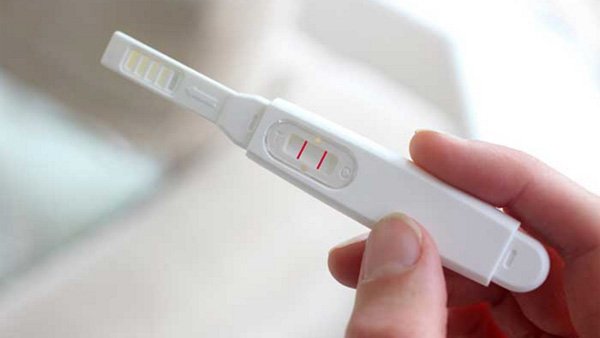
To start, you should remove the device from its packaging and soak the part with the reactive paper strip in urine. Usually, it is recommended to wet the pregnancy test directly while urinating for a few seconds to soak it well. Once wet, it is advisable to cover it again if you have the option; this way, we avoid it coming into contact with any external agent that could alter the result. Now you will have to wait for the time indicated by the pregnancy test manufacturer; this might be the most complicated part. And finally, you just have to look at the pregnancy test to see if the marks indicating you are pregnant have appeared.
Pregnancy test results
Obviously, the result of a pregnancy test can only be positive or negative. If it is positive, surely, with a 99% probability, you are pregnant. If it is negative, my advice is to take it again after a couple of days. There are less sensitive tests that could give you a false negative.
What does the future hold for pregnancy tests?
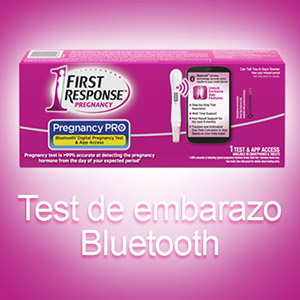
We all know that mobile phones have become a mass consumption tool used for everything. Everything points to the fact that, in the future, we will be able to take a pregnancy test directly on the mobile. I don't think they will create a specific product for this function, a specific "gadget." Rather, I am in favor of a device that, connected to our smartphone, is capable of analyzing a drop of blood and performing basic tests (sugar, pregnancy, ...) in the near future and, in the more distant future, it could even predict diseases.
Well, that's our article for today. Remember that you can try our totally free online pregnancy test that will give you an idea of whether you may be pregnant or not.
If you are looking for a baby, you might also be interested in my article about fertile days, and when you are finally pregnant, remember that you can create your own gestogram to track your pregnancy and your baby. Good luck and best wishes!