Bleach Pregnancy Test: Does It Actually Work?
Chances are you got here after watching a TikTok or YouTube video of a girl mixing bleach with urine and claiming that if it foams up, it means she’s pregnant. And now you’re wondering: does the bleach pregnancy test actually work?
Let me be straight with you, and I say this with love ❤️: no, it has no scientific basis at all. And there’s something else almost nobody mentions in those videos: bleach is a strong chemical, and mixing it with urine isn’t a good idea. In this article I’ll explain how it’s done, why it went viral, why it can be risky, and above all, which pregnancy tests you can actually rely on.
What is the bleach pregnancy test?
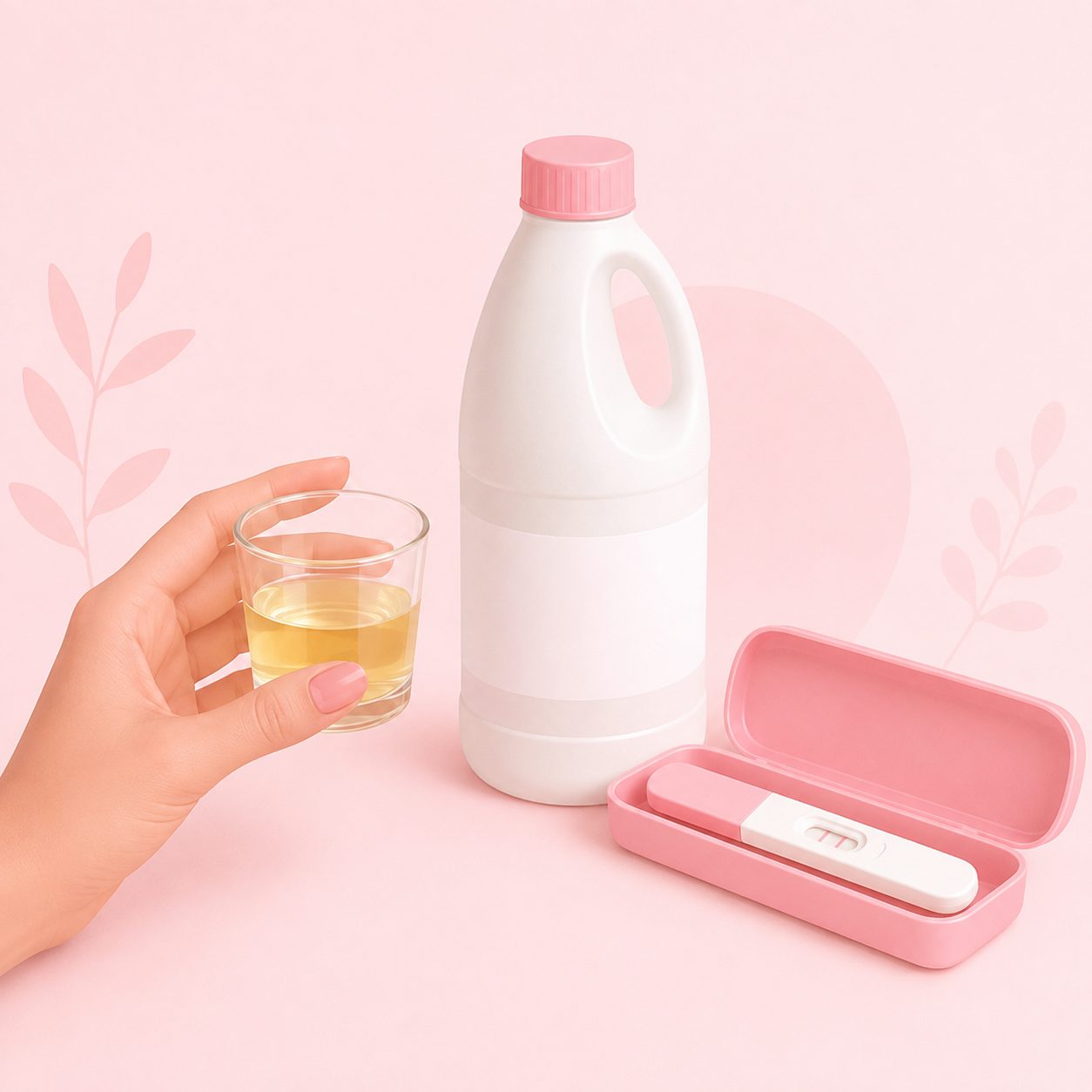
It’s a homemade method that has been circulating on social media for years, especially in fertility forums and communities. The idea is very simple: you mix a little bleach with a urine sample and watch what happens. If the mixture foams or bubbles, many women take that as a positive result.
It belongs to the same family as other homemade methods like the vinegar test or the toothpaste test. They all share one thing: they rely on chemical reactions that, in reality, have nothing to do with pregnancy, as I already explained in my article on homemade pregnancy tests.
How do you do the bleach test?
If you want to know the steps (although I strongly advise you not to do it, and I’ll tell you why in a moment), this is what the videos usually show:
- Put a small amount of bleach in a glass or plastic container.
- Add a similar amount of your urine, preferably your first morning urine.
- Wait a few minutes and check: if the mixture foams or bubbles, it’s considered “positive”.
Fast, right? Well, that’s exactly the problem: the reaction happens every time, whether you’re pregnant or not.
Why doesn’t it work?
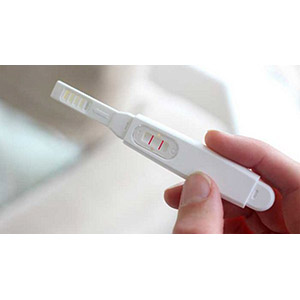
The pregnancy tests you buy at the pharmacy detect a very specific hormone: human chorionic gonadotropin (hCG), which is only produced when a pregnancy is underway. That’s the hormone that makes the second line appear, and that’s why those tests are around 99% accurate when used correctly.
Bleach, on the other hand, has no mechanism to detect hCG. It’s a solution of sodium hypochlorite, a strong oxidizing agent, and its only reaction with urine is chemical and non-specific: when it comes into contact with compounds like urea or uric acid, it produces foam and gas bubbles. That reaction happens whether you’re pregnant or not, because it depends on your urine composition, the bleach concentration, or even the temperature — not on the presence of the pregnancy hormone.
The risks nobody tells you about
I want to stop here for a moment, because this matters. Bleach isn’t water: it’s a corrosive chemical that can irritate your skin, eyes and airways. When you mix it with urine, it releases fumes that can be irritating if inhaled, especially in closed, unventilated spaces.
So my advice is clear: don’t do this test. It’s not worth risking your health for a result that means nothing. If you have doubts, there are much better ways to resolve them — and they’re right below.
Why did it go so viral?
Social media has an enormous power to spread this kind of trick, and there are several reasons why it catches on so deeply:
- It’s cheap and accessible: almost everyone has bleach at home, so there’s nothing to buy.
- It gives instant results: you get an answer in minutes, even if it’s a fake one.
- It plays on emotions: when you’re hoping for a positive or dreading a negative, any sign feels like an answer.
- Confirmation bias: someone who wants to be pregnant tends to interpret any bubble as a positive sign.
And that’s where the danger lies: a positive result from this test can create false hope, and a negative one can cause unnecessary distress. Neither scenario matches reality.
Which pregnancy tests you can actually use
If your period is late and you want to know if you’re pregnant, these are the options that are actually reliable:
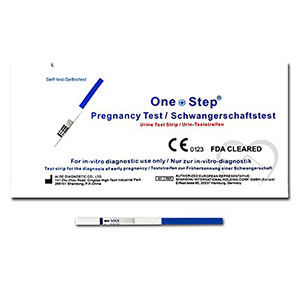
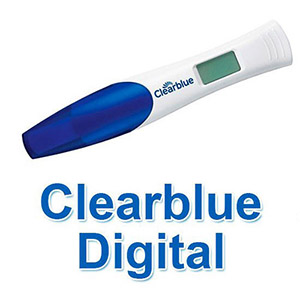
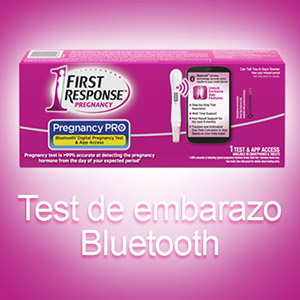
- Pharmacy urine test: around 99% accurate. You can take it from the first day of a missed period.
- Blood test (beta-hCG): nearly 100% accurate. It can be done from 10-12 days after conception.
- Ultrasound: the definitive confirmation. It is performed from week 5-6 of pregnancy.
My advice is to wait until the first day of your missed period and take a urine test with your first morning urine, which is the most concentrated. If it’s negative but you still have symptoms, repeat it a couple of days later. And if you want a quick idea before that, you can take our free online pregnancy test to get some guidance from your symptoms. And if you fancy a bit of fun, try your luck with our fun fingerprint game — it’s just a game, not a real test.
If you want to understand how real tests work, I recommend my article on how pregnancy tests work.
Frequently asked questions
Is the bleach pregnancy test reliable?
No. It has no scientific basis. The foam is a non-specific chemical reaction between bleach and compounds in your urine, and it happens whether you’re pregnant or not.
Why does bleach foam up with urine?
Because bleach (sodium hypochlorite) is an oxidizing agent that reacts with urine compounds like urea and uric acid, releasing gases and forming foam. That reaction has nothing to do with the pregnancy hormone.
Is it dangerous to do the bleach test?
It can be. Bleach is corrosive, and its fumes, mixed with urine, can irritate your skin, eyes and airways. That’s why I don’t recommend doing it at all.
Can it give a false positive or a false negative?
It can give both, because the result doesn’t measure anything related to pregnancy. In fact, many women get a “positive” without being pregnant and a “negative” while actually being pregnant.
Which homemade pregnancy test actually works?
None. The only reliable tests are pharmacy urine tests (which detect hCG) and the blood test your doctor can order. Homemade methods are just curiosity.
When should I take a real pregnancy test?
Ideally, wait until the first day of your missed period and take a urine test with your first morning urine. If it’s negative but your period still doesn’t come or you have symptoms, repeat the test a few days later.
Sources
This article is based on clinical criteria and reputable medical sources. These are the guidelines and studies I’ve used to explain how reliable pregnancy tests really are and the role of the hCG hormone:
- MedlinePlus (U.S. National Library of Medicine) — Pregnancy test
- MedlinePlus (U.S. National Library of Medicine) — Am I pregnant?
- MedlinePlus (U.S. National Library of Medicine) — HCG blood test – quantitative
- NHS (United Kingdom) — Finding out you’re pregnant
- Mayo Clinic — Home pregnancy tests: Can you trust the results?
- PubMed (Human Reproduction, 2005) — Dynamics of urinary levels of hCG during early pregnancy and accuracy of the home pregnancy test
Remember, this article is for information only: if you have any health concerns or think you might be pregnant, talk to your doctor. They can tell you which tests are right for you and support you through this special moment ❤️.