First pregnancy symptoms: when they appear and what to do
Today on online pregnancy test we’re going to talk about the first pregnancy symptoms: those little signs many women notice before they even take a test and that make us suspect a possible pregnancy.
Here’s the thing: early pregnancy symptoms are easily confused with premenstrual syndrome — tender breasts, tiredness and sleepiness, increased vaginal discharge, a sharper sense of smell… So I’m going to walk you through all of them calmly, so you can understand what your body is telling you without stressing out. ❤️
A missed period: the most important symptom
The most telling symptom — apart from very specific exceptions — is amenorrhea, in other words, a missed period. As we know, menstruation is the last stage of the menstrual cycle: a few days of bleeding from the uterus each month, when the unfertilized egg is expelled from the body.
When that last stage doesn’t happen, it’s usually because the egg has been fertilized: the period stops because there is nothing to expel. As soon as you have the first day of delay, it’s time to take a pregnancy test to find out for sure.
That said, pregnancy isn’t the only thing that can delay or stop your period: stress, certain medications or sudden changes in your diet can also mess with your cycle. So if your period is late, pay attention to the other symptoms or take a test — and if the delay drags on, talk to your doctor.
Tender breasts
From day one, your breasts start getting ready to breastfeed. Usually, from the fourth or sixth week they begin to grow: blood flow increases due to hormonal changes and they become more sensitive. Since the skin stretches, this growth can also bring itching, heaviness or a dull ache a bit stronger than period soreness.
Vaginal discharge
Discharge or leukorrhea — whitish and odorless — is similar to what you get when you’re not pregnant, but it becomes more abundant as pregnancy progresses. That’s because of the placental hormones and the formation of the mucus plug, which protects the uterus from possible infections until the end of pregnancy.
Tiredness and sleepiness
Feeling tired and sleepy is very common throughout pregnancy. It makes sense: your body is the one growing and supporting the baby. To cope, rest as much as you can, eat a balanced diet and take the vitamins your gynecologist recommends.
Nausea, vomiting and dizziness
Nausea is one of the first symptoms that makes you wonder if you’re pregnant. It usually fades by the end of the first trimester, although in some cases it can last the whole pregnancy. Hormonal changes, a sharper sense of smell and excess stomach acid are some of the factors behind it. To ease it, it’s usually recommended to eat small amounts frequently.
Basal body temperature
Around ovulation, your basal temperature dips slightly and then rises about 0.3-0.5 °C, staying high for the following days until it drops and normalizes as your period approaches. If that temperature, close to 37 °C, doesn’t drop at the end of your cycle and your period doesn’t come, it’s a possible sign of pregnancy.
When should I take a pregnancy test?
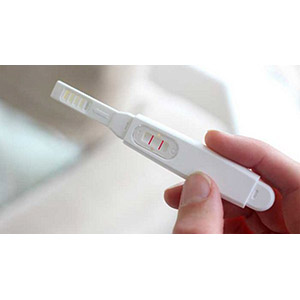
Pharmacy tests detect the hCG hormone in urine and are reliable from the first day of a missed period (some sensitive ones even a few days earlier). It’s best to use your first morning urine, as it’s the most concentrated.
If you don’t have a delay yet but want some guidance based on your symptoms, you can take our free online pregnancy test, which is orientative. And if you feel like having some fun, try our finger pregnancy test game — it’s just a game, not a real test. 😉
Want to understand how these tests actually work? Check out my article on how pregnancy tests work.
FAQ
How many days after conception do the first symptoms appear?
There’s no fixed rule: implantation usually happens between 6 and 10 days after fertilization, and the first hormonal changes start from there. Some women notice something during the first week, others don’t feel a thing for several weeks.
Can I be pregnant and still get my period?
No: there’s no menstruation during pregnancy. You may have light spotting from implantation — darker and lighter than a normal period — but any bleeding you’re worried about should be checked by your doctor.
Are pregnancy symptoms similar to period symptoms?
Very much so: progesterone, present in both situations, causes tender breasts, bloating and mood swings. That’s why it’s so hard to tell them apart in the first days, and the only reliable way to know is a pregnancy test.
Can I be pregnant without any symptoms?
Yes, some women don’t notice any symptoms during the first weeks. The absence of symptoms doesn’t mean there’s no pregnancy: every woman and every pregnancy is different.
When is a pregnancy test reliable?
From the first day of a missed period, ideally with your first morning urine. If it’s negative but you still have symptoms or no period, wait a few days and repeat it, or see your doctor.
Sources
To write this article I’ve relied on verifiable information from recognized health organizations and centers:
- Mayo Clinic — Symptoms of pregnancy: What happens first
- MedlinePlus (U.S. National Library of Medicine) — Am I pregnant?
- NHS (United Kingdom) — Signs and symptoms of pregnancy
- World Health Organization (WHO) — general information on pregnancy and maternal health
Remember this article is for information only: if you have any health concerns or think you might be pregnant, talk to your doctor or gynecologist — they’re the only ones who can guide you properly. Wishing you all the best in this very special moment! ❤️