Positive Pregnancy Test: Your Action Plan and What to Avoid
That second line has finally shown up and, between the excitement and the butterflies, I bet you’re wondering: what now? I get it completely — it’s one of those moments where the joy comes hand in hand with a pile of questions. Take a breath: you don’t have to do everything at once, and you don’t need to memorize a thousand things.
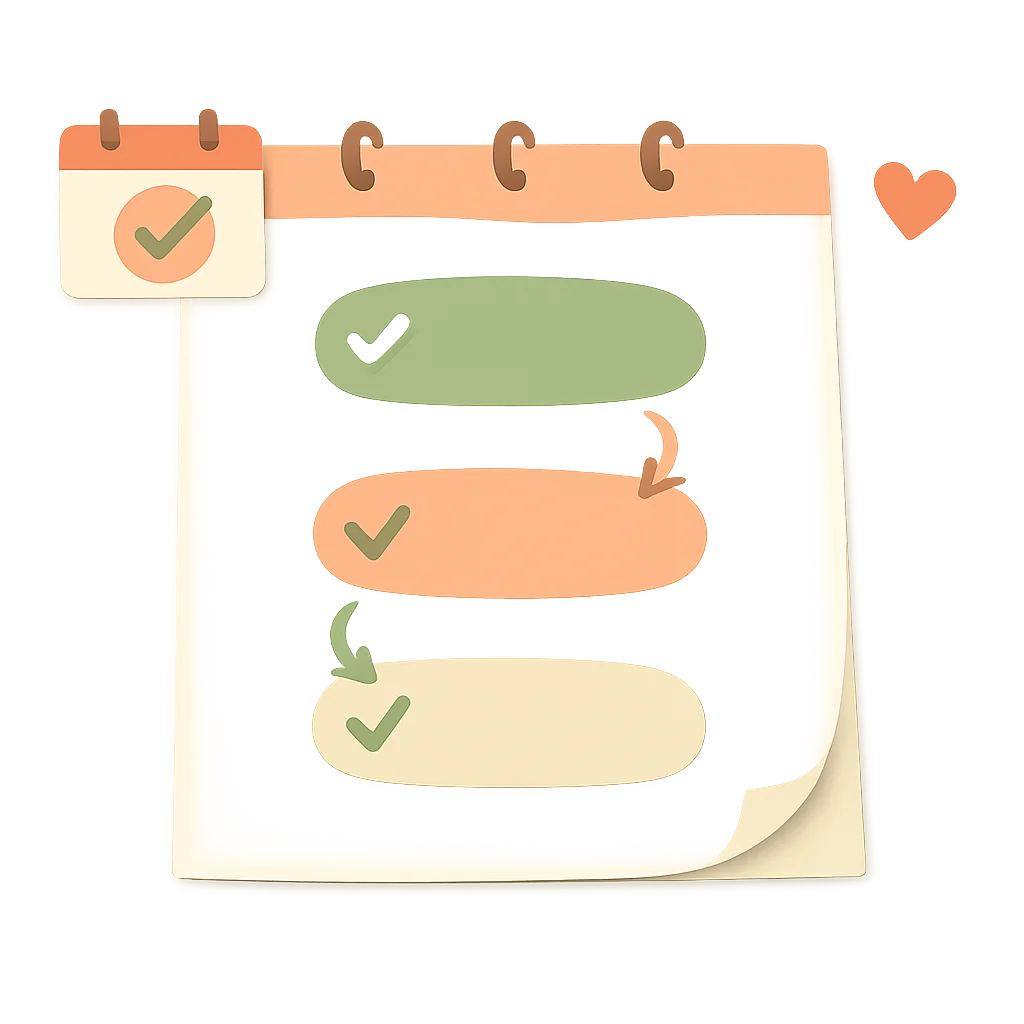
This article is exactly what you need: a clear action plan for the first days after a positive test, step by step, without jargon and in my usual voice. When you finish reading, you’ll know exactly what to do, what to avoid and when to call your doctor without a second thought. And if you’d like, you can print it out as a small checklist to tick off as you go (❤️).
First things first: confirm the result calmly
Before you rush to announce anything, spend a moment confirming the result the right way. A positive home urine test is, in the vast majority of cases, a real positive. But for peace of mind and to be 100% sure, it’s worth following a sensible order:
- Repeat the test 2-3 days later with your first morning urine. If the line holds or gets stronger, the result is very reliable.
- Look at the colour, not just the intensity: a pigmented line (pink or blue) within the reading window is a positive. A greyish, late line is usually an evaporation line, which means nothing.
- If you’re unsure between a faint line and a shadow, I recommend you read my article on the faint positive pregnancy test to clear it up for good.
If instead you want a numerical result that pretty much settles it on the spot, a blood beta-hCG test does exactly that: I explain how to read it in my article on beta-hCG and its values.
And if you still feel like getting some guidance based on what you’re feeling, you can take our free online pregnancy test, which walks you through your symptoms. Although, with a positive in front of you, you’re already on your way ❤️.
Your step-by-step action plan
Once it’s confirmed, here’s what I recommend from now on. You don’t need to do it all on day one — go at your own pace, but it’s good to have it clear.
- Book an appointment with your doctor or midwife. Not urgently, but within a sensible window (the first ultrasound is often done around 6-8 weeks). Call and ask how they manage pregnancy follow-up.
- Start taking folic acid if you weren’t already. It’s one of the simplest measures with the biggest impact in the early weeks, when your baby’s neural tube is forming. I tell you all about it in my article on folic acid in pregnancy.
- Review your diet. No crash diets and no putting it off: stay well hydrated, go for fresh foods and skip alcohol and raw fish or highly processed foods.
- Review your medication, including anything you take regularly and supplements. Some medicines aren’t compatible with pregnancy: if you take something on a regular basis, talk to your doctor as soon as possible.
- Quit alcohol and tobacco (and ask people not to smoke near you). These are among the few big “avoid now” items on this list. If quitting is hard, don’t judge yourself and ask for professional help — it’s the best thing you can do for you and your pregnancy.
- Work out your due date and how many weeks you are. It gives you perspective and a sense of pace. My online pregnancy calculator (gestogram) works it out in seconds, and my how many weeks of pregnancy do I have calculator rounds out the picture.
- Tell whoever you truly want to tell. There’s no rush and no obligation. Many couples wait until the first ultrasound (between weeks 6 and 8) to inform family and work.
- Make room in your daily life for more rest. Early pregnancy brings a lot of sleepiness and fatigue: listen to your body and don’t turn it into a problem.
- Write down any questions that come up. That way nothing slips your mind at the first appointment (it’s normal for nerves to get the better of you).
- Research the early stages (calmly and from reliable sources). My guide to pregnancy symptoms in the first days will help you know which symptoms are normal in these weeks.
When to call your doctor now, without waiting
Most pregnancies move along without a hitch, but there are situations where it’s important to contact your doctor as soon as possible, without waiting for the first appointment:
- Heavy bleeding or spotting along with strong pain in your belly or on one side.
- Intense and persistent abdominal pain, especially if it’s on one side (it can be a sign of an ectopic pregnancy that needs urgent assessment).
- Fever or significant discomfort.
- Strange and persistent results: for instance, a positive line that never quite firms up across several consecutive tests, or the opposite — pregnancy symptoms accompanied by bleeding that feels like a period.
If you’re worried about a positive that seems to fade or that comes and goes, my article on biochemical pregnancy explains these cases well, as does the one on false positive and false negative pregnancy tests. But remember: in the face of strong pain or bleeding, the right move is always to speak to a professional as soon as possible.
What to avoid in the first days
This is shorter than the “do” list, but just as important:
- Don’t take a test every hour or obsess over the line’s intensity: it’s not a thermometer for how your pregnancy is going, and it will only make you anxious.
- Don’t drink alcohol or smoke. There’s no such thing as “one safe drink” in pregnancy.
- Don’t take any medication on your own that hasn’t been reviewed.
- Don’t follow low-calorie diets or fasts.
- Don’t expose your belly to intense heat (saunas, prolonged very hot baths) in the early months.
- Don’t put off a medical appointment out of embarrassment or “waiting to be more sure”. When in doubt, asking for advice is always the best option.
Your printable checklist
So you don’t have to memorize anything, here’s the summary as a checklist (tick each point and breathe easy):
- ✅ I confirm the positive by repeating the test 2-3 days later with my first morning urine.
- ✅ I book an appointment with my doctor or midwife.
- ✅ I start taking folic acid.
- ✅ I review my medication and diet (no alcohol, no tobacco, well hydrated).
- ✅ I work out my weeks and my due date with the gestogram.
- ✅ I tell whoever I truly want to tell, without rushing.
- ✅ I rest more and listen to my body.
- ✅ I write down my questions for the first appointment.
- ✅ I know when to call the doctor right away (strong pain, heavy bleeding, fever).
Save this list on your phone or print it: it’ll come in handy during these first weeks, which are among the most exciting and, also, the ones that raise the most questions.
Frequently asked questions
When should I see a doctor after a positive test?
Not urgently if you have no symptoms: the usual thing is to book an appointment with your gynecologist or midwife for an initial check, often around 6-8 weeks, when the first ultrasound can be done. If there’s no early slot, call and ask how they handle it.
When do I start folic acid?
As soon as possible. Ideally before conception, but the moment you find out you’re pregnant is the time to start (or continue). It’s one of the measures that does the most to protect your baby’s neural tube development in the early weeks.
Can I keep exercising?
Yes, in general moderate exercise is good, but you should adapt it and check with your doctor. What you avoid are extreme efforts, contact sports or anything that compromises your belly.
Does the risk of miscarriage drop after the first ultrasound?
The first ultrasound (often between weeks 6 and 8) confirms the heartbeat and the location of the pregnancy, which brings a huge sense of relief. From then on the risk gradually decreases week by week, but every pregnancy is unique and your doctor is the best person to assess it.
What if a later test turns negative?
It could be a faulty test, an evaporation line read too late, or a biochemical pregnancy (an implantation that didn’t progress). Repeat with your first morning urine and, if doubts persist or there’s bleeding, see your doctor. I explain more in my article on biochemical pregnancy.
When is it safe to tell everyone I’m pregnant?
There’s no universal “safe” moment: many people wait for the first ultrasound or the end of the first trimester to tell family and work. It’s a personal decision, with no pressure.
Remember that this article is for information only and doesn’t replace the advice of a healthcare professional. If you have doubts, unusual symptoms or want to confirm your follow-up, the best option is always to talk to your doctor or gynecologist, who will be with you through this very special moment ❤️.
And if you fancy a bit of fun while you wait for your first appointment, give our fun fingerprint pregnancy test game a go: it’s just a game, not a real test.
![Online gestogram: pregnancy wheel and due date [Calculator]](/img/300_Test-de-embarazo-Online-Gestograma.jpg)