Biochemical pregnancy: what it is, symptoms and what to do
Maybe you’ve arrived here because a test came back positive and, a few days later, your period came. Or because a blood test mentioned a pregnancy that “didn’t develop”. Let me start by telling you this with all the warmth I can: whatever you’re feeling is valid, and you’re not alone, because it’s far more common than you think. In this article I explain clearly what a biochemical pregnancy is, why it happens and, above all, what you can do from here.

Before we dive in, I recommend my articles on false positive and false negative pregnancy tests and on when to take a test after a missed period. They’ll help you see the whole picture.
What is a biochemical pregnancy?
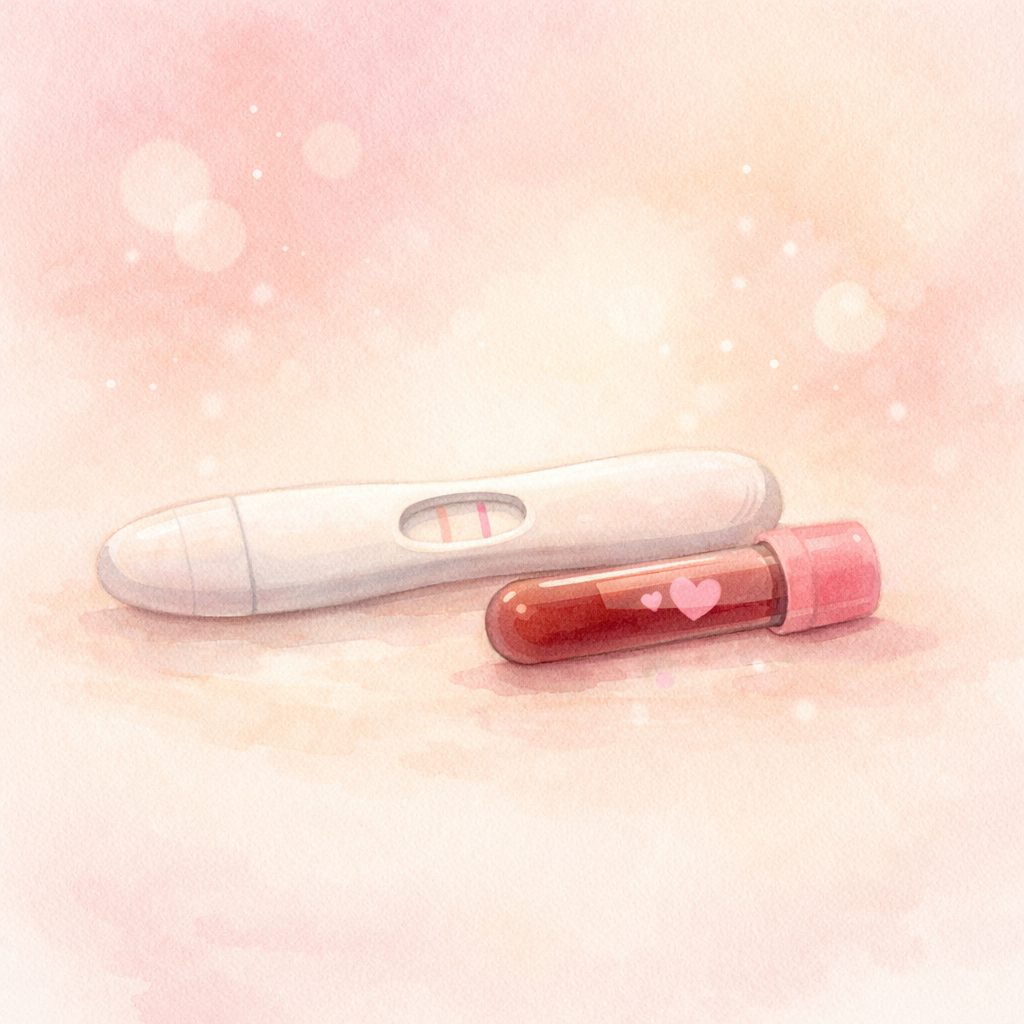
A biochemical pregnancy is a pregnancy loss that happens very early, before anything can be seen on a scan. We call it “biochemical” because it’s only detected through chemistry, meaning through the hCG hormone (the one pregnancy tests detect) in blood or urine: there is hCG, but the pregnancy doesn’t develop and stops by itself.
In practice it looks like this: you take a test and it comes back positive, or a blood test detects a low beta-hCG. But a few days later, around when your period should come (or does come), you get bleeding similar to your period and, repeating the test, it’s already negative. The pregnancy stopped before it was established.
It’s important to understand that it’s not your fault or something you could have caused. It’s the most common outcome of any pregnancy and, in the vast majority of cases, it doesn’t happen again.
What are the symptoms of a biochemical pregnancy?
Here’s the tricky part: many times there are no symptoms different from what you already had. A biochemical pregnancy often goes unnoticed, and many women never even know it happened. When there are signs, the most typical are:
- A positive test that goes back to negative a few days later.
- Bleeding that comes around the expected date of your period, sometimes a bit heavier or with mild cramps.
- Early pregnancy symptoms (tender breasts, tiredness) that suddenly disappear.
- Sometimes, a low beta-hCG in blood that doesn’t rise as it should, and then falls.
As you can see, many of these signs are easily confused with a normal cycle. That’s why it’s discovered most often in women who are trying to conceive and take tests or blood work as soon as there’s a small delay. And in fertility treatments, where hCG is monitored very closely, it’s where it’s detected most.
Why does a biochemical pregnancy happen?
The most common cause is a genetic or chromosomal problem in the embryo: during cell division, an alteration occurs and the embryo is no longer viable. It’s the earliest and mildest form of pregnancy loss, often a kind of natural selection that stops a pregnancy with abnormalities from continuing.
Sometimes maternal factors play a part (a hormonal imbalance, for example, with progesterone), and sometimes no clear cause is found. The key point is that, in the vast majority of cases, it’s an isolated and random event that says nothing negative about your fertility or your ability to have a healthy pregnancy later on.
How is it diagnosed?
The diagnosis is usually confirmed with a clear pattern in the beta-hCG blood test: the hormone appears but with low values that don’t double as they should and end up falling until they disappear. Also, an ultrasound shows no gestational sac, because the pregnancy stopped too early for one to form or become visible.
If it happens to you, the wisest thing is to repeat the test after a few days and see your gynaecologist. They’ll confirm your hCG is back to zero and there’s nothing left. You can use the how many weeks pregnant am I calculator to get your bearings on where you are in your cycle in the meantime. And if you fancy a distraction, try our finger pregnancy test game: it’s just a game, not a real test.
Does it affect your future fertility?
In the vast majority of cases, no. A biochemical pregnancy doesn’t mean you have a problem getting pregnant; in fact, many women who have one go on to have a healthy pregnancy shortly after. It’s often suggested to wait one menstrual cycle to let your body recover, but there’s no universal rule, so always follow your doctor’s advice.
Only when there are repeated or consecutive losses (experts usually speak of two or more) might it be worth doing a deeper study to rule out treatable causes. In that case, your gynaecologist will guide you on which tests to have.
What should I do now?
If you’ve just had a biochemical pregnancy, here’s a small action plan:
- Let yourself feel: it’s normal to feel sad and very confused. Don’t downplay what’s happening, but don’t blame yourself either.
- See your doctor to confirm your hCG is back to zero and everything is fine.
- Rest your body: wait for the guidance your professional gives you before trying again (usually one cycle).
- Take care of your emotions: talk to your partner or someone you trust. The grief after a loss, no matter how early, is real and valid.
- In the next cycle, if you try to conceive again, you can take our free online pregnancy test for guidance with your symptoms while the time comes.
And remember: the test that detects hCG works through the same biochemical pathway we’re talking about, so my article on false positive and false negative will help you read results more calmly.
FAQ
Is a biochemical pregnancy a miscarriage?
Yes, medically it’s considered the earliest form of pregnancy loss, but with a key difference: it happens before the pregnancy is confirmed on a scan and, often, before you even notice a missed period. It’s much milder and, above all, far more common than people think.
How long does a biochemical pregnancy last?
It usually resolves on its own within a few days, around the expected date of your period. The hCG that appeared disappears and your cycle returns to normal. If the bleeding is very heavy or the pain is severe, see your doctor.
Can I get pregnant after a biochemical pregnancy?
Yes, in the vast majority of cases. It’s considered an isolated, random event that doesn’t harm your fertility. Many women go on to have a healthy pregnancy in the following cycles.
How do I know if it was a biochemical pregnancy and not just a late period?
The typical sign is a positive test (or a detectable beta-hCG) that goes negative within days. If you only had a delay or slightly different bleeding and didn’t take any test, it’s impossible to know and you don’t need to: it doesn’t change what you should do.
Does a biochemical pregnancy give a false positive?
From a practical point of view, many people call it that: the test detects the hCG from a minimal implantation, but the pregnancy doesn’t progress and your period comes. I explain this in more detail in my article on false positives.
When should I worry?
If you lose two or more pregnancies in a row, or have concerns about your health, it’s worth a work-up with your gynaecologist. You should also seek care if the bleeding is very heavy, the pain is strong or you have a fever.
Remember this article is for information only. If you’re going through a loss or have any doubts, the best decision is always to see your doctor or gynaecologist. And above all, be kind to yourself: an early loss doesn’t define your ability to become a mother, and you’re not alone ❤️.


![Online gestogram: pregnancy wheel and due date [Calculator]](/img/300_Test-de-embarazo-Online-Gestograma.jpg)