When Does Your Belly Show in Pregnancy? Week by Week
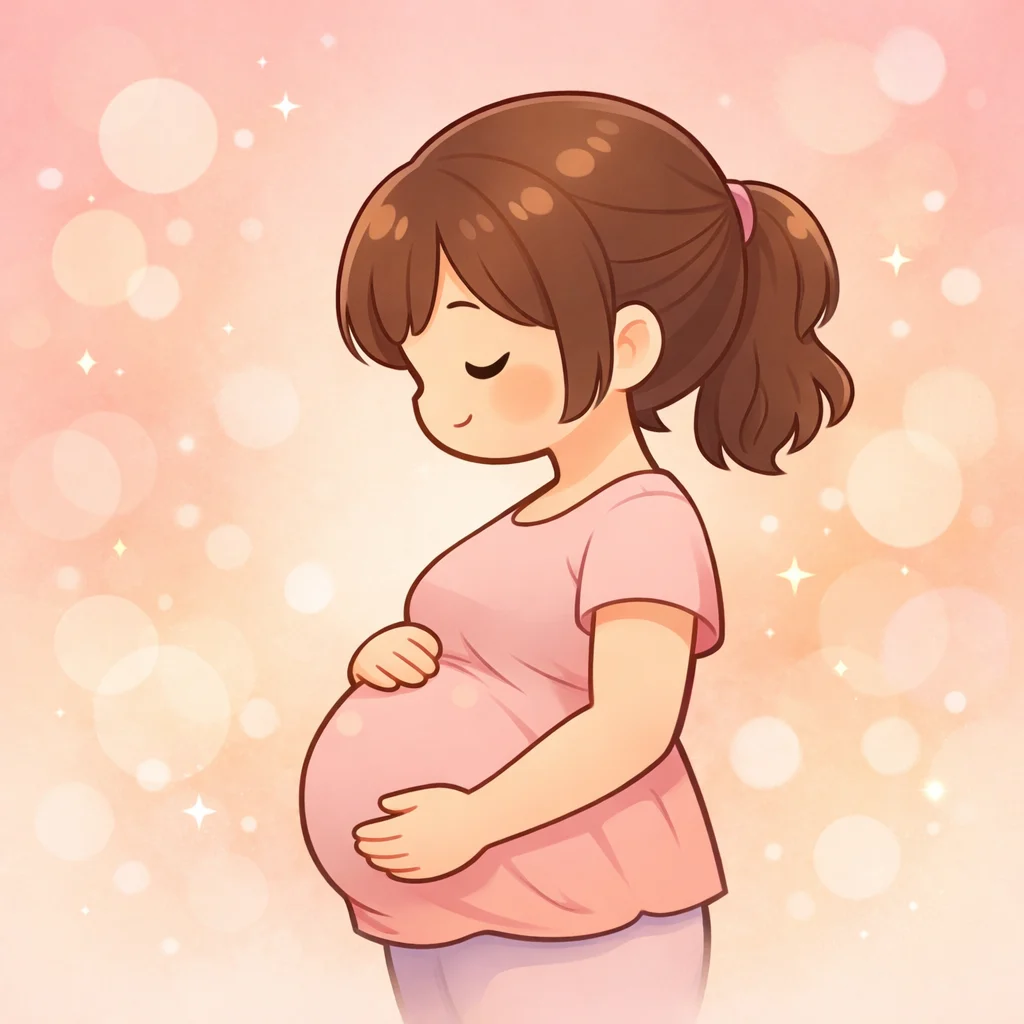
When does your belly show in pregnancy? It’s one of the questions I get asked the most, and I completely understand how eager you are to see it pop out… although there are also plenty of you who’d rather wait as long as possible. The short answer is that every woman is different, but the belly usually starts to be felt and seen between week 12 and week 16, and becomes clearly visible around week 20. Let me walk you through it, nice and calm, as always ❤️.
If you’ve been trying to read your body for a while, our free online pregnancy test can help you get a sense of your symptoms. And for the full picture of this stage, here’s the pregnancy week by week guide.
From what week do you start to notice your belly?
There’s no fixed rule, but to give you a rough idea:
- From week 12 on: many first-time mums start to feel a slight swelling or “show” a little tummy, though it’s often still hard to tell apart from a normal abdomen.
- Between week 16 and 20: the belly usually begins to show clearly, especially once the uterus grows above the pubic bone.
- From week 20 on: for most women the bump is unmistakable by now and starts to take on that rounded pregnancy silhouette.
- Around week 24-28: the belly becomes obvious and seems to change from one day to the next.
The key thing to understand is that this isn’t a race. If at week 14 you barely notice anything but your friend is already showing, take a breath: it’s completely normal and doesn’t mean anything is wrong.
Why do some people show sooner and others later?
The bump doesn’t appear “at one specific week” because it depends on lots of factors. These are the main ones:
- Whether it’s your first pregnancy or not: with your first baby the abdominal muscles are firmer and tend to “let go” more slowly; in a second or third pregnancy the belly usually shows sooner because those muscles have already stretched.
- Your build and previous weight: women with less abdominal fat often notice their belly sooner, simply because the uterus grows “inward” and reaches the abdominal wall earlier. The other way round, with more tissue it can take longer to become obvious.
- Your height and the position of the baby/uterus: your uterus may be tipped backward (retroverted) or the baby may sit further back, which delays the bump showing.
- How toned your muscles are: a well-worked abdominal wall holds the uterus more and slows the bump “popping out”.
- If it’s a multiple pregnancy: with twins or more, the uterus grows faster and usually shows sooner.
None of these is better or worse — they just explain the differences. What’s worth remembering is that your doctor will track the baby’s growth with ultrasounds, which is what actually matters.
When does your belly get hard?
Another very common question. The belly doesn’t “get hard” all of a sudden as such: what you feel is that the uterus, once it’s above the pubic bone from week 12-16, has a firm consistency under the fat and muscle layer.
- It’s normal to feel that area firm when you lie on your back. That’s the uterus itself.
- From the second trimester on you may notice occasional hardening, especially when you change position or make an effort.
- If you notice rigid, repeated, rhythmic hardening (the famous Braxton Hicks contractions), these are practice contractions that typically show up around week 20, though some women feel them earlier. They’re normal if they’re irregular and painless.
- If the hardening comes with pain, bleeding or discharge, or the contractions become regular, get checked by your doctor quickly.
If you’re unsure about what you’re feeling, remember that our online pregnancy test can help with your symptoms, and you can work out which week you’re in with the tools I’ve linked further down.
When does the belly show with twins?
In a twin or multiple pregnancy everything tends to happen earlier. It’s common for the belly to start showing already between week 10 and 14, and from week 16-18 to be clearly visible, with faster growth throughout the pregnancy.
That’s because there are two babies, and the amount of amniotic fluid and the size of the uterus grow sooner. Even so, every body is different, and not all multiple pregnancies “show” the same way as quickly. What matters is the medical care of both babies with their ultrasounds.
How your belly changes trimester by trimester
To give you the full picture, here’s roughly how it progresses:
- First trimester (week 1-13): barely anything shows. Many women only have abdominal bloating (gas and constipation are typical in the early weeks) rather than a real bump.
- Second trimester (week 14-27): this is when the belly “wakes up”. It starts to show and round out, your centre of gravity shifts, and by week 20-24 it becomes obvious.
- Third trimester (week 28-40+): growth speeds up, the belly button may pop out, the bump feels heavy and stretch marks may appear.
Want to see it week by week? In our pregnancy week by week guide you’ll find what happens at every stage, and I’ve linked the tools below so you don’t get lost.
Tips for caring for your growing belly
- Keep the skin hydrated on your belly, chest and thighs to help with elasticity and ease itching. And drink plenty of water.
- Watch your posture: as the bump grows, your centre of gravity shifts and back pain is common. Walk tall and avoid heavy lifting.
- Wear comfortable clothes that don’t squeeze your abdomen from week 12-16, when the uterus passes the pubic bone.
- Don’t rely on the mirror alone: bump growth on its own doesn’t tell you how the baby is doing. That’s confirmed by ultrasounds and your doctor’s check-ups.
- If anything bothers you, talk to your healthcare professional before self-medicating, even with creams.
Frequently asked questions
Is it normal that I don’t show at 16 weeks?
Yes, completely. In first-time mums and in women with firm muscles or a tilted-back uterus, it’s very common not to show until week 18-20. Your doctor will monitor growth with ultrasound.
What week do you usually show in a first pregnancy?
Most commonly between week 16 and 20, though slight swelling can start earlier. In later pregnancies it’s usually felt sooner.
Is a hard belly before week 20 normal?
The uterus has a firm consistency once it’s above the pubic bone (week 12-16), so feeling that area tense is normal. The rhythmic, tighten-then-loosen Braxton Hicks may appear around week 20.
When does the belly show with twins?
Usually earlier: between week 10 and 14 it can already be noticeable, and by week 16-18 clearly visible, with faster growth throughout the pregnancy.
Does a big bump mean a big baby?
Not necessarily. Shape and volume depend on many factors (position, fluid, your build). The baby’s weight is assessed by ultrasound, not by bump size.
When should I worry about the bump?
If you notice painful hardening, reduced movement, bleeding or discharge, or contractions that become regular too early, talk to your doctor. When in doubt, it’s always better to get checked.
To stay on top of your pregnancy, work out your due date with the gestogram, see which week you’re in with the how many weeks pregnant am I calculator, and convert that number into months with the weeks to months converter. And remember this article is just for information: if you have any concern about your health or your baby’s, ask your doctor, who’s the person best placed to support you through this special time ❤️.



![Online gestogram: pregnancy wheel and due date [Calculator]](/img/300_Test-de-embarazo-Online-Gestograma.jpg)