Homemade pregnancy test: do they really work?
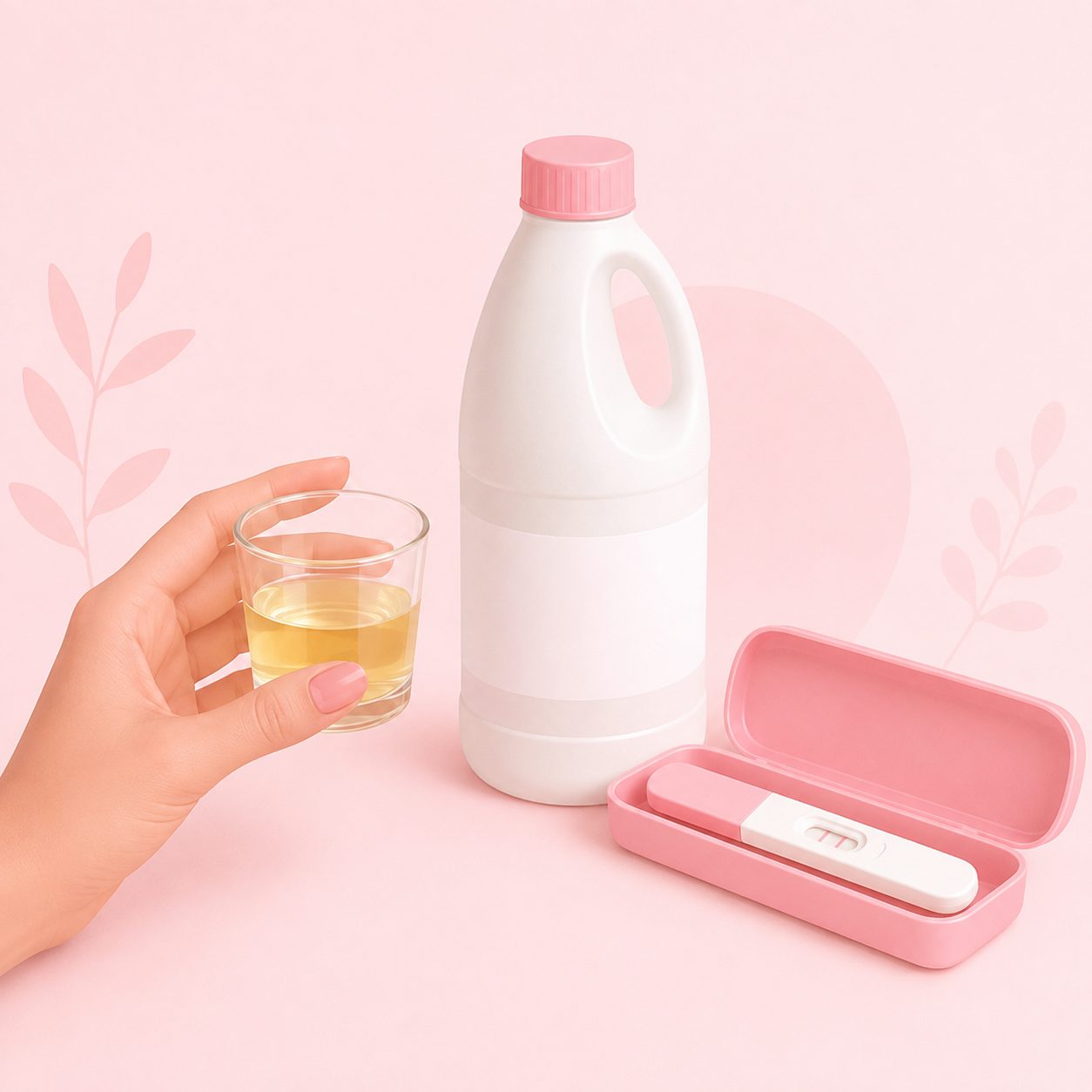
In this article we’re going to go through the different homemade pregnancy tests you can find online or that someone may have told you about, including a few that were used a long time ago. When we talk about homemade pregnancy tests, we mean the ones you can do at home with things you already have, without buying anything at the pharmacy.
Let me be upfront with you from the start ❤️: none of these tests have any scientific basis. I’m covering them here out of curiosity, so you can recognise them if you ever hear about them, or, if you feel like it, try them yourself and see that the result doesn’t match reality.

No homemade method should ever replace a reliable test. If your period is late and you’re in doubt, the best thing is to wait until the first day of your missed period and take a pharmacy urine test. I’ll explain the why of all this below.
Why don’t homemade pregnancy tests work?
Pharmacy pregnancy tests detect a very specific hormone: human chorionic gonadotropin (hCG), which your body only produces when a pregnancy is underway. That’s the hormone that makes the second line appear on the test.
Homemade methods have no way to detect hCG. The bleach, vinegar, oil or toothpaste react with the composition of your urine (its acidity, its concentration, what you’ve eaten or drunk), not with the pregnancy hormone. That’s why the same test can “turn positive” whether you’re pregnant or not, depending on factors that have nothing to do with it.
With that said, let’s look at each one so you can recognise them.
The bleach test
It’s one of the most popular. For this one you need a little bleach and a very clean container, for example a glass, so no outside agent affects the result.
The process is very simple: collect your first morning urine in the container (first morning urine is recommended because it’s more concentrated), add the bleach and watch the reaction.
- If the contents of the glass stay unchanged, it’s read as “not pregnant”.
- If it fizzes or changes colour, it’s read as “pregnant”.
The truth is that bleach is a highly reactive chemical that fizzes with the organic substances in urine (and with almost any liquid). That reaction has nothing to do with hCG, so the result means nothing.
The vinegar test
Very similar to the previous one, but this time we swap the bleach for vinegar. Collect your urine sample in a very clean container, preferably first morning urine, and add a dessert spoon of vinegar. Let it sit for about twenty minutes and watch.
If the contents change colour and a little foam appears on the edges, it’s considered “positive”. Again, that reaction happens between the vinegar (an acid) and the urine, and it can happen whether you’re pregnant or not. It gives you no real information about a possible pregnancy.
The urine test (also known as the grandmother’s test)
This is probably the simplest one. Collect your first morning urine in a transparent, very clean glass and leave it to sit for about twenty-four hours. After that time, if a whitish layer appears on the surface, pregnancy is suspected.
That layer is simply the result of the sediment and components of urine that has been sitting still for hours — something that happens with anyone’s urine left undisturbed. It has nothing to do with the pregnancy hormone.
The pendulum test
This test belongs to the world of beliefs and superstitions. You’ll need someone to help you, a piece of thread and a sewing needle. Thread the needle as if you were going to sew on a button and tie the two ends together.
Lie down on a surface that’s as flat and firm as possible (the floor works well) and ask your helper to hold the pendulum with the needle about fifteen centimetres above your belly. If the pendulum tends to sway on its own, it’s read as positive.
There’s no chemical reaction here at all: the movement depends on your helper’s hand and the natural little tremors of anyone holding it. It’s an unfounded belief, closer to fortune-telling than to medicine.
The boiling test
For this one you need a clean, sterilised container. Collect the urine, put it on the heat and let it boil. If a creamy layer appears on the surface as it starts to boil, it’s read as positive.
When you boil urine, its proteins and salts denature and form foam and a surface layer. That happens with anyone’s urine when boiled, pregnant or not, and depends on the concentration of the sample, not on hCG.
The oil test
This is one of the ones that seems most popular on forums. You’ll need a glass, any cooking oil and the urine. Wear gloves for hygiene and so you don’t disturb the sample.
Urinate into a clean, dry container with no dirt or dampness that could interfere. On one side of the glass put a tablespoon of oil and wait about an hour for the urine sample to cool down. Then, using a dropper or a spoon, place a small portion of urine on the opposite end of the oil drops, without letting them touch. Wait another hour and observe.
- If the two substances have joined together, it’s read as positive.
- If they’ve stayed separate, it’s read as negative.
There’s no scientific basis behind this test. Whether oil and urine mix or not depends on surface tension and the density of the liquids, not on pregnancy. Some forums mention a 70–80% success rate, but there’s no study backing that, and real experience shows it simply isn’t reliable.
The frog test (a historical note)
This one was used a lot until the 1960s, when immunological methods were developed, and it’s still used in rural or less-developed areas of some countries because it’s simple and cheap. It involved injecting a female frog or toad with the woman’s urine under its skin.
The urine of a pregnant woman contains hCG, and that hormone stimulates the animal to ovulate. If the frog spawned within twenty-four hours, the test was considered positive. The animal survives and can be reused, leaving an interval of about forty days between tests.
It’s a curious piece of medical history, but today it would be unthinkable to use it: we have far more reliable, faster tests that are much kinder to animals too.
What pregnancy tests actually work
If your period is late and you want to know whether you’re pregnant, these are the options that give a reliable result:
- Pharmacy urine test: it detects hCG and is about 99% reliable when used correctly. You can take it from the first day of your missed period, with first morning urine.
- Blood test (beta-hCG): it’s the most sensitive option, almost 100% reliable, and can be done as early as 10–12 days after conception, or even before your missed period.
- Ultrasound: it’s the definitive confirmation of pregnancy and is usually done from weeks 5–6.
My advice is to wait until the first day of your missed period and take a pharmacy urine test with first morning urine. If it’s negative but you still have symptoms or the delay goes on, repeat it a couple of days later. And if you want to understand better how these real tests work, I recommend my article on how pregnancy tests work.
Before that, if you’d like a quick idea by checking your symptoms, you can take our free online pregnancy test — it’s not a medical test, just a fun way to weigh up your symptoms. And if you fancy a bit of fun, try your luck with our fun fingerprint pregnancy test game: it’s only a game, not a real test.
You might also like the article about the bleach pregnancy test or the one on the toothpaste test, two other very viral homemade methods, as well as the one that clears up everything about false positives and false negatives so you can read results correctly.
Frequently asked questions
Is any homemade pregnancy test reliable?
No. None of the homemade methods (bleach, vinegar, oil, toothpaste, boiling, pendulum…) detect the hCG hormone, so their result doesn’t match reality. Only pharmacy urine tests and blood tests are reliable.
Why does a homemade test sometimes “turn positive” when I’m not pregnant?
Because the reaction you observe (foam, colour change, substances mixing) happens between your urine and the product (bleach, vinegar, oil…), and depends on its acidity, concentration or what you’ve eaten, not on the presence of hCG. It can happen whether you’re pregnant or not.
Is the oil test reliable? I’ve heard it’s right 70–80% of the time
No study backs that figure. Whether oil and urine mix or not depends on the density and surface tension of the liquids, not on pregnancy. Don’t trust percentages that circulate on forums.
When should I take a real pregnancy test?
The ideal is to wait until the first day of your missed period and take a pharmacy urine test with first morning urine. If it’s negative but your period still doesn’t come or symptoms appear, repeat the test a few days later.
What’s the difference between a homemade test and a pharmacy one?
The pharmacy test detects the hCG pregnancy hormone using specific antibodies (about 99% reliable when used properly). The homemade one only observes a non-specific chemical reaction of the urine, with no relation to hCG.
Remember this article is for information only: if you have any health concerns or think you might be pregnant, talk to your doctor or gynaecologist. They can point you to the right tests and support you through this very special moment ❤️.