Pregnancy Test with an IUD: Does It Still Work?
You’ve had the coil for two years, your periods have gone quiet, and now something feels off. So you buy a test and then stop in the aisle: does this thing even work with an IUD in? Or does the IUD somehow block it, change it, make it lie?
Short answer: the test works exactly as it would without the IUD. The longer answer is the useful one, because an IUD changes two things that matter much more than the test itself — how you notice a possible pregnancy in the first place, and what a positive result means for you specifically. ❤️
Does an IUD affect a pregnancy test? No — here’s why
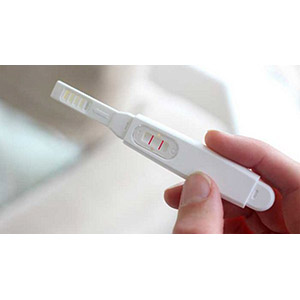
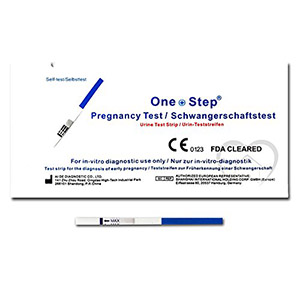
A home pregnancy test is a strip coated with antibodies that react to one specific hormone: hCG (human chorionic gonadotropin), produced by the tissue of a developing pregnancy. hCG in the urine turns the line on. No hCG, no line. That’s the whole mechanism.
An IUD contains either copper or a small amount of levonorgestrel. Neither has anything to do with hCG. There’s no chemical in an IUD that can block the antibodies, bind the hormone, or change your urine in a way that matters. The device sits in your uterus; the test reads your urine. They never meet.
Blood tests work the same way: same hormone, more sensitivity, no interference from the coil. If you want the full picture of how these tests detect a pregnancy, I’ve written about how pregnancy tests work.
So the IUD is not the variable here. What follows is what actually is.
Can an IUD cause a false positive?
No. This is one of the most persistent myths I see, and it tends to come from two places: people who had a positive test with a coil and then a negative blood test, and forum posts that mix up cause and coincidence.
A false positive means hCG showed up when there was no pregnancy. Possible real causes include:
- Testing too late after the reading window, when an evaporation line appears and looks like a faint positive.
- An expired test or one stored somewhere hot and damp.
- Fertility treatment: some injections contain hCG and stay in your system for days.
- Certain medications and rare medical conditions your doctor would investigate.
An IUD is not on that list. If you get a positive with a coil in place, the sensible assumption is that it’s real until a doctor says otherwise. If you want to read more about faint lines and how to tell them apart, I go through it in false positive and false negative pregnancy tests.
A positive test with an IUD in place: what to do today
This is where an IUD changes the rules, and I’d rather be blunt than reassuring.
A positive test with an IUD is not a “wait and see” situation. Call your doctor, your GP or your local contraception clinic today. If you can’t get through and you have pain, go to urgent care.
There are two reasons, and neither is about scaring you.
One: the chance that the pregnancy is ectopic is higher. When a pregnancy happens with an IUD in place, the proportion that implants outside the uterus — almost always in a fallopian tube — is greater than in the general population. The absolute risk is still low, because pregnancy with an IUD is rare, but it’s high enough that the position of the pregnancy needs checking with a scan rather than guessed from symptoms. I’ve covered the warning signs separately in ectopic pregnancy.
Two: leaving the IUD in adds risk to an ongoing pregnancy. If the pregnancy is wanted and the threads are visible, removing the IUD early is usually recommended because it lowers the risk of miscarriage, bleeding and infection. If the threads can’t be seen, the decision is more delicate and gets made case by case, often with a scan.
What you should not do is pull on the threads yourself. It isn’t a tampon, and tugging at it can cause bleeding or break the membranes. Leave it to someone who can see what they’re doing.
What usually happens next at the appointment:
- A blood hCG test confirms the pregnancy and gives a number to follow.
- A scan shows whether the pregnancy is inside the uterus.
- If the pregnancy is wanted, you discuss removal of the IUD and the risks either way.
- You get follow-up to check that things are progressing as they should.
Bleeding with a positive test: what it can mean
Bleeding and a positive test together is one of the most searched combinations, and it deserves a straight answer instead of a list of maybes.
Bleeding in early pregnancy can be implantation bleeding — light, pinkish or brown, a day or two around the time your period would have been due. It can also come from the cervix, which is more sensitive in pregnancy, or from the IUD itself irritating the lining. All three can happen in a normal, progressing pregnancy.
But with an IUD, bleeding plus a positive test also has to make your doctor think about an ectopic pregnancy, especially if the bleeding comes with pain on one side, shoulder tip pain, dizziness or feeling faint. In that case, don’t wait for an appointment: go to urgent care.
The practical rule: bleeding alone is not an emergency; bleeding with pain, dizziness or fainting is.
A negative test but you feel pregnant
A negative test with a coil in place doesn’t always settle it. Three explanations cover almost every case.
You tested too early
hCG takes a few days to reach the urine after implantation, and implantation happens days after ovulation — not on the day of sex. If you tested within a week or so of the encounter you’re worried about, a negative doesn’t rule anything out. Wait three to five days and test again with first-morning urine.
The IUD has moved or come out
This is more common than people think, particularly in the first months and after a heavy period. A coil that has slipped into the cervix or been expelled leaves you much less protected, and it can happen with no pain at all — sometimes just a bit of spotting that looks like a light period. Check your threads. If you can’t feel them, or you can feel the hard plastic of the device itself, get checked.
Your symptoms are from the progestin
Hormonal IUDs give you tender breasts, headaches, tiredness, mood swings and irregular spotting, especially early on. Those are the same symptoms people associate with early pregnancy. If your test was done at the right time and it’s negative, the most likely explanation is the coil doing its job — but if the doubt won’t leave you alone, repeat the test in a few days and then talk to a doctor rather than buying a fourth test.
Copper or hormonal: what actually changes
Neither type affects the test. What differs is your bleeding pattern, and that’s what makes a pregnancy harder or easier to spot.
| IUD type | What it releases | Effect on your periods | Effect on the test |
|---|---|---|---|
| Copper IUD | Copper ions, no hormones | Similar, often heavier and crampier in the first months | None |
| Mirena | Levonorgestrel, higher dose | Much lighter, often stops altogether | None |
| Kyleena | Levonorgestrel, lower dose | Lighter, often just spotting | None |
| Jaydess | Levonorgestrel, low dose | Lighter, especially in the first year | None |
All four are long-acting methods and among the most effective contraception available: over 99% effective, meaning fewer than 1 in 100 women get pregnant in a year of typical use. That’s why a positive test with a coil is uncommon — but uncommon isn’t never, and it’s exactly why the test still matters.
How to test when your periods have stopped
If your IUD has stopped your periods, the usual advice — “test on the first day of your missed period” — is useless to you. There’s no missed period to count from. Use these instead:
- Three weeks after the sex you’re worried about. By then, hCG would show on any standard home test if there were a pregnancy.
- Any new, unexplained change in bleeding: spotting after months of nothing, bleeding after sex, a period that suddenly returns. Test even though there’s no “late” period to speak of.
- Before any procedure or new prescription, if you’re not sure. A quick test is cheaper than an unexpected finding.
Two practical details that make a real difference:
- First urine of the morning, or after four hours without drinking much. Diluted urine is the most common reason for a false negative in early pregnancy.
- Read the result inside the time window. A line that appears after ten or fifteen minutes is not a result; it’s an evaporation line.
If timing is your main question, when to take a pregnancy test goes through it scenario by scenario.
When to get help
With an IUD, these are the moments to stop reading and call someone:
- Positive test: today, whether or not you have symptoms.
- Severe pain on one side of your abdomen, especially with dizziness, sweating or fainting: emergency care now.
- Fever, intense pelvic pain and smelly discharge with the coil in place: same day, possible infection.
- Heavy bleeding with clots, or bleeding that leaves you lightheaded: don’t wait.
- You can’t feel your threads, or you can feel the device: get the position checked.
- Three negative tests and no period (or symptoms that don’t add up): book an appointment rather than testing again.
If you want a quick symptom-based steer while you wait, you can take our free online pregnancy test — it’s about symptoms, not hormones. And if you’d like a distraction, try the finger pregnancy test game: it’s just a game, not a real test ❤️.
Frequently asked questions
Does the IUD make a pregnancy test less accurate?
No. The test measures hCG in your urine, and the IUD doesn’t contain or affect hCG. Its accuracy is the same as it would be without the coil — around 99% when you test at the right time and read it correctly.
Can an IUD cause a false positive?
No. False positives come from evaporation lines, expired tests, hCG-containing fertility drugs or rare medical conditions, not from the coil. A positive with an IUD should be treated as real until a doctor confirms otherwise.
I have a positive test and an IUD. Can I just wait for my appointment next month?
No. Contact your doctor today. The priority is a scan to confirm the pregnancy is inside the uterus, because the proportion of ectopic pregnancies is higher when a pregnancy occurs with a coil in place.
Will they remove the IUD if I’m pregnant?
Usually yes, if the threads are visible and the pregnancy is wanted, because leaving it in raises the risk of miscarriage and infection. If the threads aren’t visible, it’s a case-by-case decision made with a scan. Never try to remove it yourself.
Can I get pregnant with an IUD and still have a period?
Yes. Hormonal IUDs often cause light or absent periods, and bleeding can still happen in early pregnancy. A “period” doesn’t rule out a pregnancy, and a missing period doesn’t prove one.
How soon after sex should I test if I have an IUD?
Three weeks is the reliable window for a home urine test. Testing earlier can give a false negative because hCG may not be high enough yet. If the first test is negative and you’re still unsure, repeat it three to five days later.
I had a negative test but my coil threads are missing. What now?
Get checked. A missing thread can mean the IUD has moved or been expelled, which lowers your protection. A doctor can locate it or confirm it’s gone, and discuss backup contraception in the meantime.
Does the copper IUD cause birth defects if the pregnancy continues?
There’s no evidence that the copper itself causes malformations. What does increase is the risk of miscarriage and infection if the device stays in, which is why removal is discussed early. That conversation belongs with your doctor, not with a search engine.
Sources
- MedlinePlus — Pregnancy test
- MedlinePlus — Birth control
- NHS — IUD (intrauterine device or coil)
- NHS — Doing a pregnancy test
- ACOG — Birth control (FAQ)
- ACOG — Ectopic pregnancy (FAQ)
- WHO — Family planning and contraception
This article is for information only and doesn’t replace advice from your doctor or midwife. If you have a positive test with an IUD, severe pain or a fever, speak to a healthcare professional ❤️