How to conceive a girl or a boy: what actually works
Can you actually choose whether you have a girl or a boy? I get this question almost every week, usually from someone who already has two boys and is quietly hoping the third one is a girl. So let me save you some money and some disappointment up front: no timing trick, diet or calendar has been shown to work. What I can do is walk you through what each popular method claims, what the research says about it, and where the real answers come from 💕.
I’m not a doctor, and this article is information, not advice. If you’re trying to conceive, the person to talk to is your GP or your gynaecologist.
The one thing that isn’t up for debate
Your baby’s sex is set at conception and it comes down to one chromosome: the mother always gives an X, and the father gives either an X or a Y. XX is a girl, XY is a boy. Nothing you do after that point changes it.
What’s mildly interesting is that the coin isn’t perfectly balanced. Worldwide, about 105 boys are born for every 100 girls, and the ratio shifts slightly with things like maternal age and birth order. That’s the only “bias” anybody has been able to demonstrate reliably — and it’s not something you can steer.
Does gender swaying actually work?
“Gender swaying” is the umbrella term for every attempt to nudge the odds: timing, positions, douching, diets, supplements. It has a big online community and a very thin evidence base. Here’s the honest summary:
| Method | What it claims | What the evidence shows |
|---|---|---|
| Shettles | Intercourse close to ovulation → boy; 2-3 days before → girl | Not supported. Later studies found no reliable difference between X and Y sperm, and no timing effect |
| Whelan | The opposite: 4-6 days before ovulation → boy | Not supported, and it contradicts Shettles outright |
| Gender diets | More calories and potassium → boy; less → girl | Small observational studies, never replicated consistently |
| Douching / pH | Vinegar or bicarbonate rinses to favour one sperm | No evidence, and douching can cause irritation and infection |
| Chinese gender predictor | Mother’s lunar age + lunar month of conception | Around 50% — the same as guessing |
| Old wives’ tales | Bump shape, heart rate, cravings, hair | Folklore. Fun at a baby shower, useless as a test |
If a method has a “success rate” quoted online, ask what it’s being compared against. A method that gets it right half the time is not a method, it’s a coin.
The Shettles method: success rate and what the studies found
Dr Landrum Shettles built his method on a claim about sperm: that Y-bearing sperm (boys) are smaller, faster and shorter-lived, while X-bearing sperm (girls) are bigger, slower and tougher. From that he reasoned that sperm deposited right at ovulation — when cervical mucus is thinner and less acidic — would favour the fast Y sperm, and that intercourse two or three days earlier would leave mostly the hardy X sperm alive.
The practical advice that follows is:
- For a boy: intercourse as close to ovulation as you can, ideally on the day of the LH surge.
- For a girl: intercourse two to three days before ovulation, then stop.
- Extras: female orgasm at the same time (to reduce acidity) and, in the original version, a cup of coffee beforehand.
It’s a tidy theory. The trouble is the premise. Modern studies have not found a consistent size or swimming-speed difference between X and Y sperm, and the largest study to look at timing directly found no link between the day of intercourse relative to ovulation and the baby’s sex. Shettles himself reported success rates around 75-80%; independent attempts to replicate that have landed at roughly 50%.
Chinese gender predictor 2026: how it’s read
The Chinese gender chart is the one everybody has seen — a grid where you cross the mother’s age with the month of conception and get a pink or blue cell. I’ve included the version I use below.
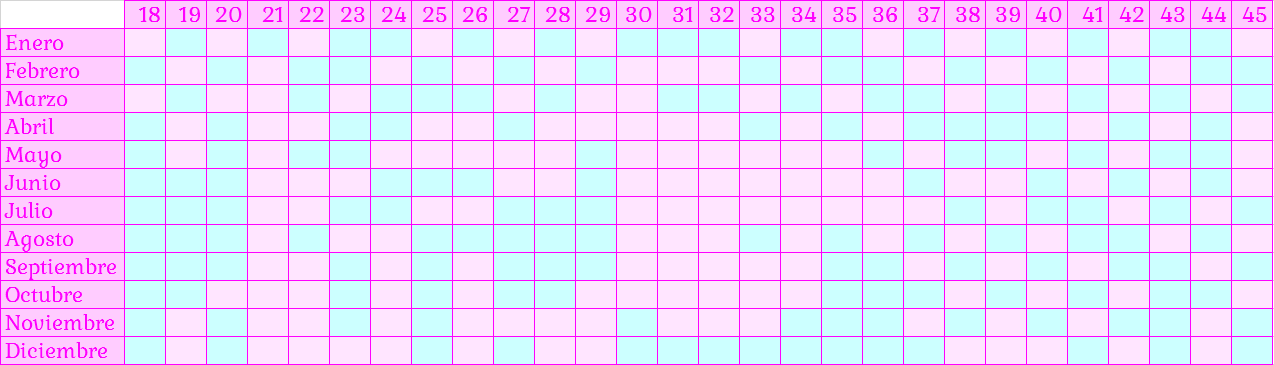
Two things most sites don’t tell you, and they’re the reason every chart you find looks slightly different:
- It uses lunar age, not the age on your ID. In the traditional system a baby is one at birth and gains a year at each Lunar New Year, so your “chart age” is usually one or two years more than your actual age.
- It uses the lunar month of conception, not the calendar month.
Get either one wrong and you’re reading a different chart. Get both right and you’re still looking at a tradition with no predictive value — studies that have tested these charts find accuracy at chance level.
”How to conceive a girl naturally”: diet, timing and old wives’ tales
The diet idea is the most persistent one, and it has a grain of research behind it — just not enough to act on. One UK study found that women who conceived boys had, on average, eaten more calories around the time of conception, and there’s a hypothesis that blood glucose and mineral levels affect cervical mucus in ways that favour one sperm type. It’s a single observational finding with small numbers, and nobody has shown that changing your diet changes your baby’s sex.
What actually matters nutritionally is boring and important: 400 micrograms of folic acid daily before conception, a varied diet, and no alcohol or smoking while you’re trying. Cutting calories or skipping breakfast to aim for a girl is a bad trade.
The bump, the ring and the heart rate
The classics, for the record:
- Bump shape: high and pointy means boy, wide and round means girl. In reality, bump shape depends on your muscle tone, your height and how the baby is lying.
- Heart rate: over 140 bpm means girl. Fetal heart rate varies with gestational age and activity, not sex.
- The wedding ring on a string: swings one way for a boy, circles for a girl. It’s your hand moving.
- Cravings: sweet for a girl, salty for a boy. Nobody has found a mechanism, and cravings change week to week anyway.
- Hair and skin: “girls steal your beauty.” A myth with a long life and zero evidence.
When you’ll actually find out
There are only a few reliable routes to the answer, and they all involve medicine rather than method:
- Ultrasound. Sex can often be guessed from around 16 weeks and is usually confirmed at the mid-pregnancy anomaly scan at 18-22 weeks. Earlier than that, the structures look similar enough that even experienced sonographers hedge.
- NIPT (non-invasive prenatal testing). A maternal blood test that looks at cell-free fetal DNA. From 10 weeks it can detect Y-chromosome material with very high accuracy, and it’s offered on the NHS for higher-chance screening results. It is a screening test, not a diagnostic one.
- Amniocentesis or CVS. Diagnostic tests that sample amniotic fluid or placental tissue, usually because of a screening result or a family history. Both carry a small risk of miscarriage, so they are not done for curiosity.
- Cell-free DNA “early sex” kits sold online. Some work, some are tested too early to be reliable, and results vary by lab quality. If you’re considering one, ask your midwife first.
You’ll also see the nub theory and the Ramzi theory doing the rounds in due-date groups. The nub theory compares the angle of the genital tubercle on a 12-week scan — supposedly over 30 degrees means a boy. The Ramzi theory claims the position of the placenta (left or right) predicts sex. Both were tested on small samples, neither has held up in larger reviews, and both are read off images that are often too fuzzy to judge. If your sonographer won’t call it at 12 weeks, it’s not because they’re being coy: the structures genuinely look alike.
One important point: in the UK, and in most of Europe, sex selection for non-medical reasons is not permitted. If you’re being offered it as a service, that’s a red flag.
Trying after two boys (or two girls)
This is the question behind most of the searches, so here’s the honest answer: the odds reset with every pregnancy. Having two boys doesn’t mean a girl is “due”, and the slight male excess at birth doesn’t swing back to compensate you. Families with four children of the same sex are not unlucky — they’re just what independent coin flips look like sometimes.
What you can do is shorten the time it takes: learn to recognise your fertile window, use an ovulation calculator if your cycles are regular, and get the timing right. If you want to check where you are, our free online pregnancy test walks you through the early symptoms. And if you just want to play, the finger pregnancy test game is exactly that — a game, not a test 💕.
When to stop googling and see a doctor
- You’ve been trying for a year (six months if you’re over 35) without a positive test.
- Your cycles are very irregular, shorter than 21 days or longer than 35, or you’ve gone three months without a period.
- You’ve had two or more miscarriages. There are causes worth investigating.
- There’s a sex-linked condition in the family — haemophilia, Duchenne muscular dystrophy. Ask before you start trying, because there are real medical options.
- You’re considering an early sex-reveal blood test bought online. Check with your midwife first; the earlier the test, the more likely it is to be wrong.
Frequently asked questions
Does the Shettles method actually work?
There’s no solid evidence for it. The theory rests on differences between X and Y sperm that modern studies haven’t confirmed, and the best-designed study on intercourse timing found no effect on the baby’s sex. Reported success rates around 75% haven’t been reproduced independently.
Is the Chinese gender predictor accurate?
No. It’s a centuries-old tradition with no scientific basis, and its accuracy sits at roughly chance level. It also uses lunar age and the lunar month of conception, which most online versions get wrong.
Can my diet influence my baby’s sex?
The research is preliminary. One study linked higher calorie intake around conception with boys, but it’s observational and hasn’t been replicated well enough to base decisions on. Eat a balanced diet with folic acid instead.
Does douching or changing vaginal pH help?
No, and it can irritate the vagina and disturb the normal flora. Your GP or pharmacist can advise on what’s safe if you’re trying to conceive.
Can I choose the sex of my baby with IVF?
Only for medical reasons, such as avoiding a serious sex-linked genetic condition. In the UK and most of Europe, selecting for preference isn’t legal.
When can I find out the sex?
Usually at the anomaly scan between 18 and 22 weeks, though it’s sometimes possible from around 16. NIPT from 10 weeks can also tell you, with high accuracy.
Is NIPT safe for the baby?
Yes. It only needs a blood sample from you, so there’s no risk to the pregnancy. It’s a screening test, so an unusual result is followed up with a diagnostic test.
I already have two boys. Are my chances of a girl higher now?
No. Each pregnancy is independent, and the odds stay close to 50/50, with a slight overall excess of boys across the population.
This article is general information, not medical advice. If you have questions about your health or you’re trying to conceive, speak to your doctor or midwife — they know your history and can give you an answer that fits ❤️.
Sources
- MedlinePlus — Prenatal testing
- MedlinePlus — Amniocentesis
- NHS — Amniocentesis
- NHS — Chorionic villus sampling (CVS)
- NHS — Your antenatal appointments
- ACOG — Amniocentesis (FAQ)
- WHO — Birth defects
- Wilcox AJ et al. Timing of sexual intercourse in relation to ovulation. N Engl J Med 1995 (PubMed)