Pregnancy Week 3: Fertilisation and Implantation
Pregnancy week 3 is the big one: fertilisation happens and, towards the end, the fertilised egg implants in the uterus. Even though you can’t feel it yet, this is when it all really begins. Let me explain how it happens and what you can expect ❤️.
⚠️ Already got a positive test? Then you’re further along than you think. With a positive result or a missed period, you’re usually in week 4 or beyond. Find your week or go to pregnancy week 4.
What happens in pregnancy week 3?
Two essential things happen during week 3:
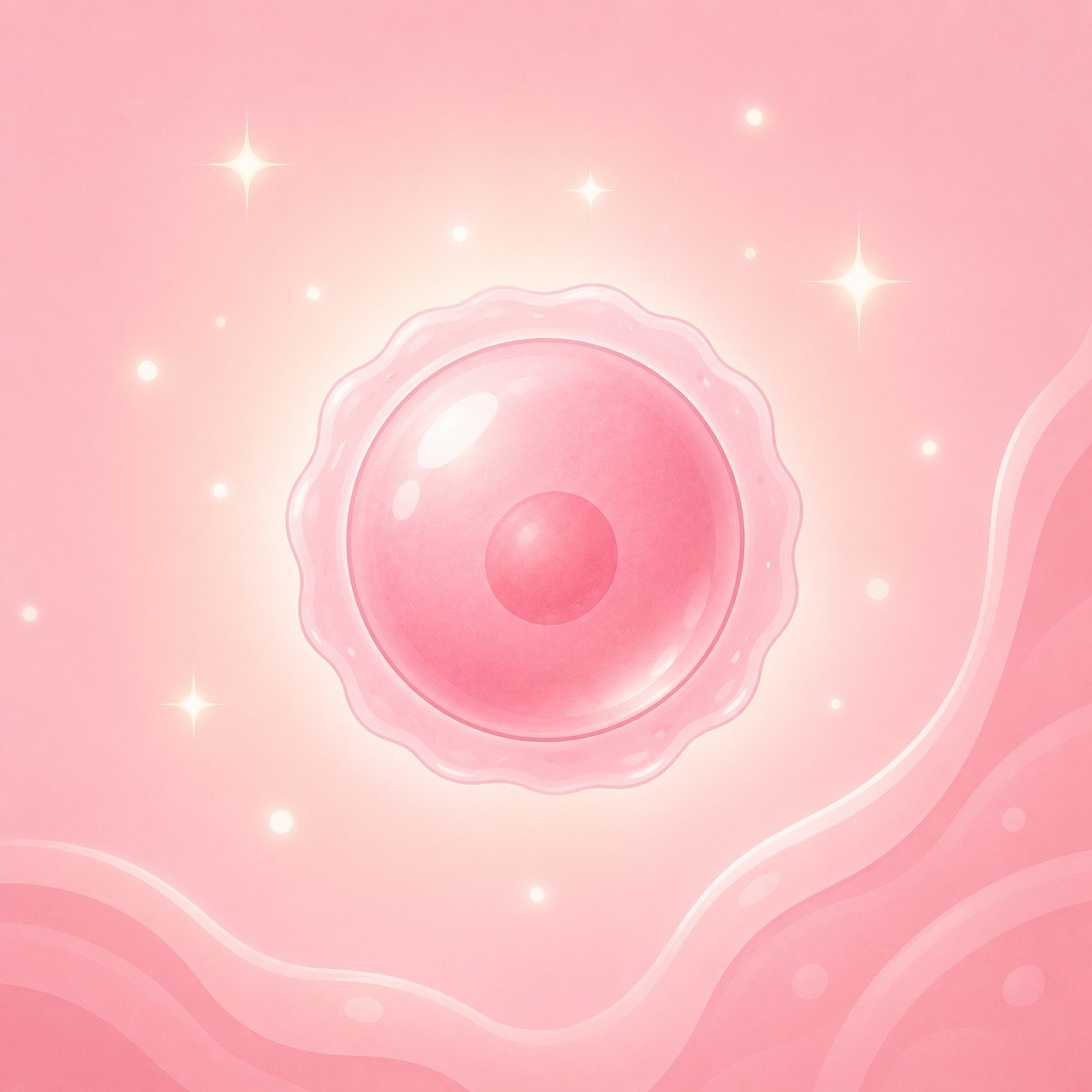
- Fertilisation: the egg released during ovulation (week 2) meets a sperm in the fallopian tubes and the zygote is formed. At that moment your baby’s genetic sex is decided (XX for a girl, XY for a boy).
- Implantation: the fertilised egg travels through the tube towards the uterus and, towards the end of week 3 (around day 20-24 of your cycle), implants in the endometrium. That’s when your body starts producing the hCG hormone, the one pregnancy tests detect.
Fun fact: in pregnancy week 3, the zygote has only been alive for about one week, because the first two weeks “don’t count” (they were your period and your ovulation).
Do I notice anything in week 3?
Most women notice absolutely nothing, and that’s completely normal. Some do feel very subtle signs:
- Implantation bleeding: a few pink or brown drops, light and short-lived. Not everyone has it.
- Mild cramping in the lower belly, similar to period cramps.
- Tiredness and tender breasts, from the early rise in progesterone.
But I insist: feeling nothing is also perfectly normal. Every pregnancy is different.
Can the test be positive in week 3?
Almost never. hCG only starts being produced after implantation (end of week 3) and its level is still tiny. A urine test in week 3 will almost always be negative, even if you’re pregnant. If you test too early, a false negative is very likely.
The best thing is to wait until the first day of your missed period (start of week 5). If you want to get ahead, a beta-hCG blood test can be detected from about 10-12 days after conception. In the meantime, you can take our free online pregnancy test to get some guidance from your symptoms. And if you fancy a bit of fun, try your luck with our fun fingerprint game — it’s just a game, not a real test.
How big is the embryo in week 3?
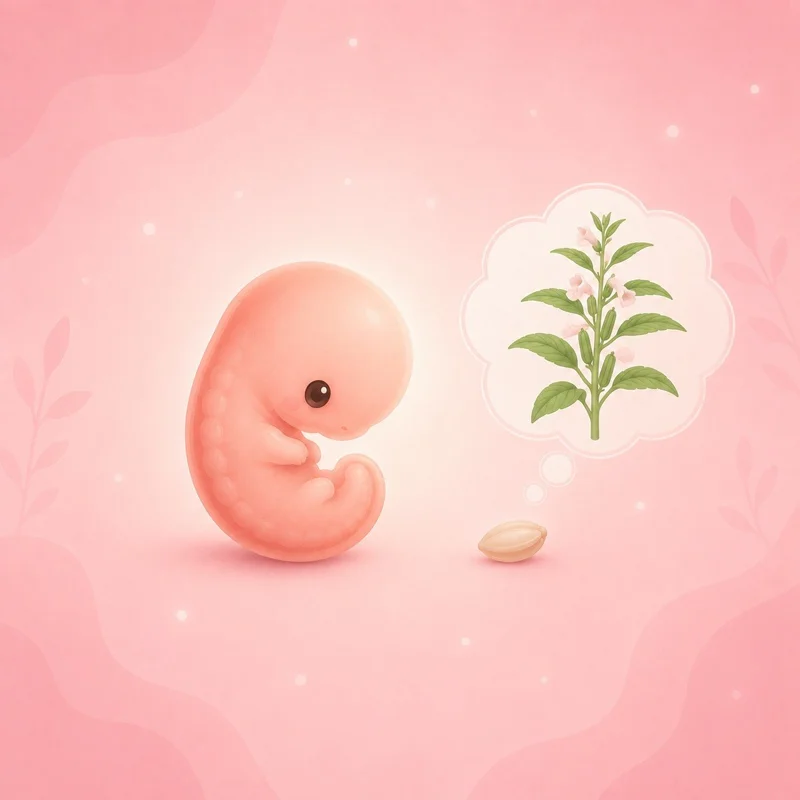
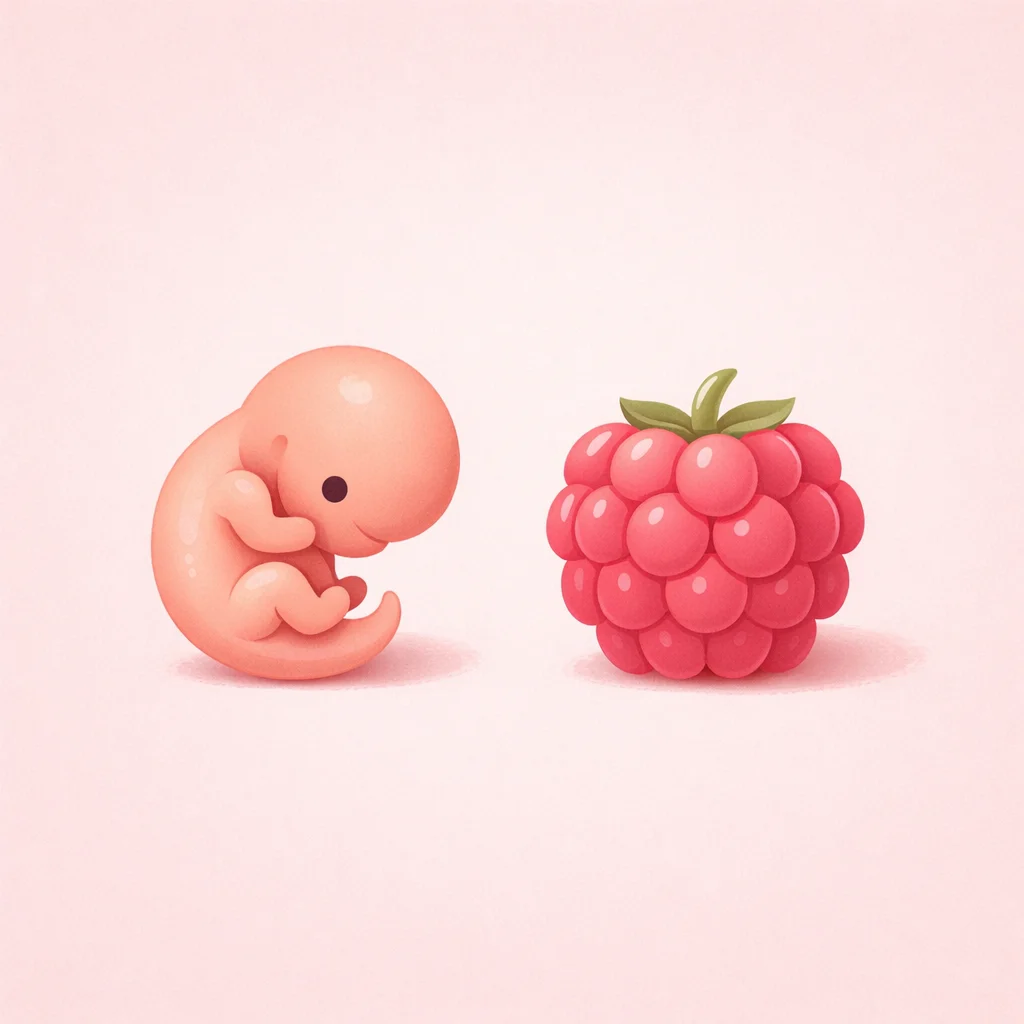
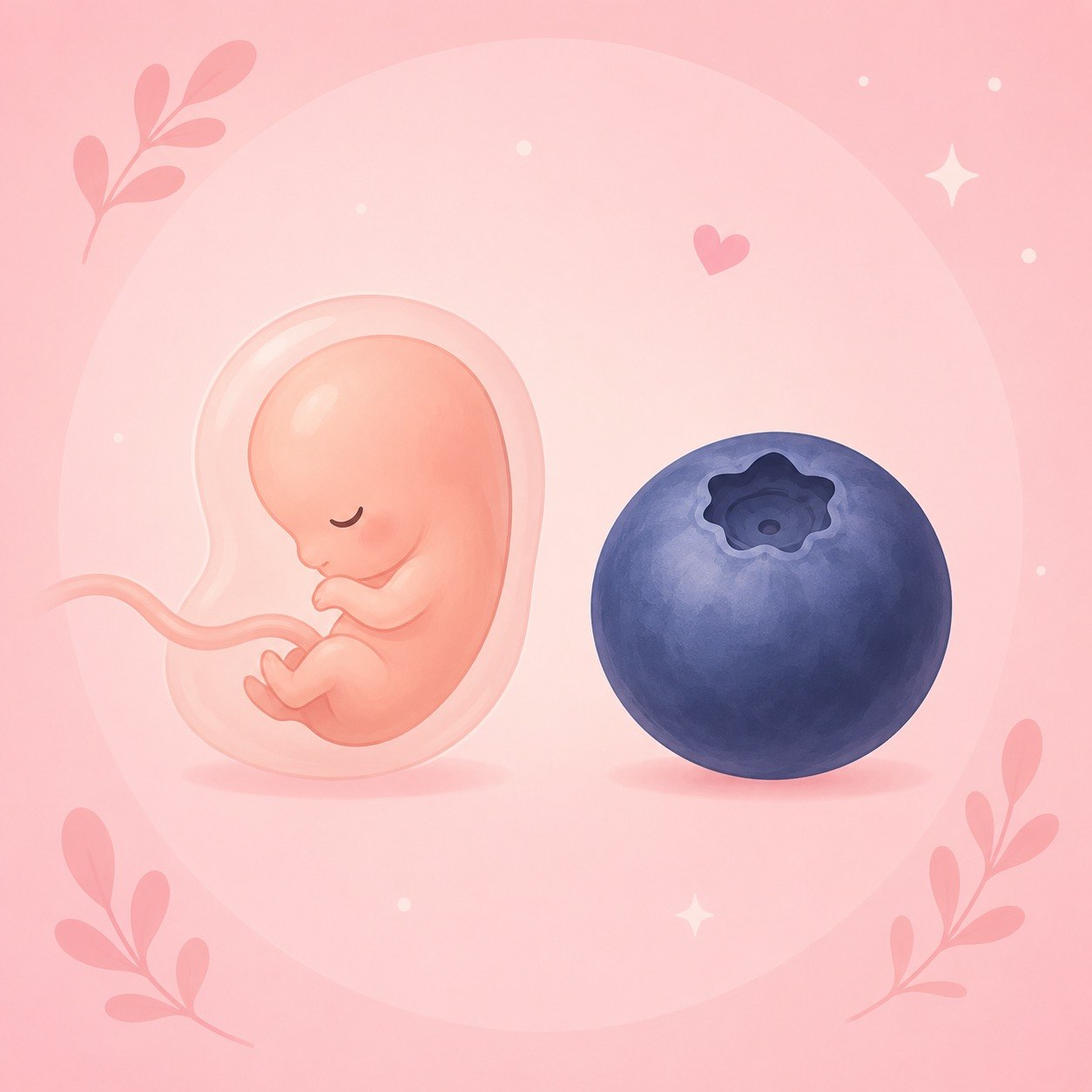
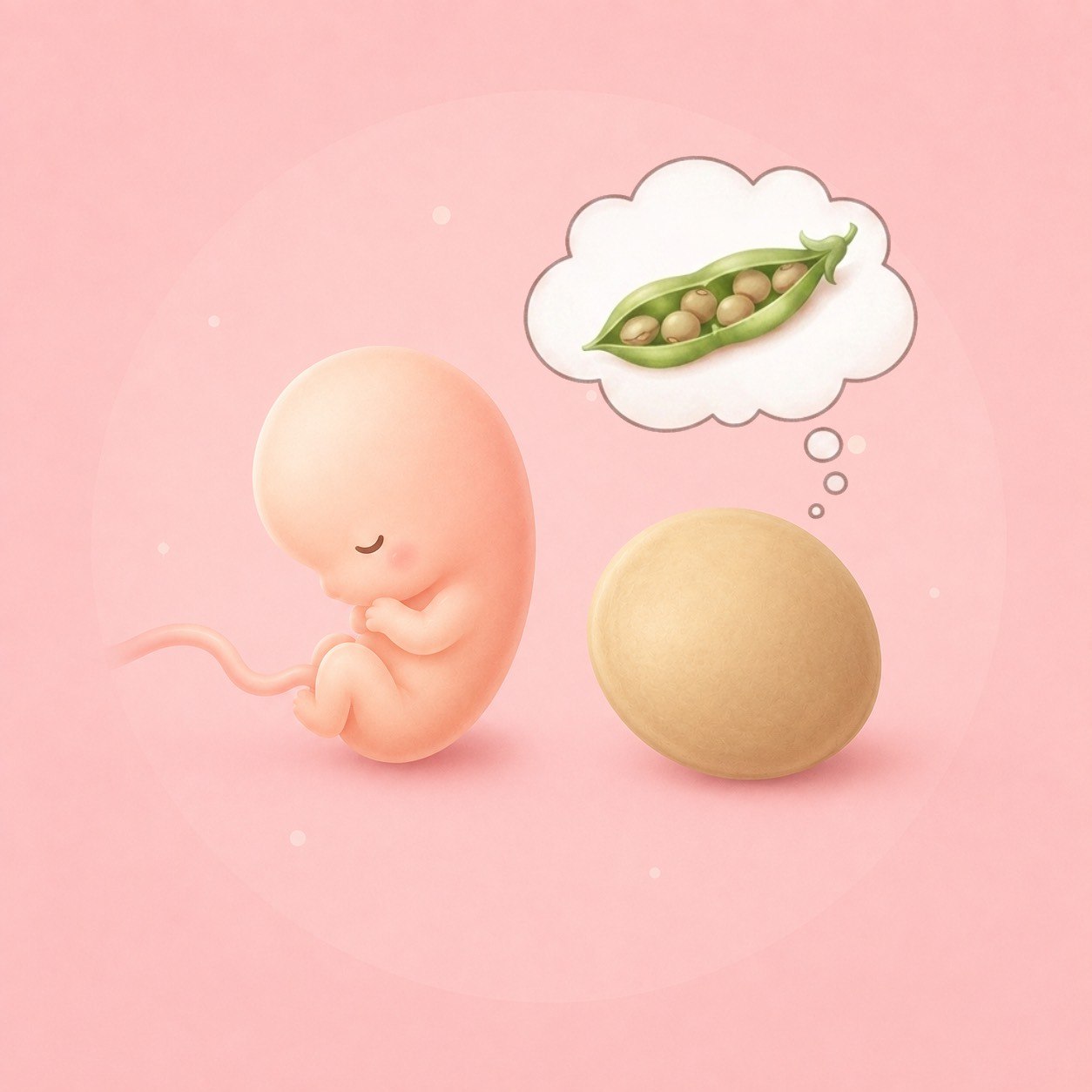
It’s still a cluster of cells (a blastocyst) on its way to the uterus. It measures barely 0.1-0.2 millimetres: invisible to the naked eye and on an ultrasound too. Don’t expect to see anything on a scan this week; the gestational sac only shows up from week 5-6.
Tips for week 3
- Keep taking your folic acid: your baby’s neural tube starts forming very soon, in the next few weeks.
- Avoid alcohol, tobacco and any medication without checking with your doctor from now on.
- Don’t obsess over the test: waiting a few more days avoids false negatives and needless worry.
- Write down the date of your last period so you can work out your weeks later.
Frequently asked questions
Is implantation bleeding my period?
No. Implantation bleeding is light, pink or brown, and lasts a day or two. A period is heavier and lasts several days. If you’re unsure about any bleeding, see your doctor.
Can anything be seen on an ultrasound in week 3?
No. The embryo measures under a millimetre. The first scan with a gestational sac is usually done from week 5-6.
Can I be pregnant and still get a negative test in week 3?
Yes, it’s very common. hCG is still minimal. The right thing is to wait for the missed period and repeat the test a couple of days later if you still have doubts.
When does hCG start being produced?
After implantation, towards the end of week 3. From then on it rises quickly, roughly doubling every 48 hours in the early weeks.
And now we reach the week where everything is noticeable: in week 4 I explain the missed period, the first symptoms and when to take the test. Remember this content is for information only: if you have any doubts, consult your doctor ❤️.