Baby Size by Week: Fruit Chart in cm and Grams
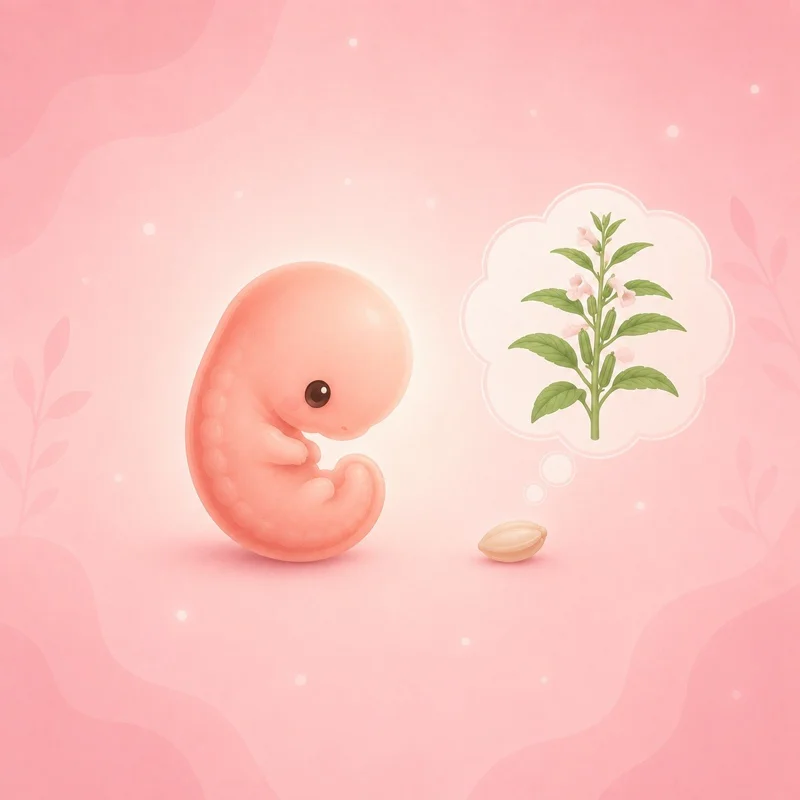
Every week someone messages me the same thing: “how big is my baby right now?” And the answer people actually want isn’t a number. It’s a fruit. A sesame seed, a raspberry, an avocado, a banana. ❤️
I’ve written a guide for each week of pregnancy, and they all end up in the same place: the size section. So I’ve pulled them together here, in one table, so you can see where you are and what’s coming next without opening twenty tabs.
One thing before you scroll: these are averages. Your baby can run a little ahead or a little behind and still be perfectly healthy. The chart is for picturing, not for comparing. I’ll walk you through the rest.
Baby fruit size chart: weeks 5 to 24
Here’s the table you came for, built from our own week-by-week guides. Each row links to that week’s article if you want the full picture.
| Week | Fruit | Length | Weight |
|---|---|---|---|
| Week 5 | Sesame seed | 2 mm | Under 1 g |
| Week 6 | Lentil | 4-6 mm | Under 1 g |
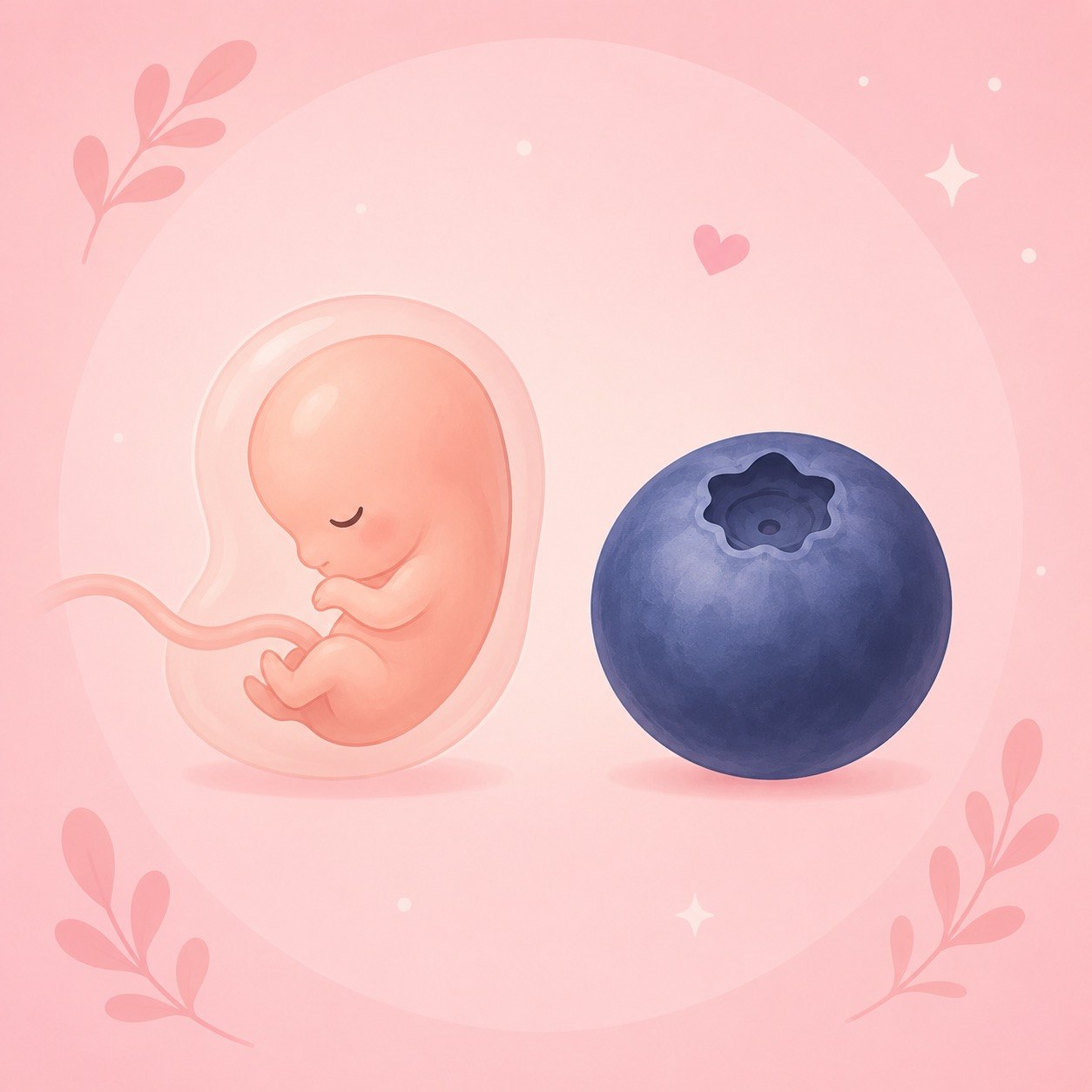
| Week 7 | Blueberry | 10 mm | Under 1 g |
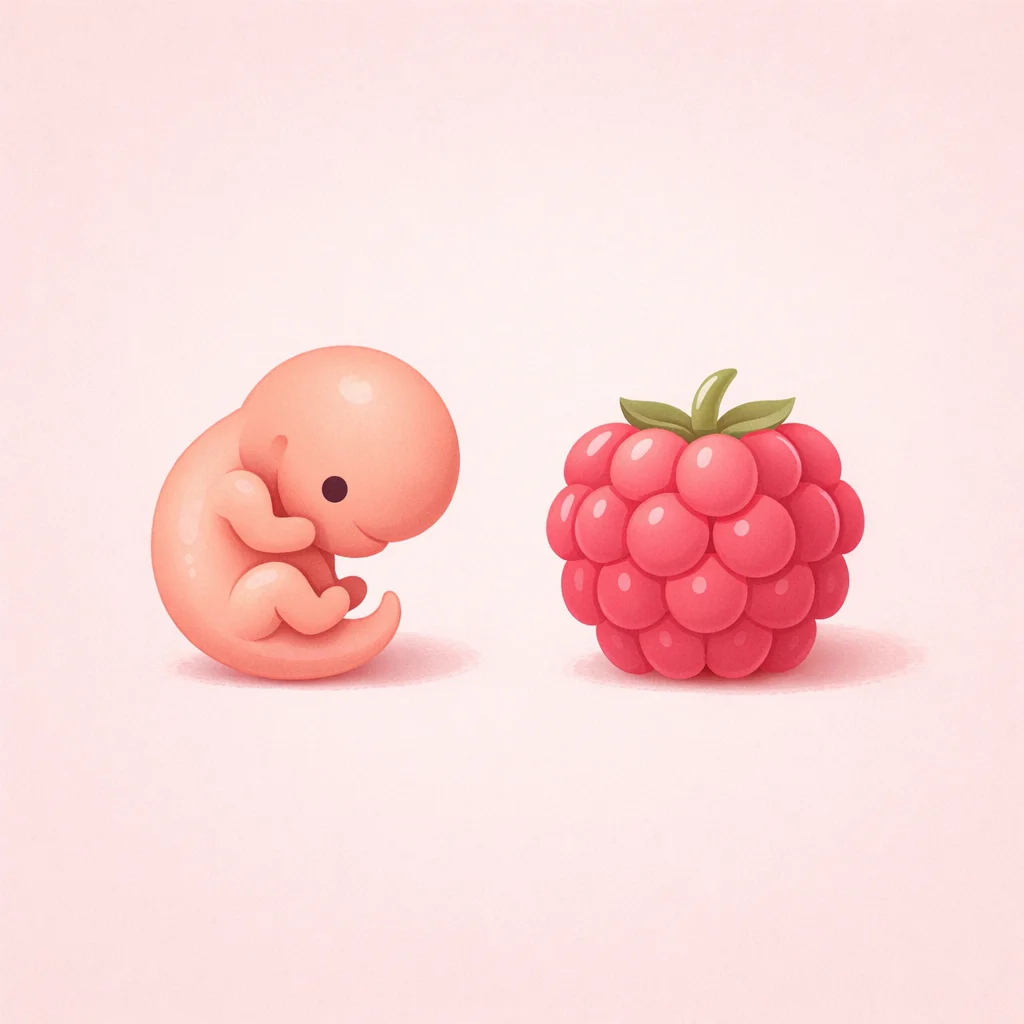
| Week 8 | Raspberry | 16 mm | 1-2 g |
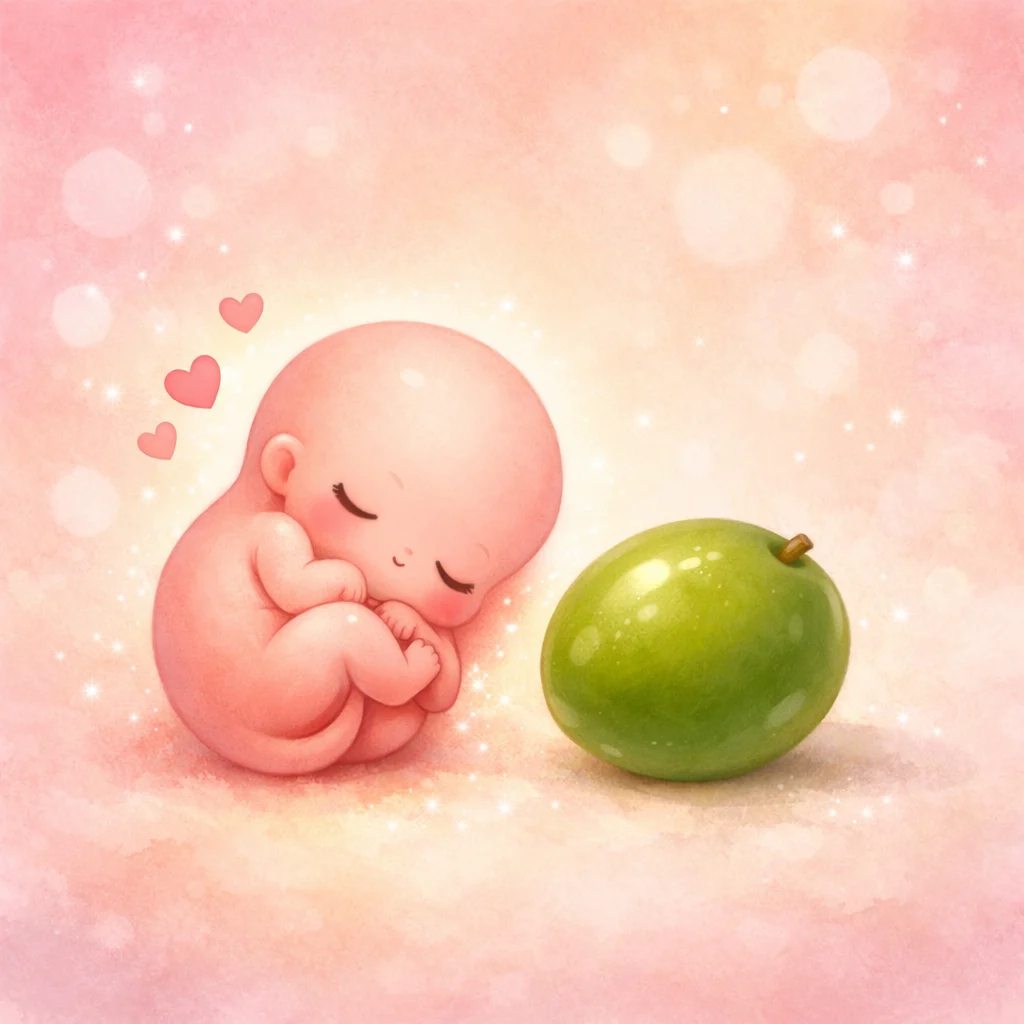
| Week 9 | Olive | 2.3 cm | About 2 g |
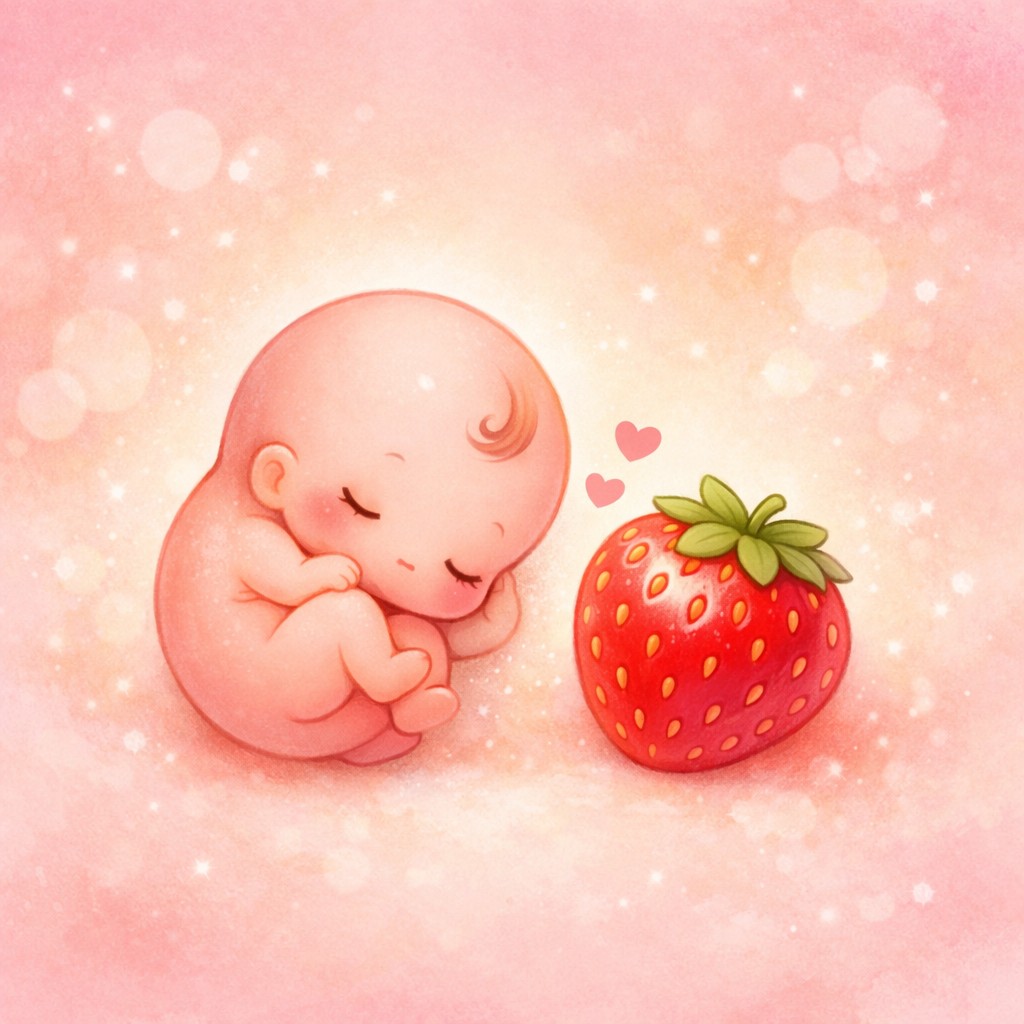
| Week 10 | Strawberry | 3 cm | 4-5 g |
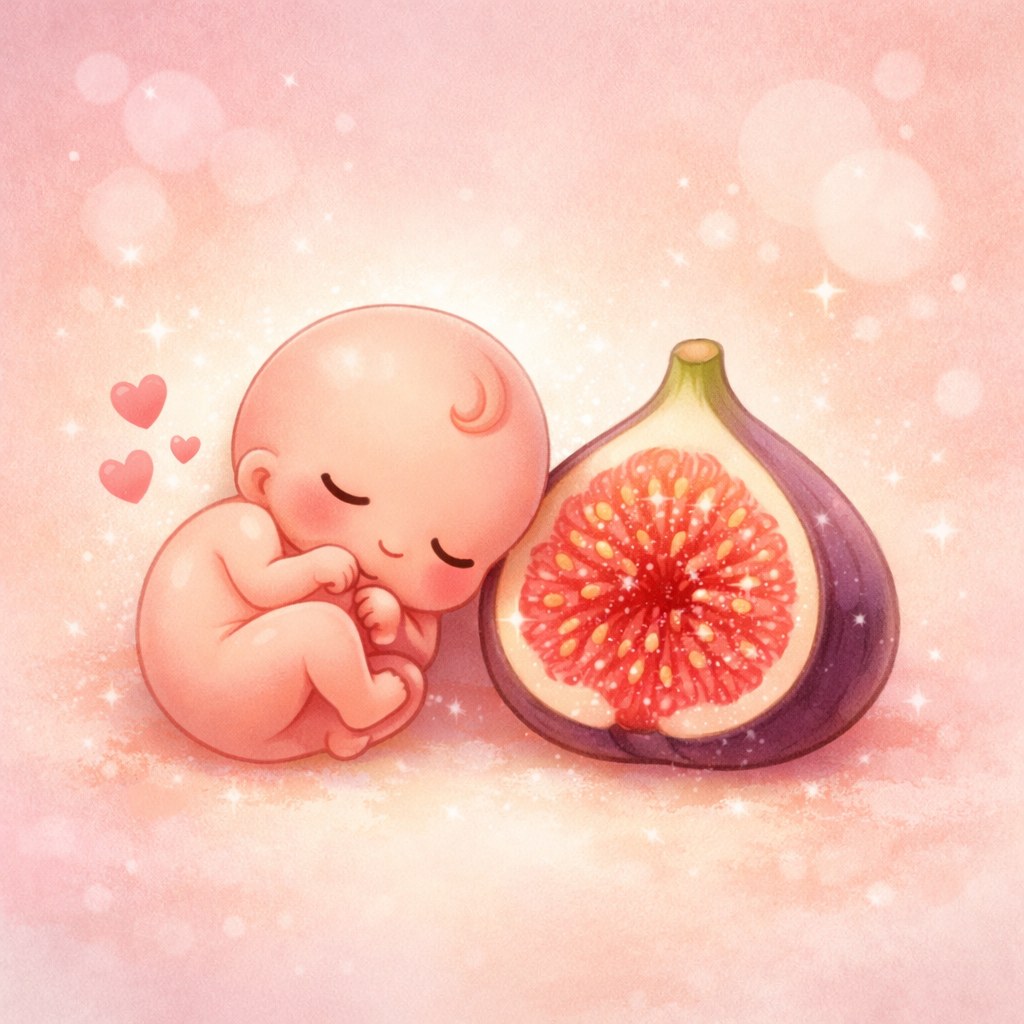
| Week 11 | Fig | 4.1 cm | About 7 g |
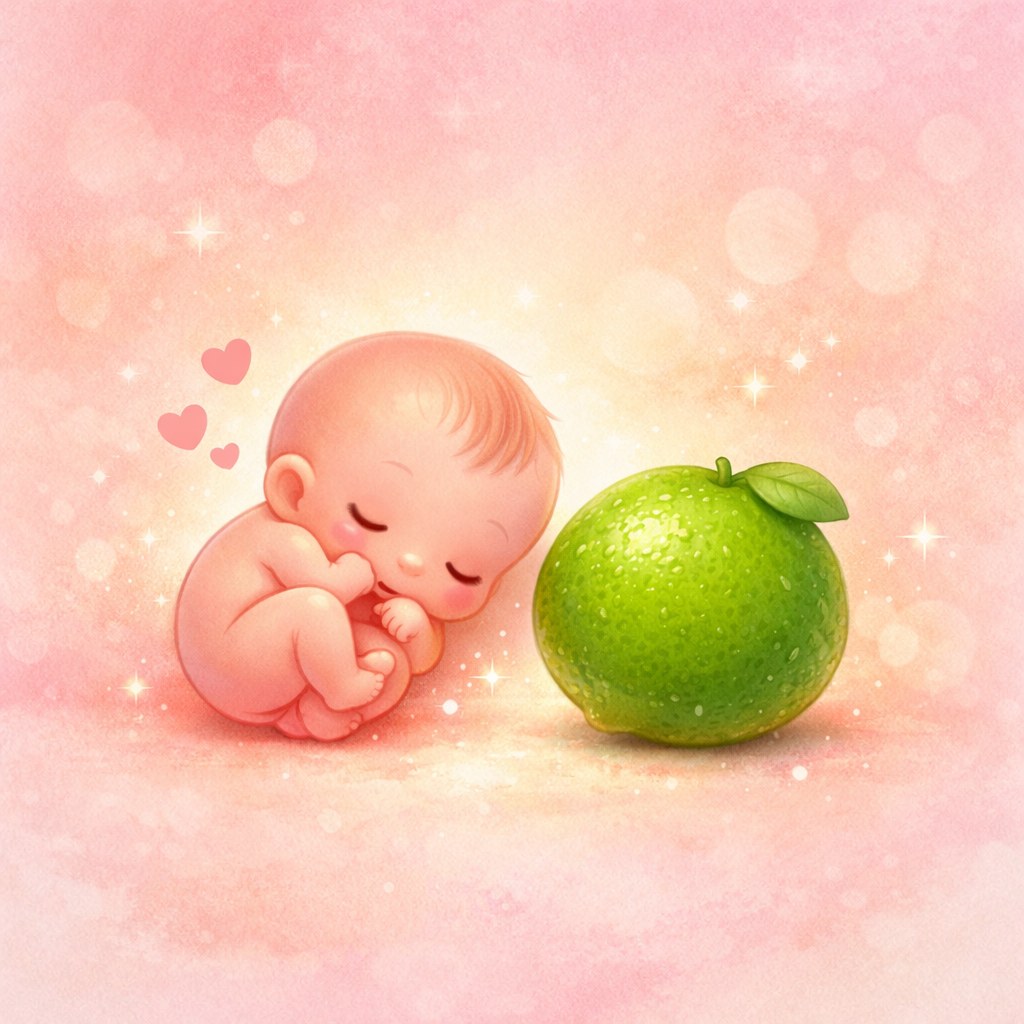
| Week 12 | Lime | 6 cm | About 14 g |
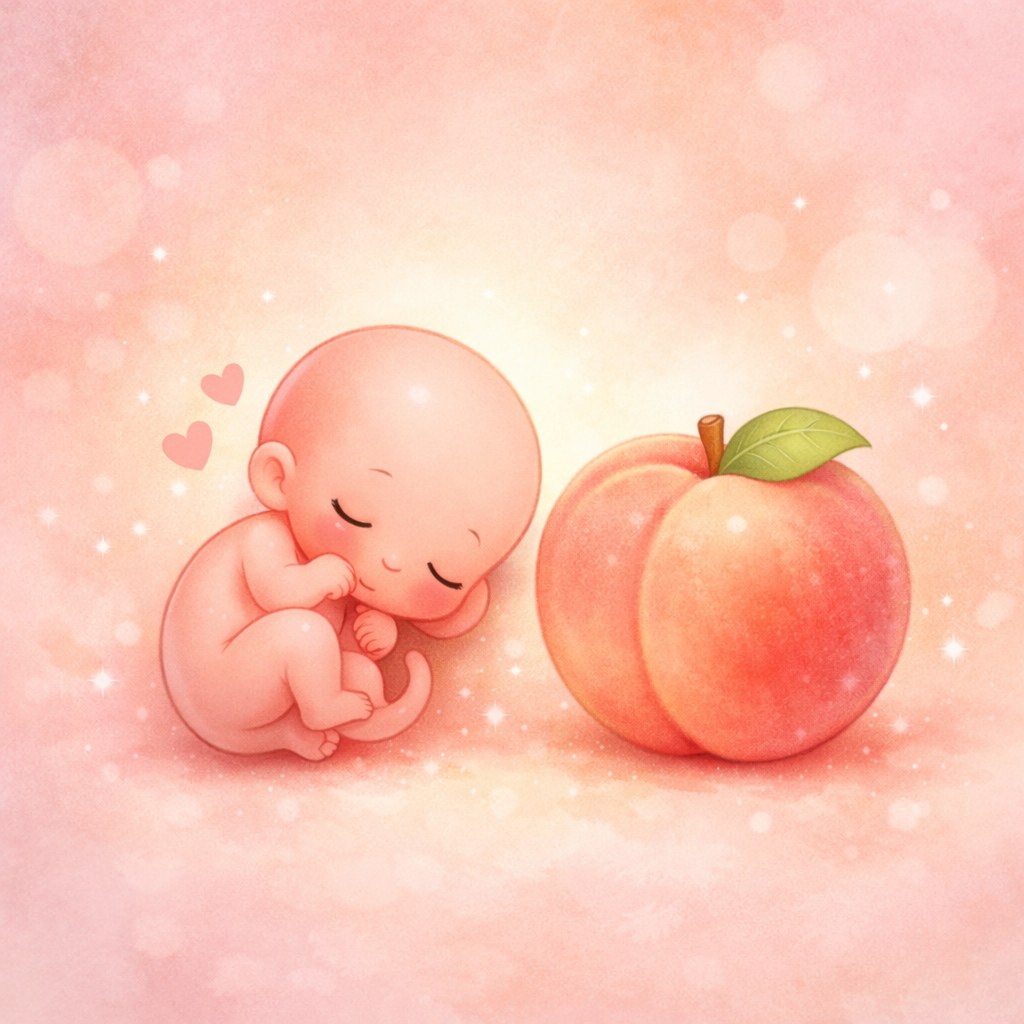
| Week 13 | Peach | 7.4 cm | About 23 g |
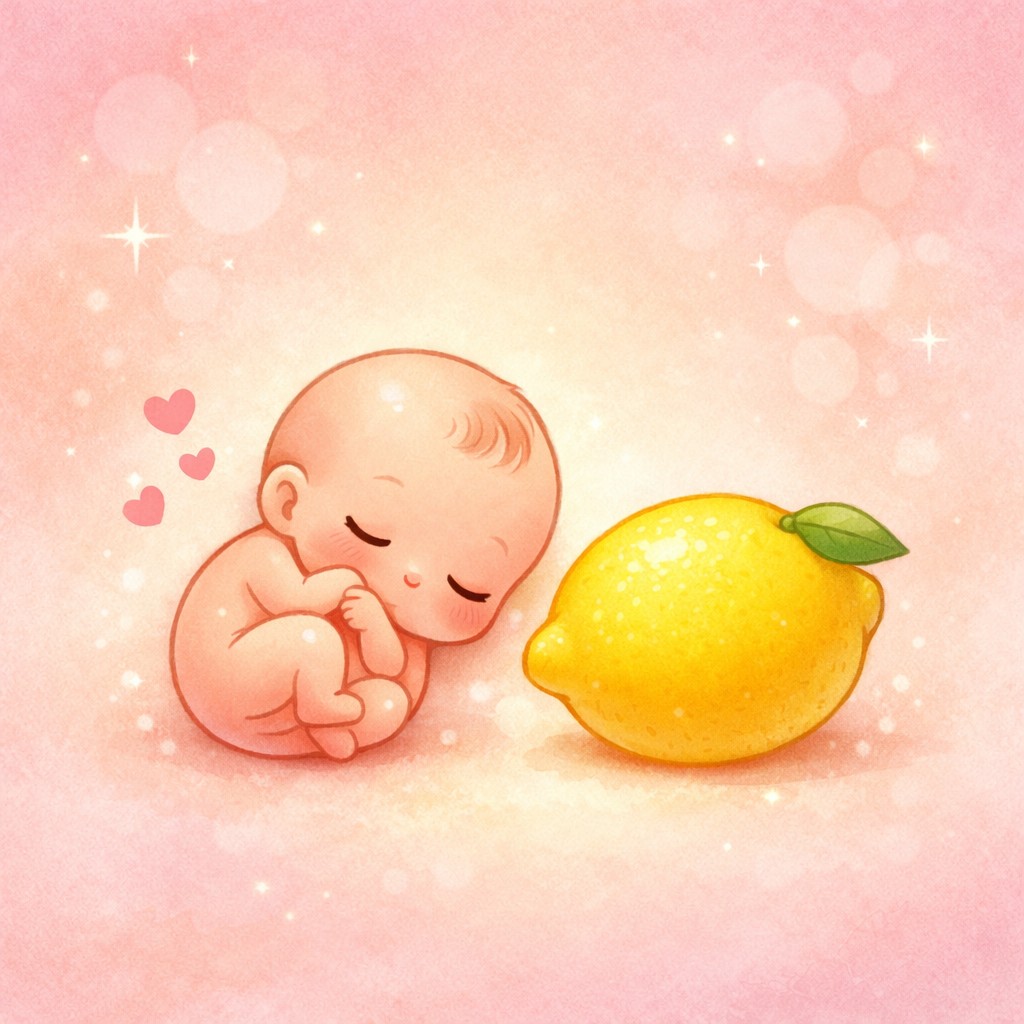
| Week 14 | Lemon | 8.7 cm | About 43 g |
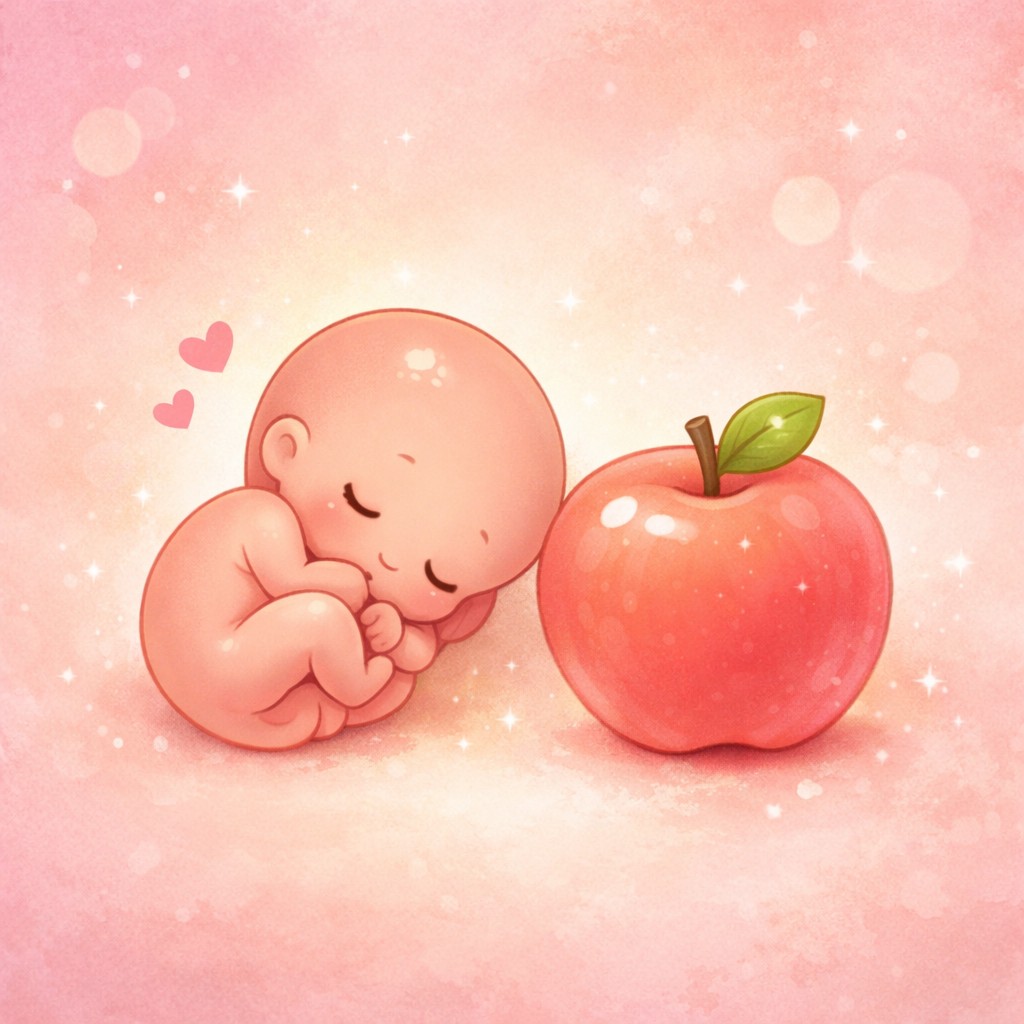
| Week 15 | Apple | 10 cm | About 70 g |
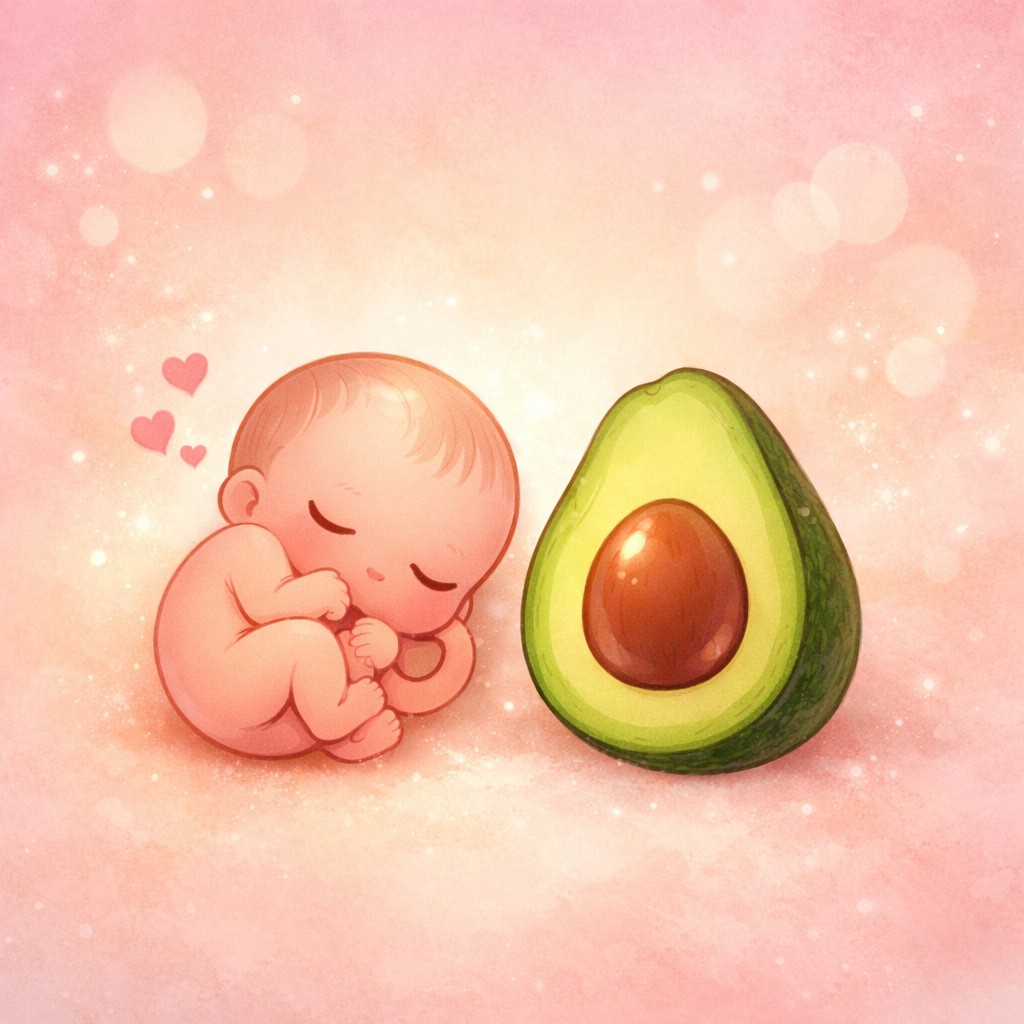
| Week 16 | Avocado | 11-12 cm | 80-100 g |
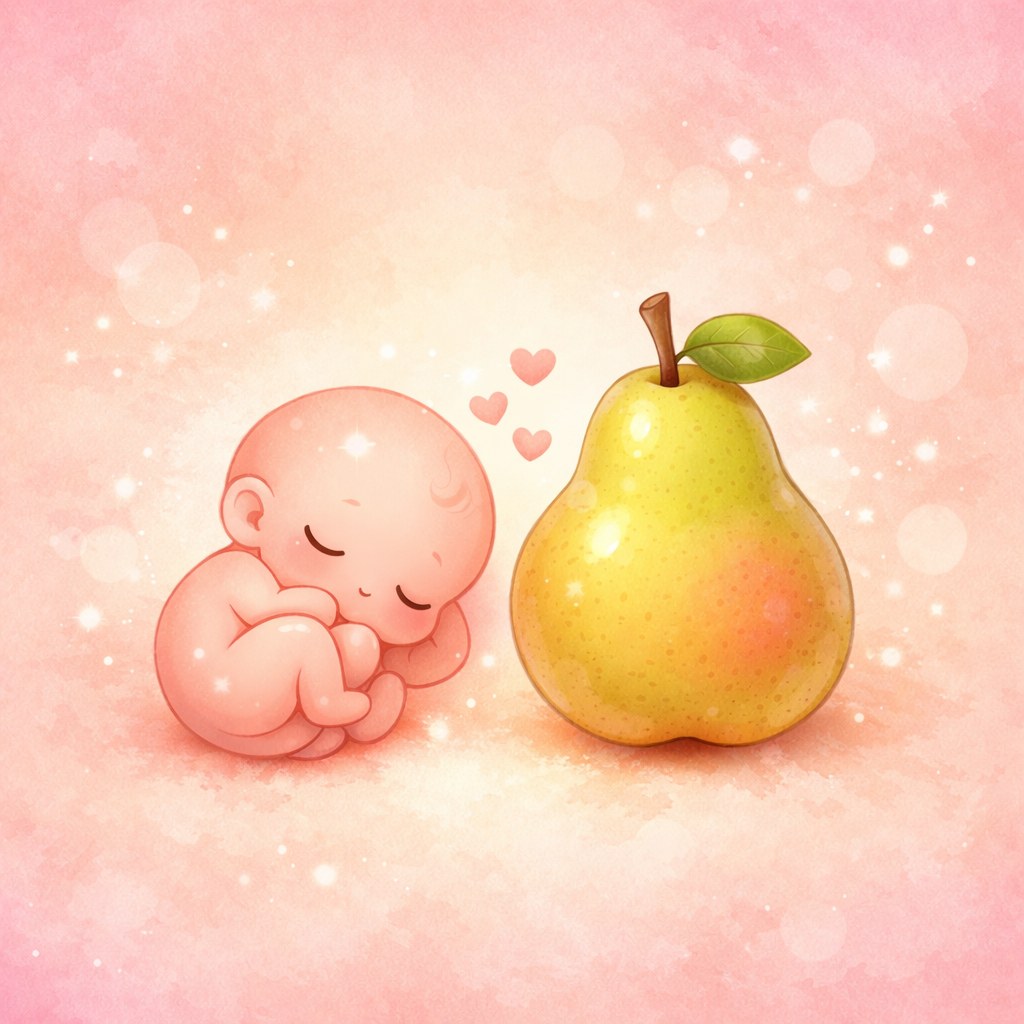
| Week 17 | Pear | 13 cm | 100-140 g |
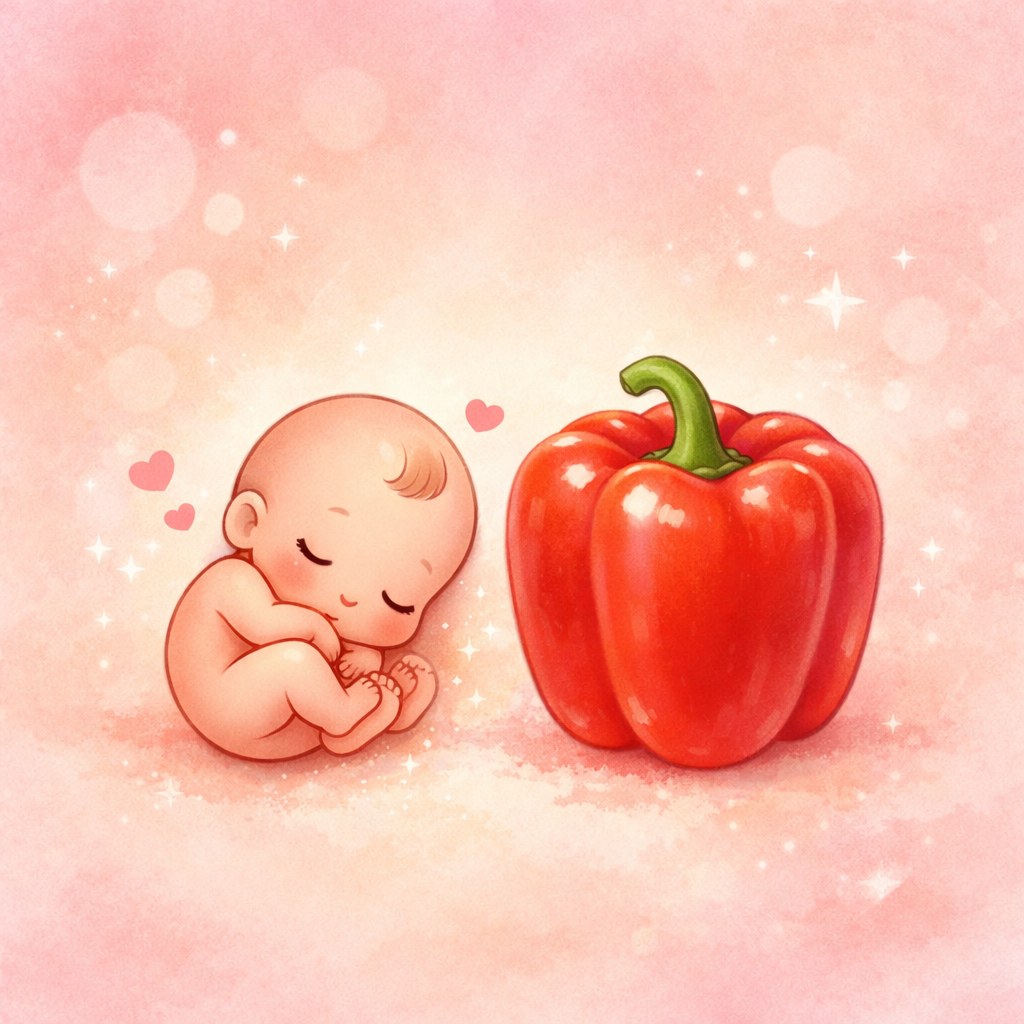
| Week 18 | Red pepper | 14 cm | 150-200 g |
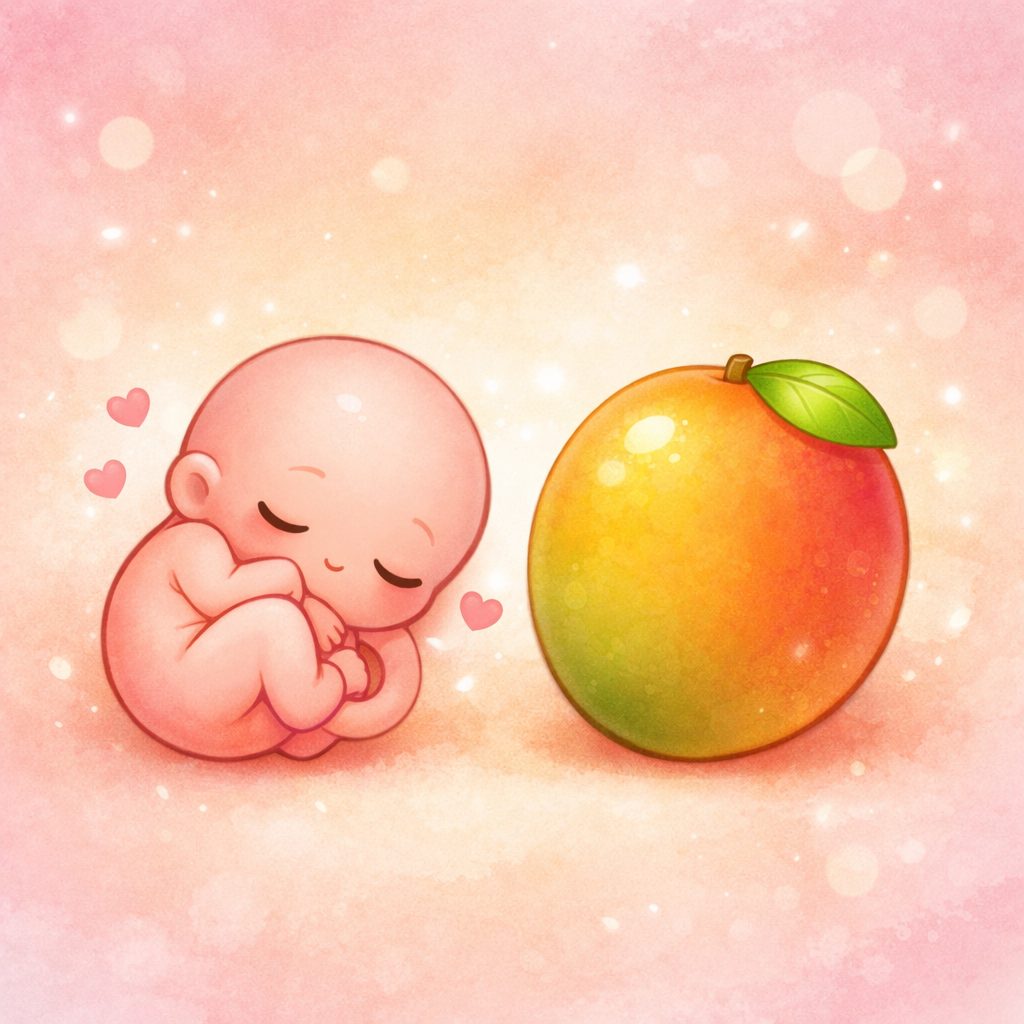
| Week 19 | Mango | 15 cm | 200-240 g |
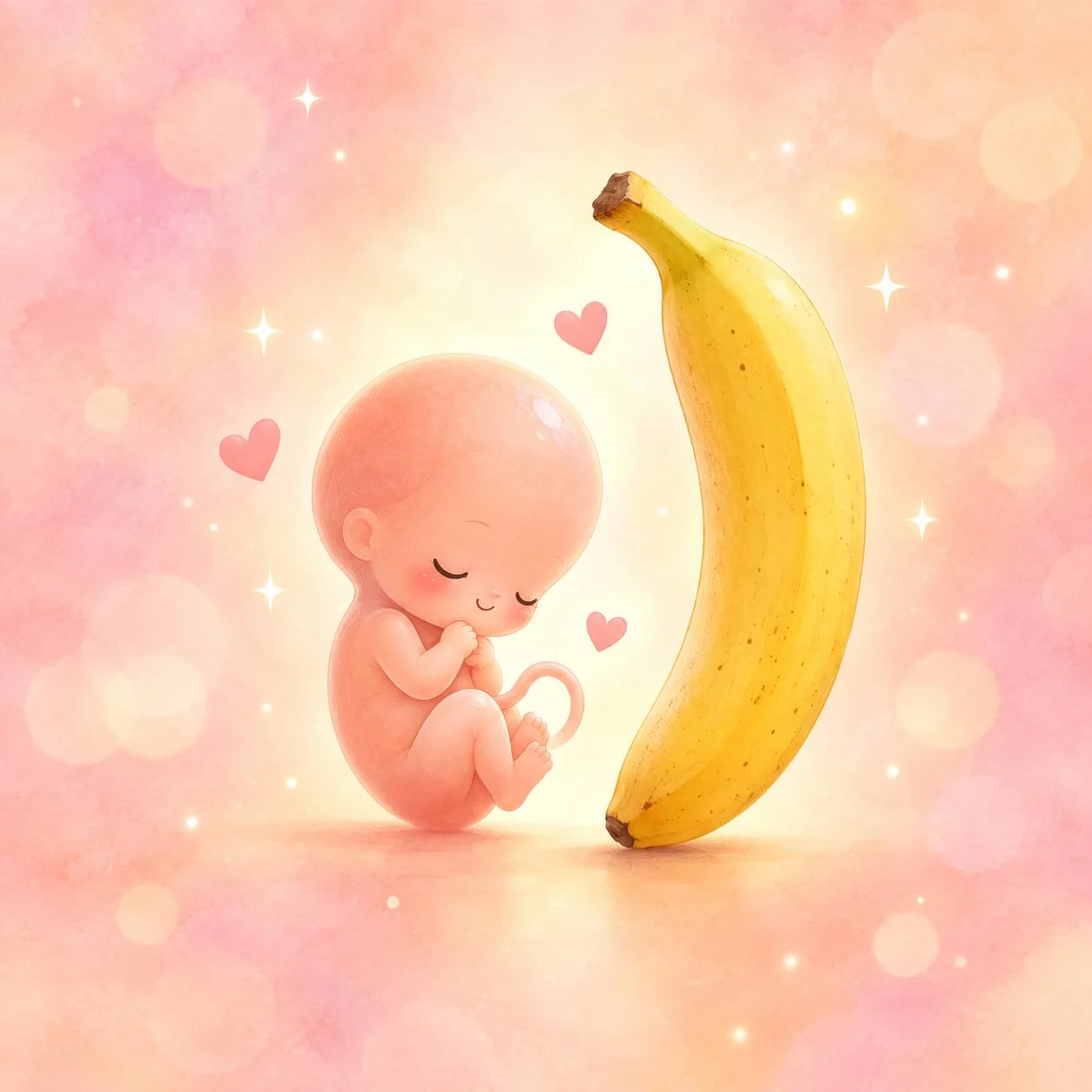
| Week 20 | Large banana | 25 cm | About 300 g |
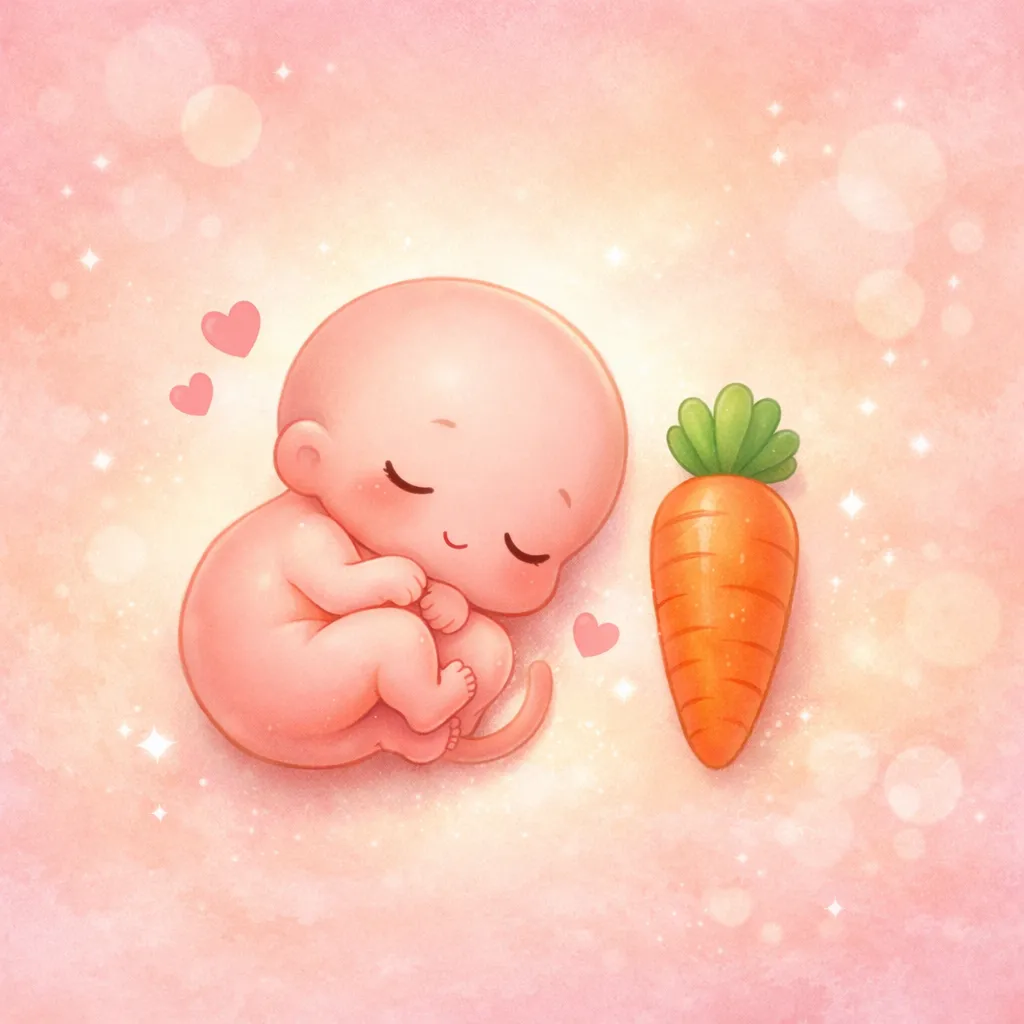
| Week 21 | Large carrot | 27 cm | About 350 g |
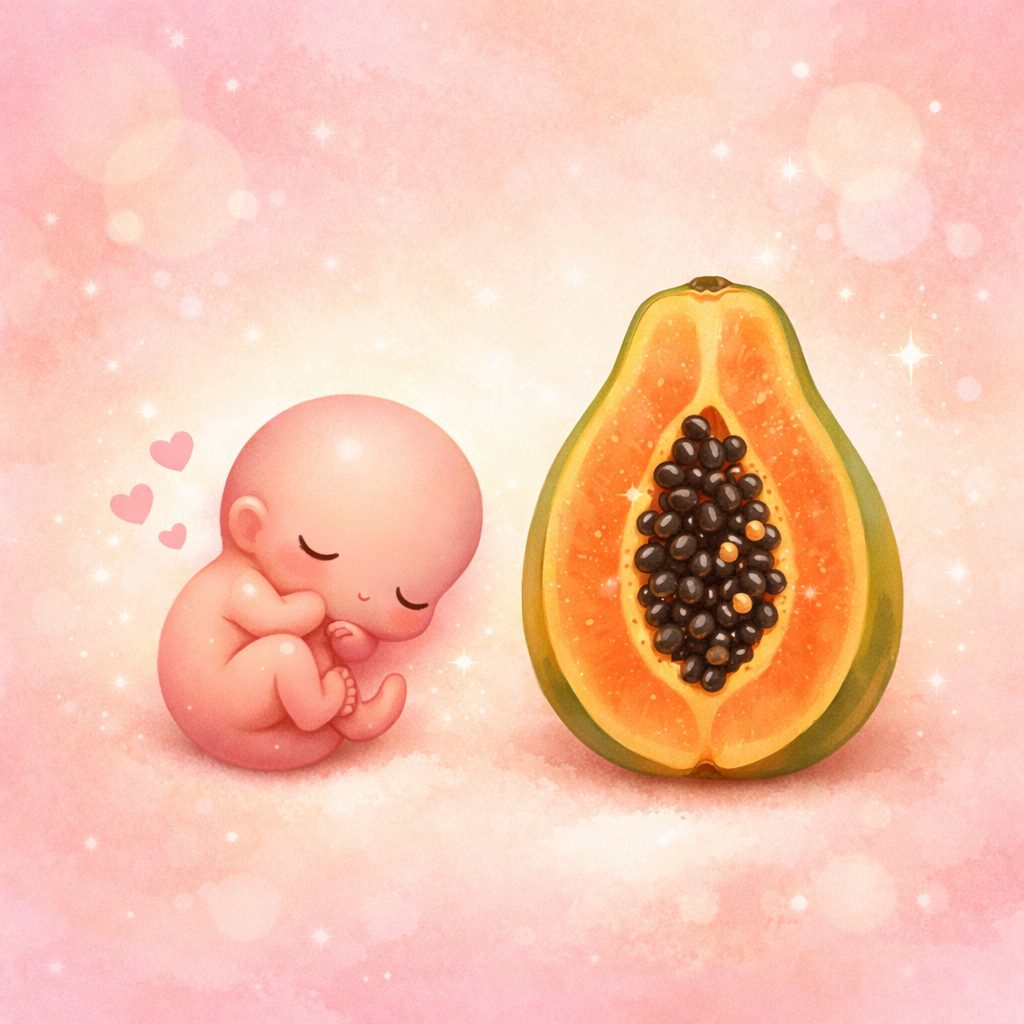
| Week 22 | Large papaya | 28 cm | 430-460 g |
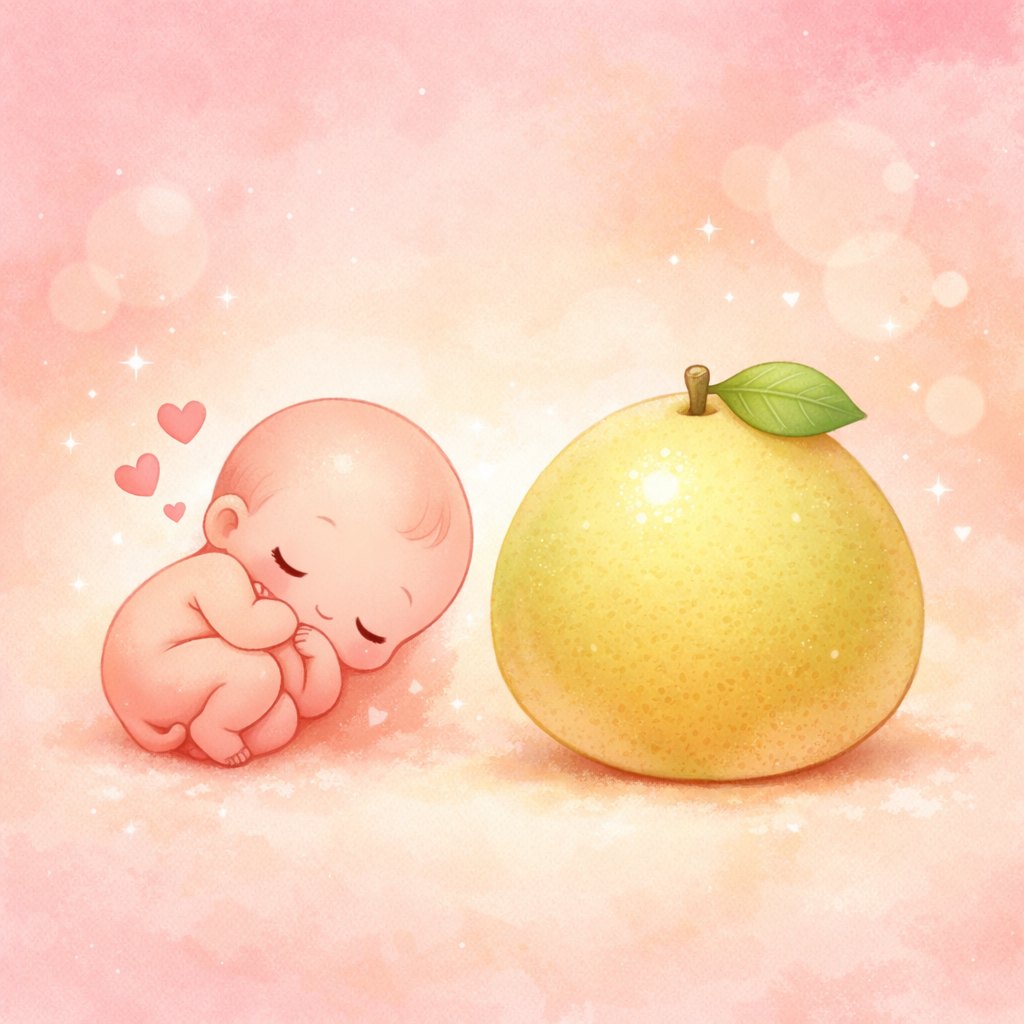
| Week 23 | Large grapefruit | 29 cm | 500-600 g |
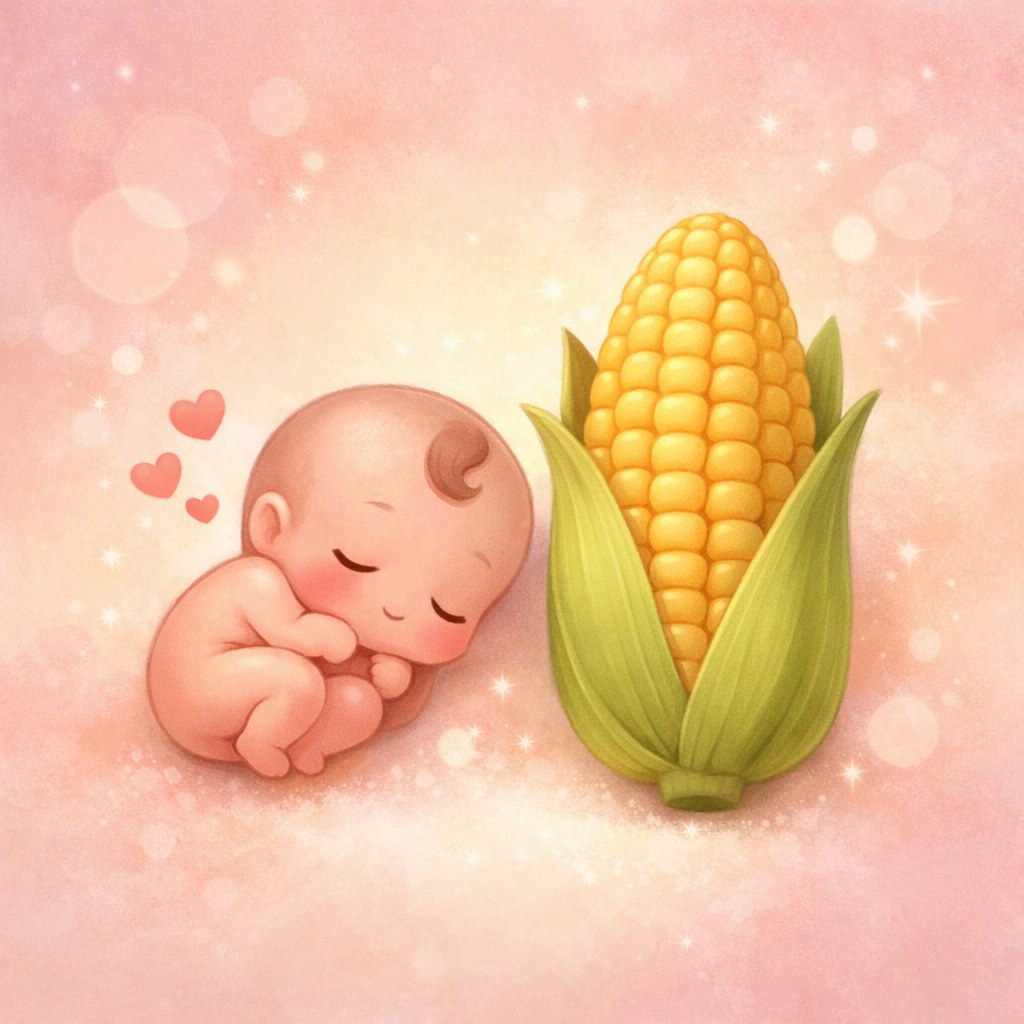
| Week 24 | Ear of corn | 30 cm | 600-700 g |
Weeks 25 to 42 will be added as their guides go live. If you want the whole journey in one place, it’s all here: pregnancy week by week.
How big is my baby at 8, 12 and 20 weeks?
These three weeks come up more than any others, so here’s the short version.
At 8 weeks your baby is about 16 millimetres long — a raspberry — and weighs almost nothing. That’s the week the fingers start to separate and the tail disappears. If you have a scan now, it looks like a tiny bean with a flickering heartbeat.
At 12 weeks it’s around 6 centimetres and 14 grams: a lime. This is the end of the first trimester and the week of the nuchal translucency scan, which is also when your due date gets confirmed or corrected. If the scan says 12 weeks and 4 days, that becomes your official gestational age, even if your period said something else.
At 20 weeks it’s about 25 centimetres from head to heel and roughly 300 grams, the size of a large banana. This is the halfway point and usually the anomaly scan, where all the measurements are taken properly for the first time. You’ll get a printout with several abbreviations on it — more on those below.
Why 20 weeks is where the numbers jump
Plenty of people notice that the length almost doubles between week 12 and week 20 and assume something dramatic happened. Nothing did, except the way we measure. Up to about week 13, babies are measured from crown to rump because their legs are tucked up. From around week 14 they stretch out and the measurement switches to head to heel. Same baby, different ruler.
Baby size by week in cm: what the numbers actually mean
The centimetre figures in the chart aren’t all the same kind of measurement, and that trips people up.
Weeks 5 to 13 use crown-rump length (CRL). It’s the single most reliable measurement of the whole pregnancy, which is why first-trimester scans are used to date it. A CRL that matches 9 weeks and 2 days is worth more than any calculation from your last period, especially if your cycles are irregular.
From week 14 onwards you get a set of measurements instead of one: biparietal diameter (BPD, the width of the skull), abdominal circumference (AC), femur length (FL) and sometimes head circumference. Add them together and a formula estimates the weight. That estimate carries a margin of roughly 10 %, so at 300 grams it could be 30 grams either way.
The weight is never measured directly. This is the bit most people don’t realise. Nobody puts the baby on a scale. The weight on your report is a calculation, and it gets less precise, not more, as the pregnancy goes on.
Why the fruit comparison is everywhere (and what it gets wrong)
Comparing a fetus to fruit isn’t an app invention, although the apps made it famous. Midwives were doing it decades ago, and for a good reason: you can hold a fruit in your hand. “Your baby weighs 300 grams” means nothing to most people. “Your baby is the size of a large banana” clicks instantly.
Where it goes wrong is when the comparison is treated as a measurement. I’ve had messages from women in tears because their baby measured 24 centimetres at 20 weeks instead of 25. One centimetre on a scan is a millimetre of cursor movement. It isn’t a diagnosis, and it isn’t a sign of anything.
So use the fruit to picture your baby. Use your sonographer’s report, and above all the trend across scans, to know whether growth is on track. Those are two different jobs.
Baby size by week animal and car parts: the other comparisons
Search “baby size by week animal” and you’ll find entire sites built on it. There’s also a whole genre of comparing babies to car parts, which I assume is aimed at partners who glaze over at the word “papaya”.
My honest take: these work the same way as fruit, only worse. A fruit has a stable size, everyone has held one, and the comparison lands immediately. An animal doesn’t: a rabbit can be a 300-gram kit or a four-kilo adult, and a “small dog” covers everything from a chihuahua to a beagle. The comparison becomes so loose it stops informing anyone.
If it makes you smile, enjoy it. If you want something you can actually picture, stick with fruit and centimetres. And if you want to know whether growth is normal, no comparison in the world will tell you that — only your baby’s own growth curve will.
If your baby measures small or large
Two scenarios cause most of the worry, so let’s deal with them plainly.
Measuring small. A baby at the 15th percentile is not a problem. Fetal growth restriction is suspected when a baby sits below the 10th percentile and there are signs it isn’t growing at the expected rate, or when the blood flow in the umbilical cord looks abnormal. That’s assessed across several scans spaced out over weeks, never from one measurement. And a small baby that keeps growing steadily is usually just a small baby.
Measuring large. Above the 90th percentile, your team may keep a closer eye on how the delivery is likely to go, and sometimes induction or a caesarean is discussed. That’s a clinical conversation based on the curve and your history, not on a single number on a printout.
In both cases the chart above is useless for deciding anything medical. It’s there so you understand the size, not so you can diagnose yourself at 2 a.m.
From here: trimester by trimester
If weeks blur into each other, this is the wider arc:
| Trimester | Weeks | What happens to size | Read more |
|---|---|---|---|
| First | 1 to 13 | From invisible to 7.4 cm: organs form and the baby goes from millimetres to centimetres | Week 13 |
| Second | 14 to 27 | From 8.7 cm to around 35 cm and from 43 g to nearly a kilo: bump appears, kicks arrive | Week 20 |
| Third | 28 to 40 | The big weight gain: most of the grams are added in these last twelve weeks | Week 24 |
Two tools I use myself when the maths gets confusing: the gestogram for your estimated due date, and the guide on pregnancy weight gain, because your weight and your baby’s weight are two different stories that often get muddled.
When to call your midwife or doctor
This page doesn’t replace a scan. Get in touch without waiting for your next appointment if:
- Your baby stops moving or moves much less than usual.
- You have vaginal bleeding, especially with pain.
- You have severe or one-sided abdominal pain that doesn’t ease.
- You notice fluid leaking from the vagina.
- You have a high temperature, severe dizziness or blurred vision.
- A scan shows growth has stalled between two appointments.
And if you don’t yet know whether you’re pregnant, you can take our free online pregnancy test to get a sense of your symptoms. You can also pass a few minutes with the finger pregnancy test game: it’s just a game, not a real test, and it says nothing about your baby’s size.
Frequently asked questions
How big is my baby at 12 weeks?
About 6 centimetres crown to rump, weighing around 14 grams — the size of a lime. It’s the end of the first trimester and the usual window for the nuchal translucency scan.
How much does a baby weigh at 20 weeks?
Roughly 300 grams, about the size of a large banana, and around 25 centimetres head to heel. From week 14 onwards the length is measured with the legs stretched out.
Is it normal for my baby to be below the chart?
Usually, yes. These are averages and the normal range is wide. What matters is that your baby follows their own curve, not that they match a table. A consistently low percentile gets investigated, but a single low reading often doesn’t.
How accurate is the fruit comparison?
Not very, and it isn’t meant to be. It’s a visual aid, not a measurement. Two different sites can give two different fruits for the same week and both are fine.
How big is a baby at birth?
Typically 48 to 52 centimetres and between 2.5 and 4 kilos, with huge variation between healthy babies. Don’t try to predict the birth weight from a 24-week chart — too much changes in the last trimester.
Can a scan tell me how much my baby weighs?
Yes, but only as an estimate. It’s calculated from head diameter, abdominal circumference and femur length, with a margin of around 10 %. The further along you are, the bigger that margin gets in grams.
Does baby size differ by sex?
Only slightly, and only near term, when boys tend to weigh a little more. In the weeks covered by this chart the difference is far too small to be useful.
When is size measured most accurately?
The crown-rump length between weeks 8 and 13 is the most reliable measurement of the entire pregnancy. After that, measurements are mainly for tracking the growth curve rather than dating the pregnancy.
This page is informational only and does not replace advice from your doctor or midwife. Every pregnancy is different, and only your maternity team can assess your baby’s growth using your scans and history.
Sources
- NHS — Week-by-week guide to pregnancy
- NICE — Antenatal care (NG201)
- ACOG — Fetal growth restriction (Practice Bulletin)
- ACOG — Ultrasound exams
- MedlinePlus — Pregnancy
- WHO — Preterm birth
- NHS — 12-week scan