Pregnancy Week 6: Symptoms, Ultrasound and Baby Size
Pregnancy week 6 is one of the most intense: you’ve already confirmed you’re pregnant (or you will very soon) and the symptoms are making themselves felt. It’s also the week when, finally, your baby’s tiny heart starts to beat. Let me tell you what’s happening, which symptoms are normal and when you might see it on your first ultrasound ❤️.
If you’re coming from pregnancy week 5, this week is the natural follow-up to everything I told you there. And if you’d like an overview of all the stages, take a look at our pregnancy week by week guide.
What is pregnancy week 6?
Pregnancy weeks are counted from the first day of your last menstrual period (your LMP), not from conception. That means in week 6 you’re about 4 weeks past fertilisation, and your baby is already well settled in your uterus.
It’s the moment when the pregnancy starts to feel “real”: the embryo’s heart begins to beat, the brain, face and limbs are forming, and your hCG hormone levels are at their peak — which is exactly why many women feel more symptoms now than at any other point.
When can I have my first ultrasound?
The first recommended ultrasound is usually done between week 6 and week 8. In week 6 it’s already possible to see:
- The gestational sac and the embryo inside it.
- Towards the end of the week, your baby’s heartbeat (although sometimes you have to wait until week 7 to see it clearly).
If you haven’t confirmed your pregnancy with a test yet, this is a good week to do it: hCG levels are already very high and the result will be reliable. You can take our free online pregnancy test for some guidance from your symptoms, and if you fancy a bit of fun, try our fingerprint game — it’s just a game, not a real test.
Which symptoms are normal in week 6?
In week 6 symptoms tend to peak, because hCG reaches very high levels. It’s normal to notice:
- Nausea, with or without vomiting: although they’re called “morning sickness”, they can strike at any time of day.
- Intense tiredness: your body is building the placenta and your baby’s heart.
- Tender, swollen or tingling breasts: rising progesterone and estrogen doing their thing.
- Frequent urination: your uterus is still pressing on your bladder.
- Aversions to smells and foods: a smell you used to love can now turn your stomach.
- Cramps and discomfort in the lower belly, similar to period cramps.
- Mood swings and cravings: your hormones are in full swing.
Feeling none of this? Don’t worry: every pregnancy is different and many women sail through the first trimester with barely any symptoms. Feeling nothing is also normal.
How big is the baby in week 6?
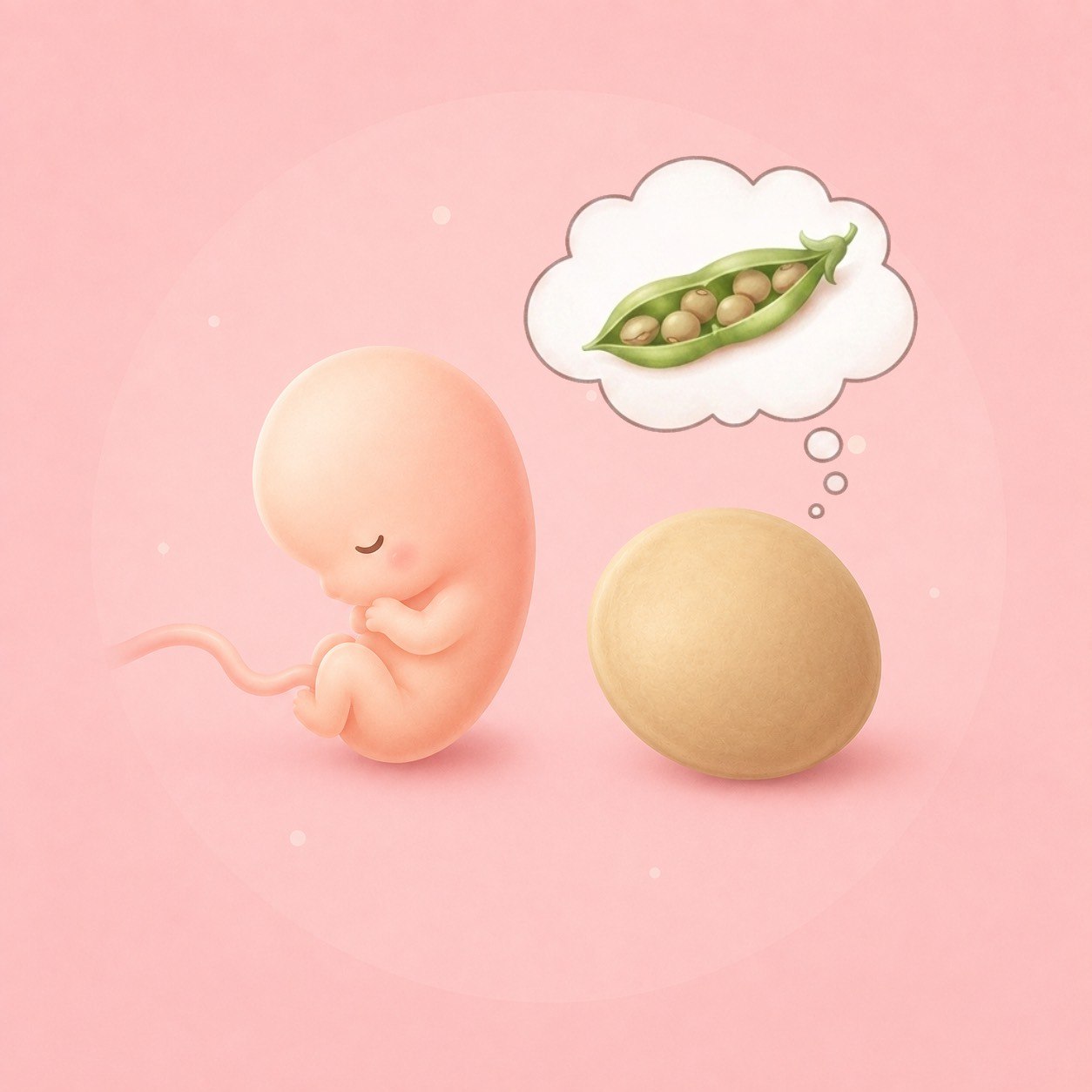
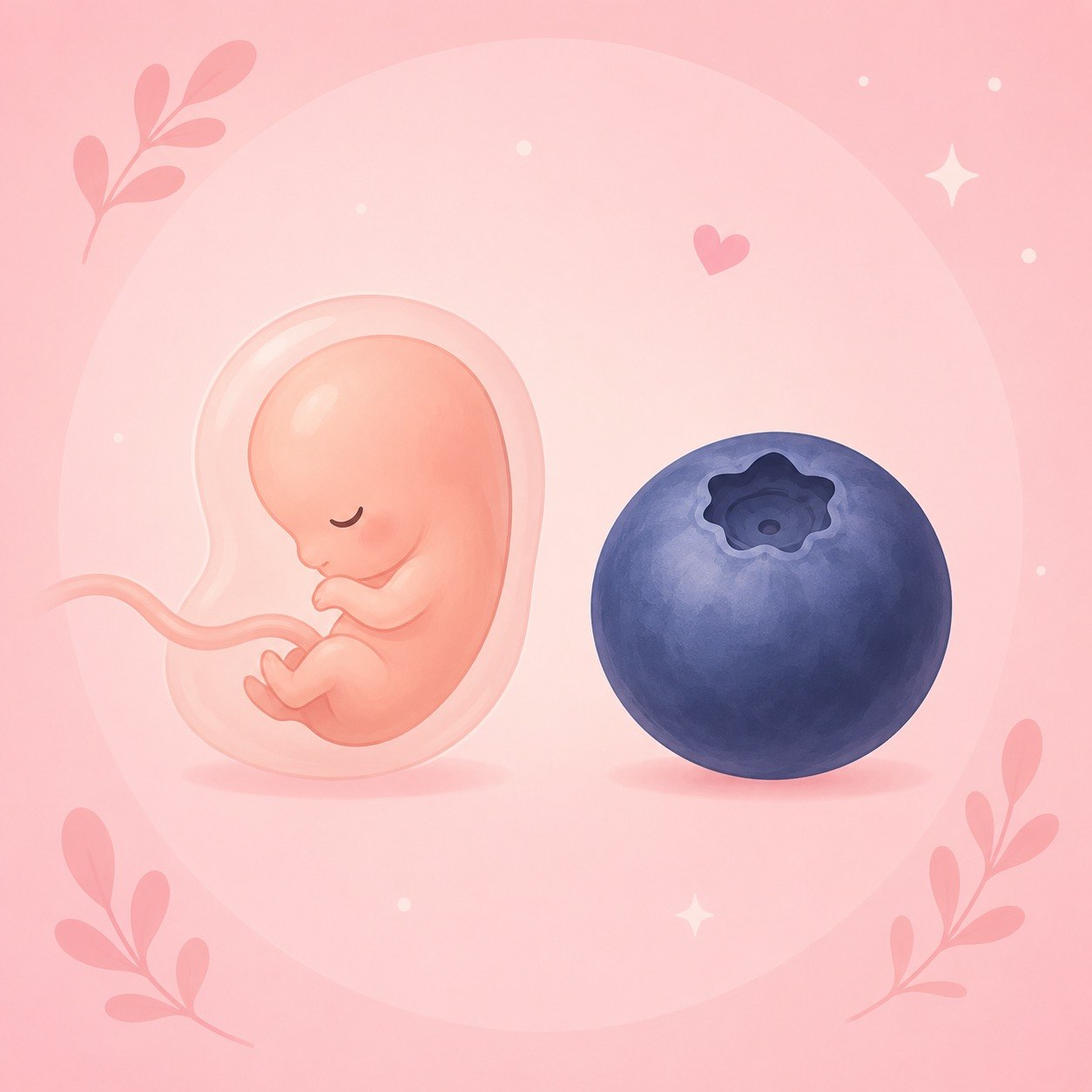
The embryo in week 6 measures about 4 to 6 millimetres: the size of a lentil. Still tiny, but a real revolution is happening inside:
- The heart is already beating and pumping blood around a body that isn’t even a centimetre long yet.
- The neural tube is forming, which will become the brain and spinal cord.
- The eyes, ears and the little buds that will become arms and legs are starting to take shape.
It’s an amazing moment: your little one already has a beating heart!
Tips for week 6
- Book an appointment with your gynaecologist for the first check-up and first ultrasound (usually between week 6 and 8).
- Keep taking your folic acid: it’s essential for the neural tube development happening right now. I tell you all about it in my article on folic acid in pregnancy.
- Eat little and often to ease the nausea: an empty stomach usually makes it worse.
- Stay well hydrated and avoid alcohol and tobacco from now on.
- Rest whenever you can: the tiredness of these weeks is real and your body will thank you.
- Calculate your estimated due date with the gestogram and check which week you’re in with the how many weeks pregnant am I guide.
If your vomiting is very frequent and you can’t even keep fluids down, mention it to your doctor: it may need specific management.
Frequently asked questions
Which month of pregnancy am I in at week 6?
You’re in the second month of pregnancy: weeks 5 to 8 make up month 2. Remember the count starts on the first day of your last period, not at conception.
Can you see the heartbeat in week 6?
The heart starts beating at the end of week 6 or in week 7. On the first ultrasound (between week 6 and 8) it’s often visible, although sometimes you have to wait a few more days to see it clearly.
Is it normal to have a lot of nausea in week 6?
Yes. Nausea usually reaches its peak around these weeks because hCG is at its highest. Eating little and often usually helps. If the vomiting is intense, consult your doctor.
How big is the baby in week 6?
Between 4 and 6 millimetres, roughly the size of a lentil. The embryo’s full shape isn’t distinguishable on an ultrasound yet.
Can I take a pregnancy test in week 6?
Yes, with a very reliable result: hCG levels are already high. If the test is negative but you still have symptoms or a missed period, wait 2 or 3 days and repeat it.
Sources
- MedlinePlus — Fetal development
- WHO — Antenatal care
- NHS — Pregnancy week by week
- ACOG — How your fetus grows during pregnancy
- NHS — Tiredness in pregnancy
- NHS — Vomiting and morning sickness
Remember this article is for information only. If you have any questions about your health or think you might be pregnant, consult your doctor. He or she can guide you with the right tests and support you in this very special moment ❤️.