Pregnancy week 18: symptoms, baby size and tips
Pregnancy week 18 is often one of the most exciting of the whole second trimester. Your baby is now the size of a red bell pepper, their skeleton keeps hardening without stopping and, very importantly, for many mums this is the week they first feel their baby move. It’s a beautiful moment — let me walk you through it, as always ❤️.
If you’re coming from pregnancy week 17, you’re on a great track. And to have the whole path at hand, check out our pregnancy week by week guide.
What is pregnancy week 18?
As always, pregnancy weeks are counted from the first day of your last period (LMP), not from conception. In week 18 you’re about 16 weeks from fertilisation, entering your fifth month of pregnancy (weeks 18–21) and still right in the second trimester, which runs from week 13 to week 28.
You’re past the halfway point of this trimester, the one many women find easiest: you often have more energy, fewer symptoms and you start to enjoy the bump, which shows more every week. Your uterus is clearly above your pubic bone and your bump is starting to be quite visible.
Your baby’s first movements: the big sign of week 18
One of the most exciting things about these weeks is feeling your baby move for the first time. Although every pregnancy is different, it’s common for the first movements to be felt between weeks 18 and 22.
- If you’ve been pregnant before, you might already notice little flutters, bubbles or tickles that will soon turn into kicks.
- If it’s your first pregnancy, don’t worry if you feel nothing yet: the first movements usually arrive around week 20 or later.
These first movements are often felt like butterflies in your stomach, gas bubbles or a little fish moving around. As the weeks pass they’ll become clearer and stronger. If you still feel nothing, it doesn’t mean anything is wrong with your baby: every mum and every pregnancy has its own rhythm.
How is your baby developing in week 18?
Your baby is still growing at a dizzying pace. These are the highlights this week:
- Their skeleton keeps calcifying: the cartilage is turning into bone, especially in the arms, legs and spine. Their heartbeat is easy to pick up with a Doppler.
- Their nervous system matures: the neurons in their brain start to be covered with a substance called myelin, which speeds up signal transmission. Their brain keeps growing fast.
- Their hearing is sharpening: the tiny ear bones are in place and they pick up sounds from outside: your voice, your heartbeat, soft music.
- Their eyes face forward: although their eyelids are closed, their eyes are well placed in their face and they may start to perceive light.
- Their vocal cords form, so everything is ready for that cry a few months from now.
- Lanugo grows: that super-fine hair covering their skin for protection which, along with vernix, keeps them safe in the amniotic fluid.
- Meconium keeps forming in their gut: their intestines already practice moving.
If you haven’t taken a test yet, don’t worry: your hCG is still high and any test is very reliable. You can take our free online pregnancy test for guidance with your symptoms, and if you fancy a distraction, try our finger pregnancy test game: it’s just a game, not a real test.
What symptoms are normal in week 18?
Every pregnancy is different, but in week 18 many women feel especially good:
- Movements you start to feel: flutters, bubbles or tickles in your lower belly. The most special sign of these weeks.
- More energy: the first-trimester fatigue is gone. Use it to rest well and move gently.
- Twinges or cramps in your lower belly: the round ligament keeps stretching as your uterus grows. That’s normal, but if the pain is strong or persistent, talk to your doctor.
- Heartburn or indigestion: progesterone still relaxes the stomach valve and acid can come up. Eating little and often helps.
- Leg cramps: especially at night. Gentle stretching and staying hydrated usually help.
- Dizziness or feeling light-headed when you stand up: your uterus can press on large blood vessels. Stand up slowly and, if it keeps happening, mention it to your doctor.
- Gums that bleed when you brush: blood flow increases and your gums get more sensitive. Use a soft toothbrush.
- Nasal congestion and light nosebleeds: pregnancy rhinitis is still common. If the bleeding is heavy or ongoing, talk to your doctor.
Hardly any symptoms? Also completely normal. Every woman experiences each week in her own way.
How big is the baby in week 18?
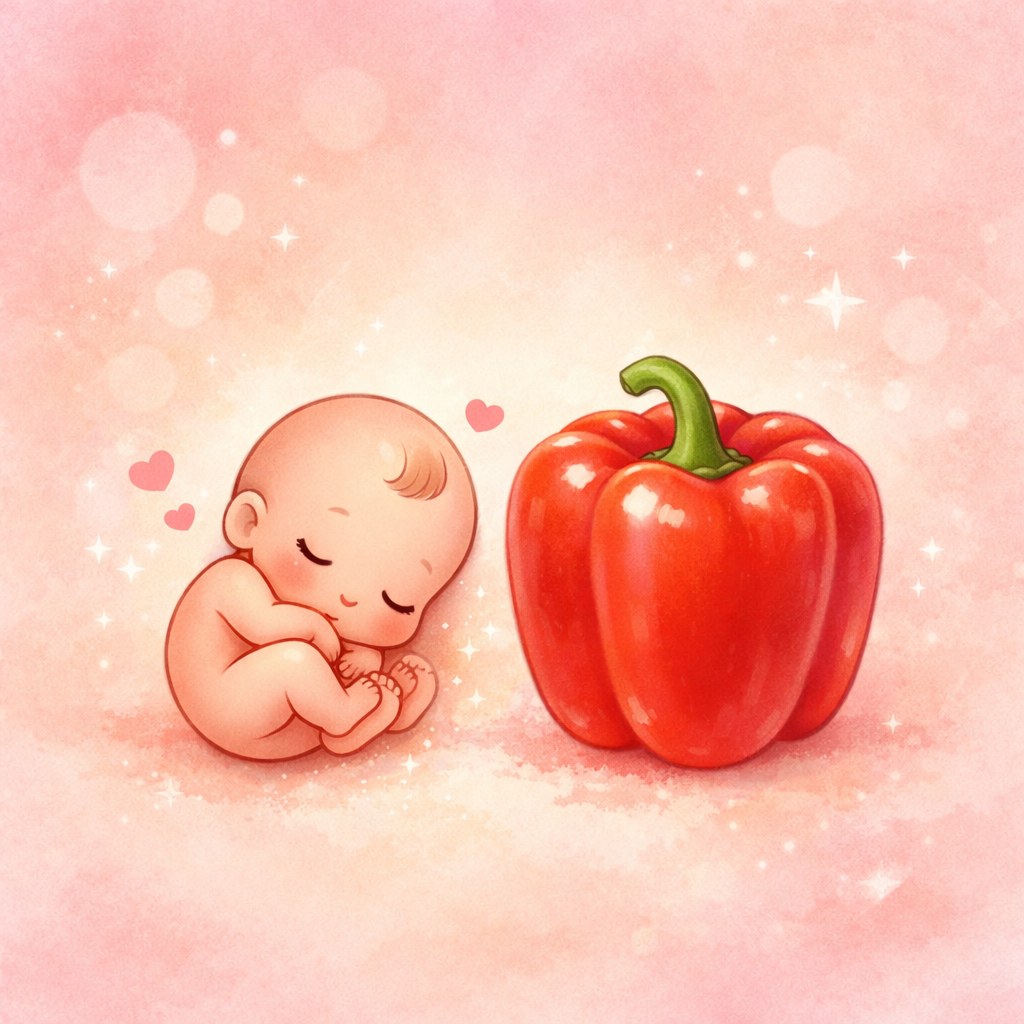
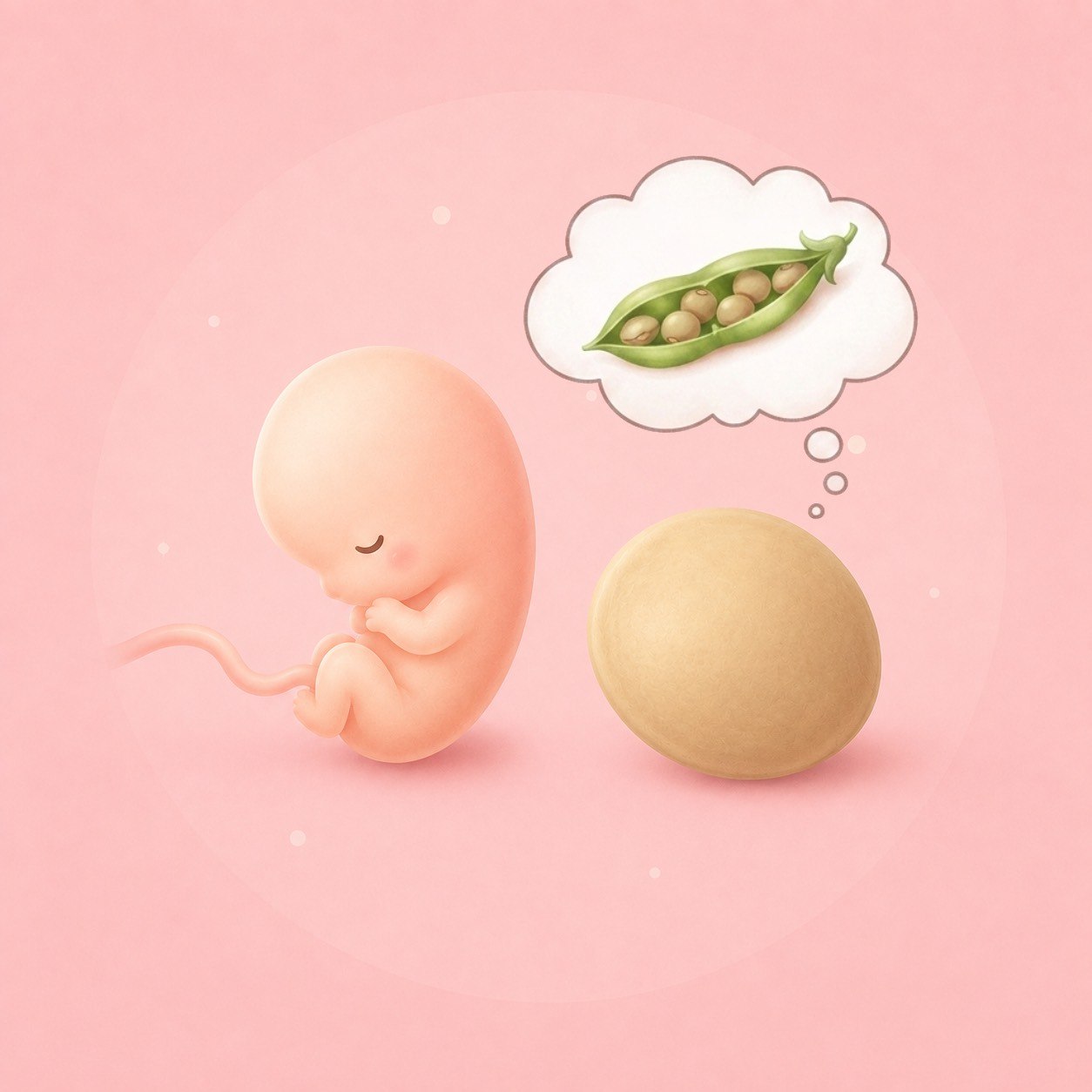
The baby in week 18 measures about 14 centimetres (from head to toe) and weighs around 150 to 200 grams, roughly the size of a red bell pepper. And even though they’re still small, they’re full of activity this week:
- Their skeleton keeps calcifying: the bones of the limbs and spine keep hardening.
- Their brain grows fast: the neurons start to be covered in myelin, speeding up their nerve signals.
- They hear better every day: their tiny ear bones are in place and they pick up your voice and your heartbeat.
- Their eyes face forward, even though they stay closed behind their eyelids.
- Their vocal cords form and they practise mouth movements.
- They’re covered in lanugo, that super-fine hair protecting their skin.
- They move, stretch and turn around: even though you may barely feel it yet.
Fun fact: even though they move a lot, it’s very likely you still can’t feel their movements, especially if it’s your first pregnancy. First-time mums usually feel the first movements between weeks 18 and 22. Don’t worry if you notice nothing yet: it’s completely normal.
Tips for week 18
- Don’t chase feeling movements: if you still feel nothing, remember it’s normal, especially in a first pregnancy. Movements are felt between weeks 18 and 22.
- Make the most of your energy: if you feel better, this is a great time for walking, swimming or prenatal yoga. Gentle exercise does wonders.
- Take care of your back: as your bump grows, try to sit and walk with a straight back and avoid lifting heavy things.
- Sleep on your side, preferably the left: it improves circulation to the uterus and helps with heartburn. Put a pillow between your knees.
- Stand up slowly: avoid sudden changes of posture to prevent dizziness, and stay hydrated.
- Keep taking folic acid and eating well: fruit, vegetables, protein and hydration. Keep avoiding alcohol, smoking and raw foods.
- Don’t self-medicate: always ask your doctor before taking anything.
- Work out your due date with the gestogram and track your week with how many weeks pregnant am I.
FAQ
What month am I in during week 18?
You’re entering your fifth month of pregnancy (weeks 18–21), within the second trimester. You’re about 16 weeks from fertilisation.
How big is the baby in week 18?
About 14 centimetres from head to toe and between 150 and 200 grams: roughly the size of a red bell pepper. Their skeleton keeps getting stronger and their brain grows fast.
Why can’t I feel the baby moving yet?
Because they’re still small and often in a position where you can’t perceive them. First-time mums usually feel the first movements between weeks 18 and 22. It’s completely normal.
When will I start to feel the baby move?
The most common time is between weeks 18 and 22. If you’ve been pregnant before, you may feel it sooner. At first it feels like flutters, bubbles or tickles.
Can the baby hear me in week 18?
Yes. Their tiny ear bones are already in place and they pick up mainly your voice, your heartbeat and soft sounds from outside.
Is feeling dizzy in week 18 normal?
It can happen because your uterus presses on large blood vessels and your blood pressure sometimes drops. Stand up slowly and stay hydrated. If the dizziness is frequent or strong, talk to your doctor.
Sources
- MedlinePlus — Fetal development
- WHO — Antenatal care
- NHS — Pregnancy week by week
- ACOG — How your fetus grows during pregnancy
- NHS — Tiredness in pregnancy
- NHS — Indigestion and heartburn in pregnancy
- NHS — Pelvic pain in pregnancy
Remember this article is for information only. If you have questions about your health or think something might be off, talk to your doctor. They can advise on the right tests and support you through this special time ❤️.