Pregnancy week 14: symptoms, baby size and tips
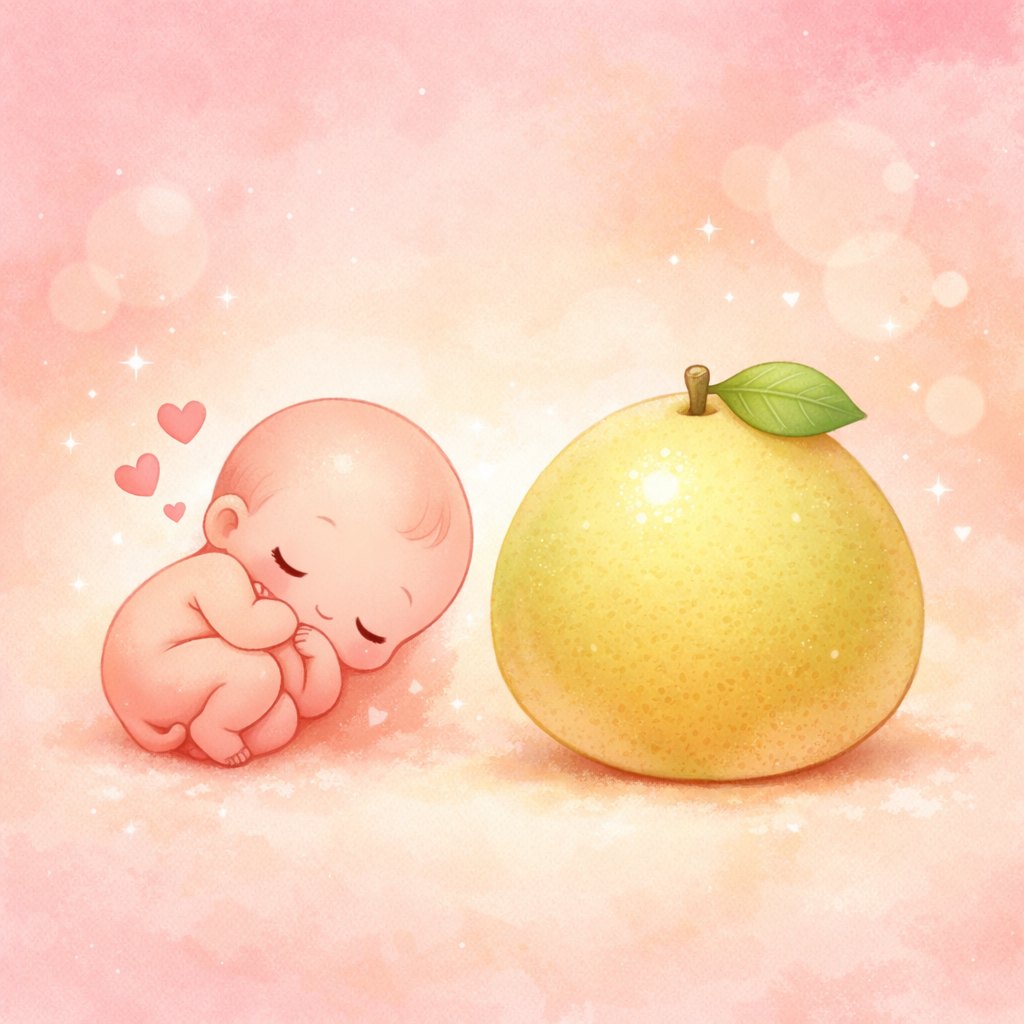
Pregnancy week 14 is the second week of the second trimester, and for many women it’s the first one where you really notice things starting to look up. Your baby is now about 8.7 centimetres, roughly the size of a lemon, and it’s so active it’s pulling faces and practising its expressions inside you. And you, at last, are getting your energy back. Let me tell you everything that’s going on.
If you’re coming from pregnancy week 13, you’ve already left the heaviest part of the first trimester behind. And to have the whole path at hand, check out our pregnancy week by week guide.
What is pregnancy week 14?
As always, pregnancy weeks are counted from the first day of your last period (LMP), not from conception. In week 14 you’re about 12 weeks from fertilisation, in your fourth month (weeks 14–17) and still in the second trimester, which runs from week 13 to week 28.
One of the best bits of news about these weeks is that the placenta is now fully formed and handles almost everything: it produces the hormones the ovaries used to make (including progesterone), and your hCG levels start to stabilise and even slowly come down. That’s a big part of why the nausea eases so visibly. I’ll say it straight: every pregnancy is different, and some women still notice it. But for most, this is the time things pick up.
What can you see on a week 14 scan?
It isn’t common to have a scan exactly this week (the nuchal scan is done up to week 13), but if you do, you’ll see a baby with a much more proportioned shape:
- The head is straightening out and the neck is getting longer; it no longer looks as curled up as in earlier weeks.
- It moves a lot: stretching arms and legs, turning around and bringing its hands to its face.
- Though it’s still tiny, it pulls faces: frowning, squinting and almost seeming to smile. Its facial muscles already work.
- It’s very common to hear the heartbeat, strong and fast.
If you haven’t taken a test yet, don’t worry: your hCG is still high and any test is very reliable. You can take our free online pregnancy test for guidance with your symptoms, and if you fancy a distraction, try our finger pregnancy test game: it’s just a game, not a real test.
What symptoms are normal in week 14?
This is a week when many women notice their body responding better:
- Energy returns: the first-trimester fatigue fades and you feel stronger in your day-to-day.
- Nausea eases: for most, morning sickness softens or disappears. If yours carry on, don’t worry: some women have it well into the second trimester.
- Your appetite and sense of smell settle down: with fewer aversions, it’s normal to want to eat again. A good moment to take care of your diet.
- Your breasts stay bigger and sensitive, though usually less sore than at the start.
- You may feel twinges or cramps in your lower belly (round ligament pain): as your uterus grows, those ligaments stretch and you feel sharp pulls when you change position or sneeze. That’s normal, but if the pain is strong or persistent, talk to your doctor.
- Some women notice the “pregnancy glow”: the extra blood flow can leave your skin looking brighter. It’s very real, and very variable.
- Constipation and bloating: progesterone is still slowing down your digestion. Stay hydrated and eat fibre.
Hardly any symptoms? Also completely normal. Every woman experiences each week in her own way.
How big is the baby in week 14?
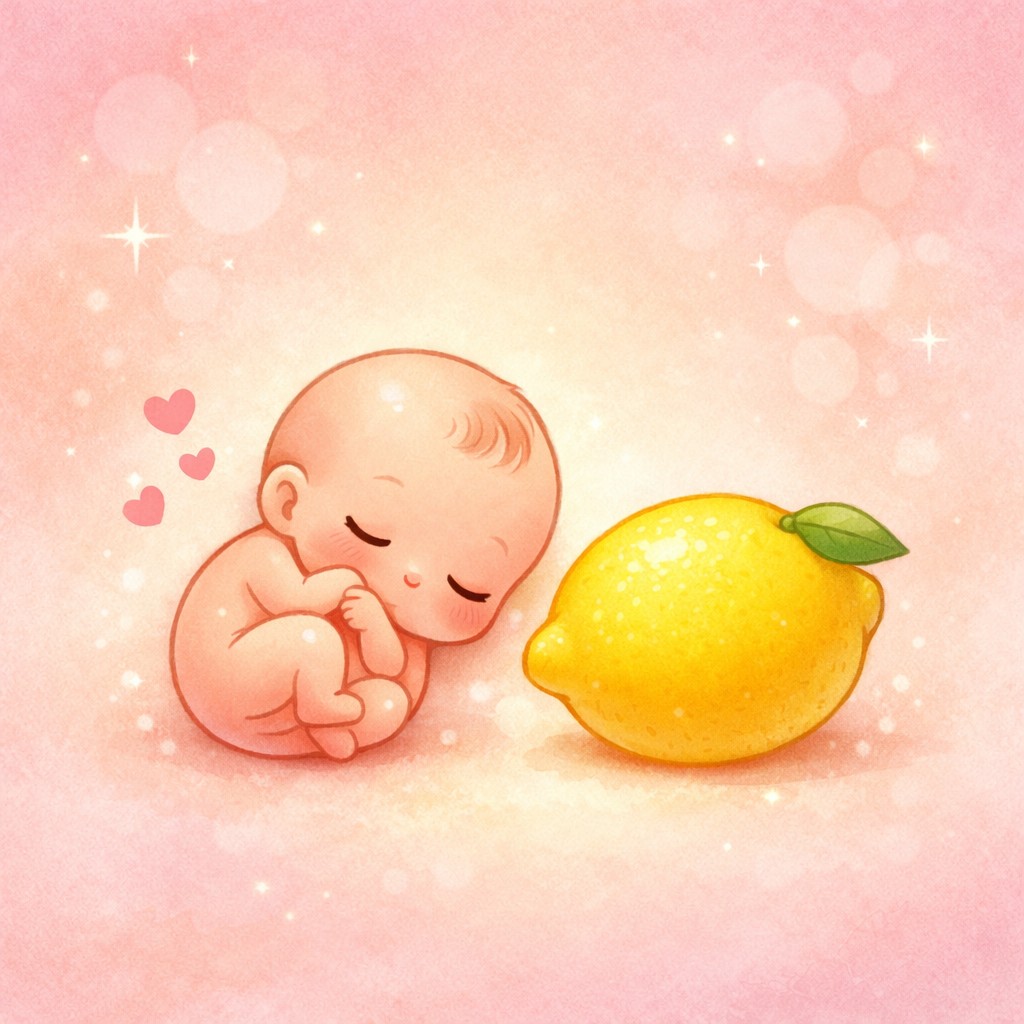
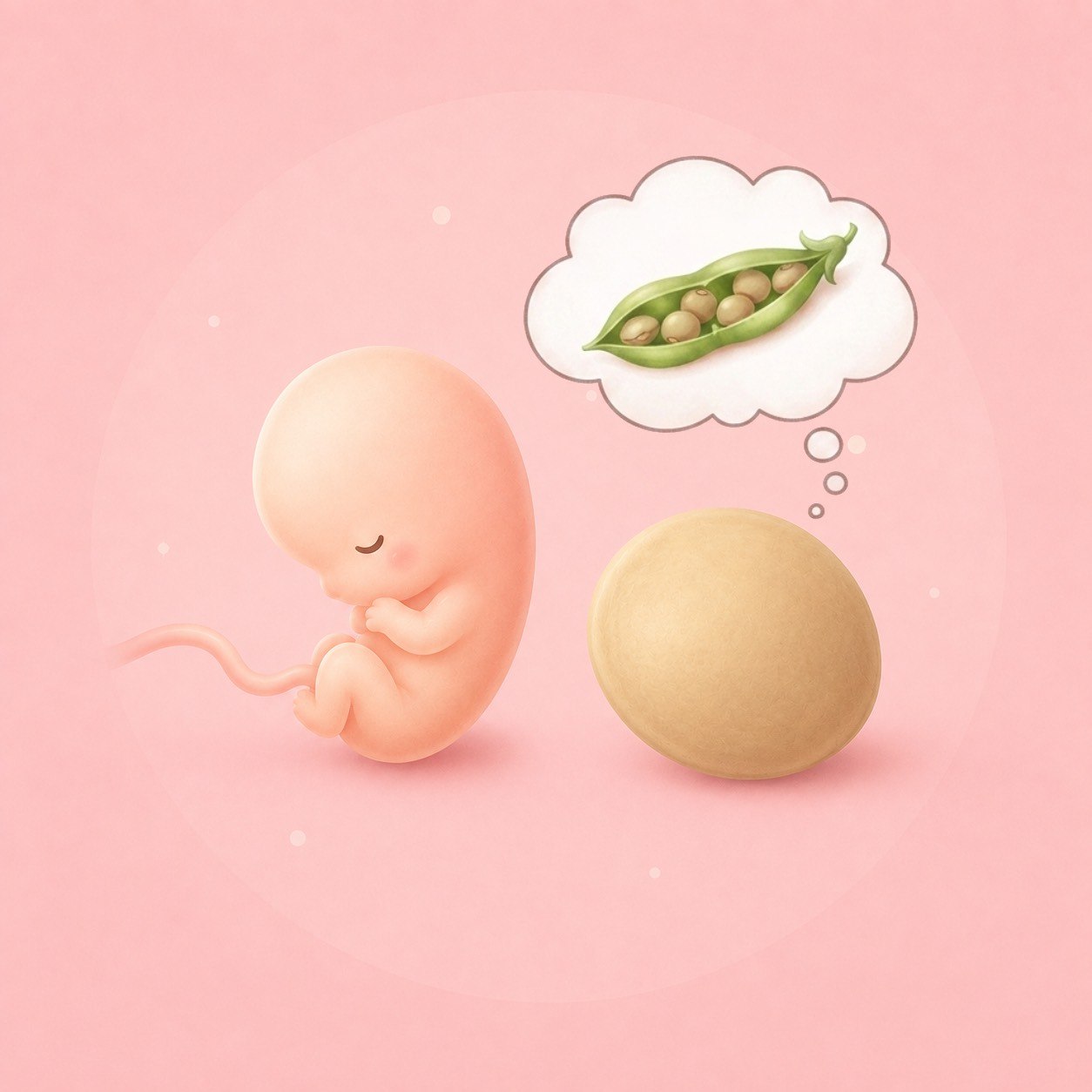
The baby in week 14 measures about 8.7 centimetres (from head to toe) and weighs around 43 grams, roughly the size of a lemon. Although it’s still small, it’s hitting a lot of milestones this week:
- It has grown lanugo, a very fine, soft hair covering its whole body that protects the skin until it matures.
- It practises its expressions: frowning, squinting and opening its mouth. The facial muscles are already working.
- Fingerprints are starting to form on its fingertips.
- Its kidneys are now making urine, which it releases into the amniotic fluid (yes, your baby has been “doing wees” for a little while).
- The thyroid gland is now making hormones on its own.
- If it’s a boy, the prostate is forming; if it’s a girl, her ovaries are settling into their final position in the pelvis.
Fun fact: even though it moves a lot, it’s very likely you still can’t feel its movements. Women who have been pregnant before tend to notice them earlier, but the general rule is that first-time mums feel that first fluttering between weeks 18 and 22. Don’t worry if you don’t feel anything yet: it’s completely normal.
Your uterus, meanwhile, already feels like a firm bump just above your pubic bone, and it’s more and more likely that a little bump starts to show.
Tips for week 14
- Don’t panic about round ligament twinges: they’re normal as your uterus grows. But if you feel severe pain, bleeding or a fever, call your doctor right away.
- Don’t expect to feel movements yet: if you notice nothing, it doesn’t mean something’s wrong. First-time mums usually feel the first movements around weeks 18–22.
- Keep taking folic acid: although the neural tube has closed, it’s still important. I explain everything in folic acid in pregnancy.
- Take care of your diet now that your appetite is back: fruit, vegetables, protein and hydration. Keep avoiding alcohol, smoking and raw foods.
- Keep moving gently: walking, swimming or prenatal yoga are great for your mood and for preparing your body.
- Start thinking about maternity clothes if your bump is showing: something flexible and comfortable will be great.
- Don’t self-medicate: always ask your doctor before taking anything.
- Work out your due date with the gestogram and track your week with how many weeks pregnant am I.
FAQ
What month am I in during week 14?
You’re in your fourth month of pregnancy (weeks 14–17), within the second trimester. You’re about 12 weeks from fertilisation.
How big is the baby in week 14?
About 8.7 centimetres from head to toe and around 43 grams: roughly the size of a lemon. It already has lanugo, fingerprints and its kidneys are making urine.
Why can’t I feel the baby moving yet?
Because it’s still very small and is usually in a position where you can’t perceive it yet. First-time mums usually feel the first movements between weeks 18 and 22. It’s completely normal.
Is it normal to have twinges or cramps in my lower belly?
Yes, they’re usually from the round ligament, which stretches as your uterus grows. They’re brief pulls when you change position. If the pain is strong, persistent or comes with bleeding, talk to your doctor.
What is lanugo?
It’s a very fine, soft hair that covers the baby’s whole body this week and protects the skin until it’s mature. It usually falls out before birth or in the first weeks of life.
What is the “pregnancy glow”?
It’s the brighter-looking skin that many women notice from the second trimester, caused by increased blood flow. It’s common, though not everyone notices it the same way.
Sources
- MedlinePlus — Fetal development
- WHO — Antenatal care
- NHS — Pregnancy week by week
- ACOG — How your fetus grows during pregnancy
- NHS — Tiredness in pregnancy
- NHS — Vomiting and morning sickness
- NHS — Pelvic pain in pregnancy
Remember this article is for information only. If you have questions about your health or think something might be off, talk to your doctor. They can advise on the right tests and support you through this special time ❤️.