Pregnancy week 13: symptoms, baby size and tips
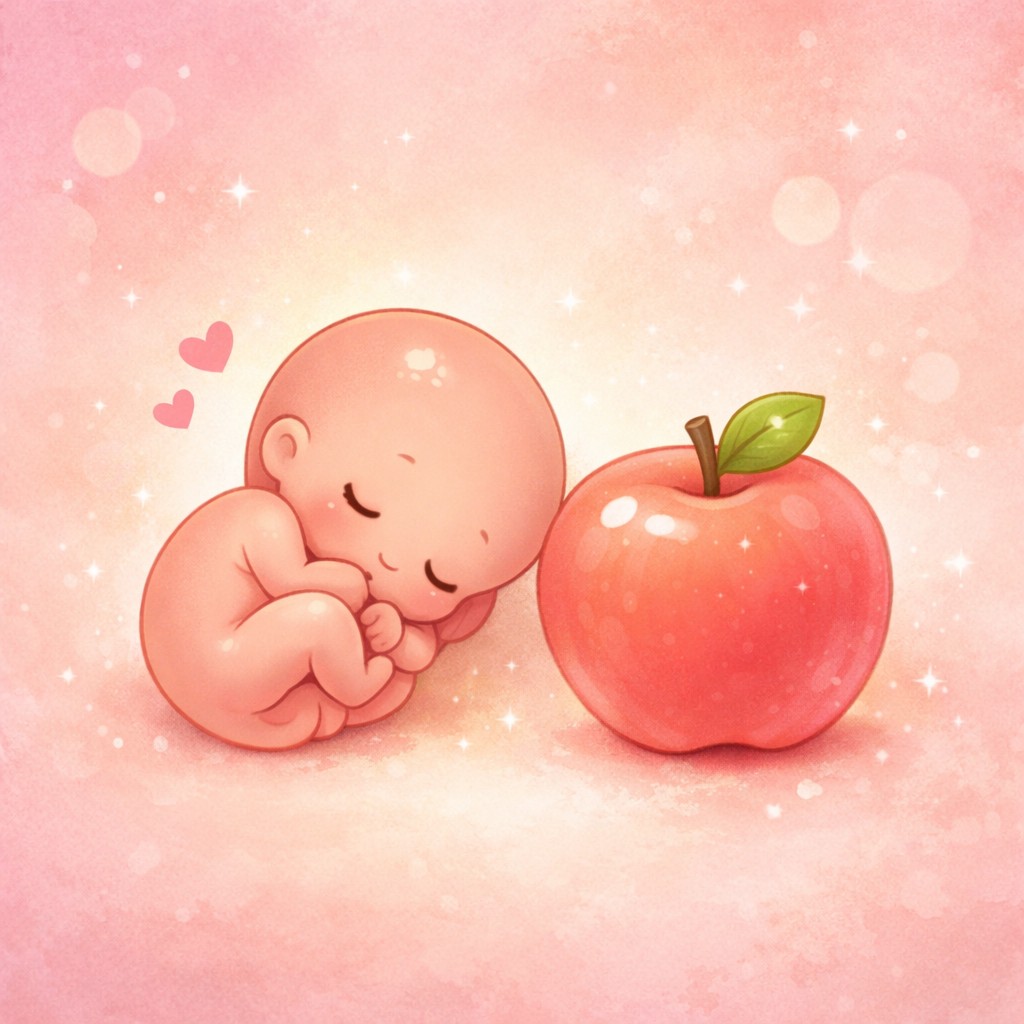
Pregnancy week 13 marks the start of the second trimester, that stage when many women finally leave behind the hardest part of the beginning. Your baby is now about 7.4 centimetres, roughly the size of a peach, and although it’s still tiny, it’s growing at an amazing pace week after week. It’s also normal for the nausea to ease off a lot and for your energy to return. Let me tell you everything that’s happening inside you.
If you’re coming from pregnancy week 12, you’ve already got through what many find the most tiring part of the journey. And to have the whole path at hand, check out our pregnancy week by week guide.
What is pregnancy week 13?
Pregnancy weeks are always counted from the first day of your last period (LMP), not from conception. So in week 13 you’re about 11 weeks from fertilisation, still in your third month (weeks 9–13) and, for most specialists, you’ve just entered the second trimester, which runs from week 13 to week 28.
What does that mean in practice? That, as a rule, the risk of loss is considered to drop very clearly from now on and the discomforts of the first trimester begin to ease off. I’ll tell you straight: not everyone experiences it the same way, and some women still have nausea for weeks longer. Every pregnancy, every body, is different.
What can you see on the week 13 scan?
If you have an ultrasound this week, you’re in for one of the nicest surprises of the pregnancy:
- Your baby already has a clearly human shape and moves a lot: stretching arms and legs, turning around and even bringing its hand to its mouth.
- The crown-rump length (CRL) is measured to confirm the exact age and your due date.
- If you didn’t have it earlier, the nuchal scan can be done up to week 13, so this could be your last chance if your clinic hasn’t booked you in yet.
- It’s common to hear the heartbeat, strong and fast. A moment mums always remember.
If you haven’t taken a pregnancy test yet, by week 13 your hCG levels are still high and any test is very reliable. You can take our free online pregnancy test for guidance with your symptoms, and if you fancy a distraction, try our finger pregnancy test game: it’s just a game, not a real test.
What symptoms are normal in week 13?
This is the week when many women notice things taking a turn for the better:
- Nausea eases: for many, morning sickness softens or disappears. If yours carry on, don’t worry: some women have it well into the second trimester.
- Energy returns: the crushing tiredness of the start fades and you feel stronger for your day-to-day.
- Your appetite may grow: with less nausea, it’s normal to want to eat again. A good moment to take care of your diet.
- Your breasts stay tender and bigger, though usually less sore than at the start.
- Fewer trips to the bathroom: your uterus is rising into the abdomen and pressing less on your bladder.
- A small bump may start to show, especially if this is your second pregnancy or more.
- Constipation and bloating: progesterone is still having its way. Stay hydrated and eat fibre.
Hardly any symptoms? Also completely normal. Every woman experiences each week in her own way.
How big is the baby in week 13?
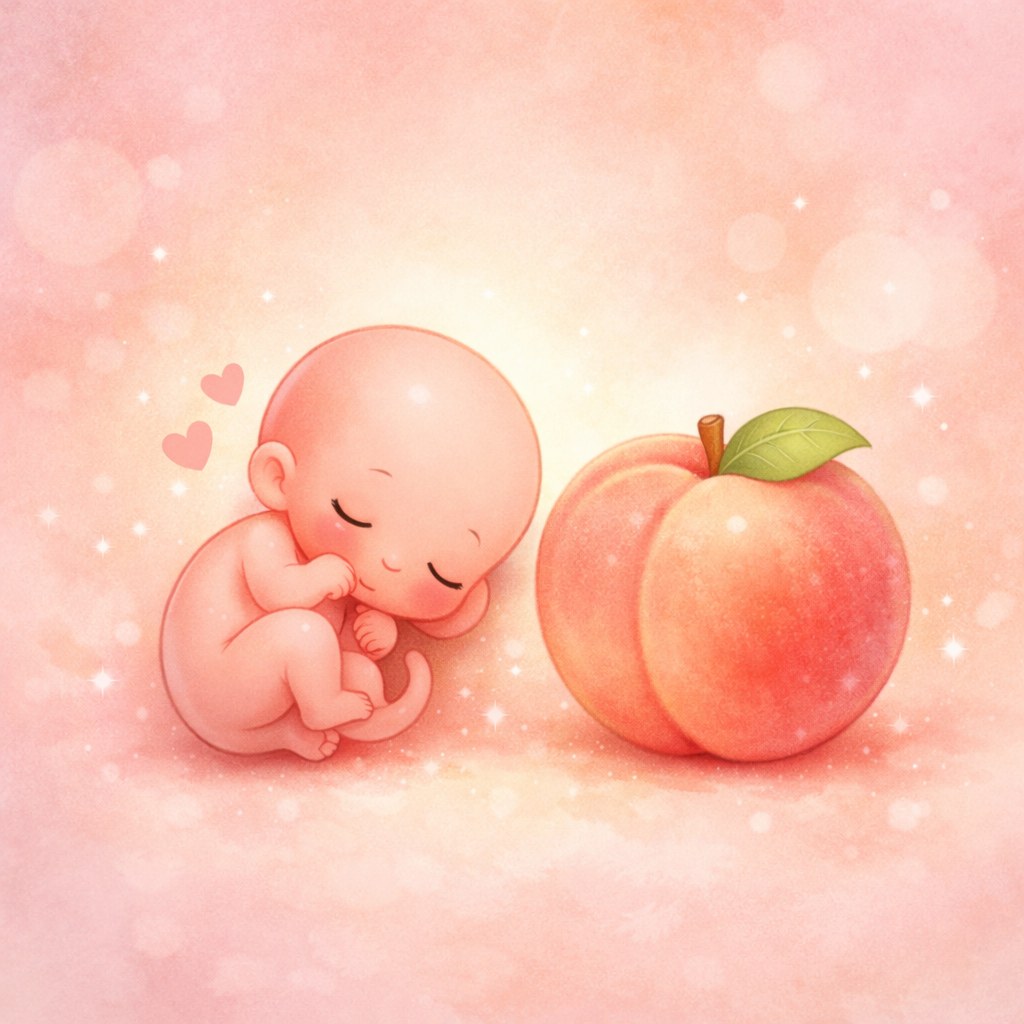
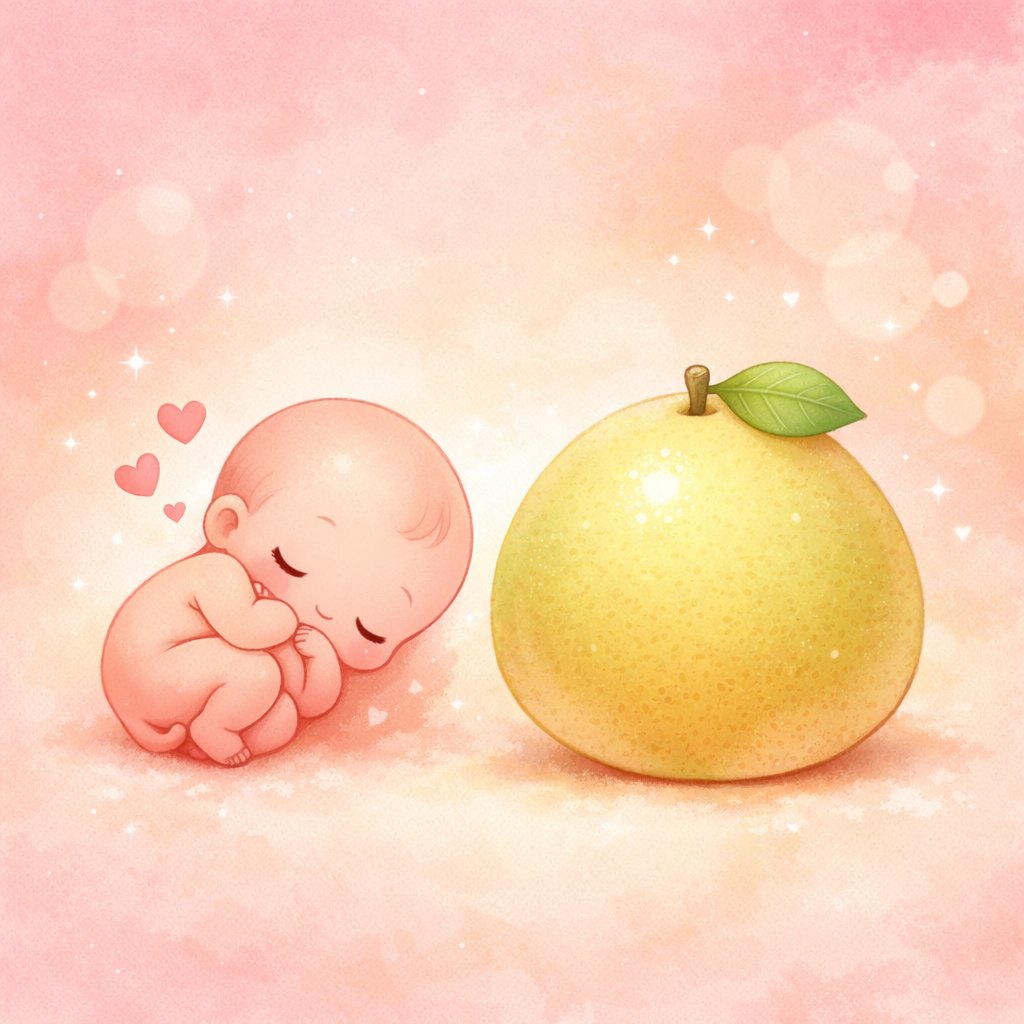
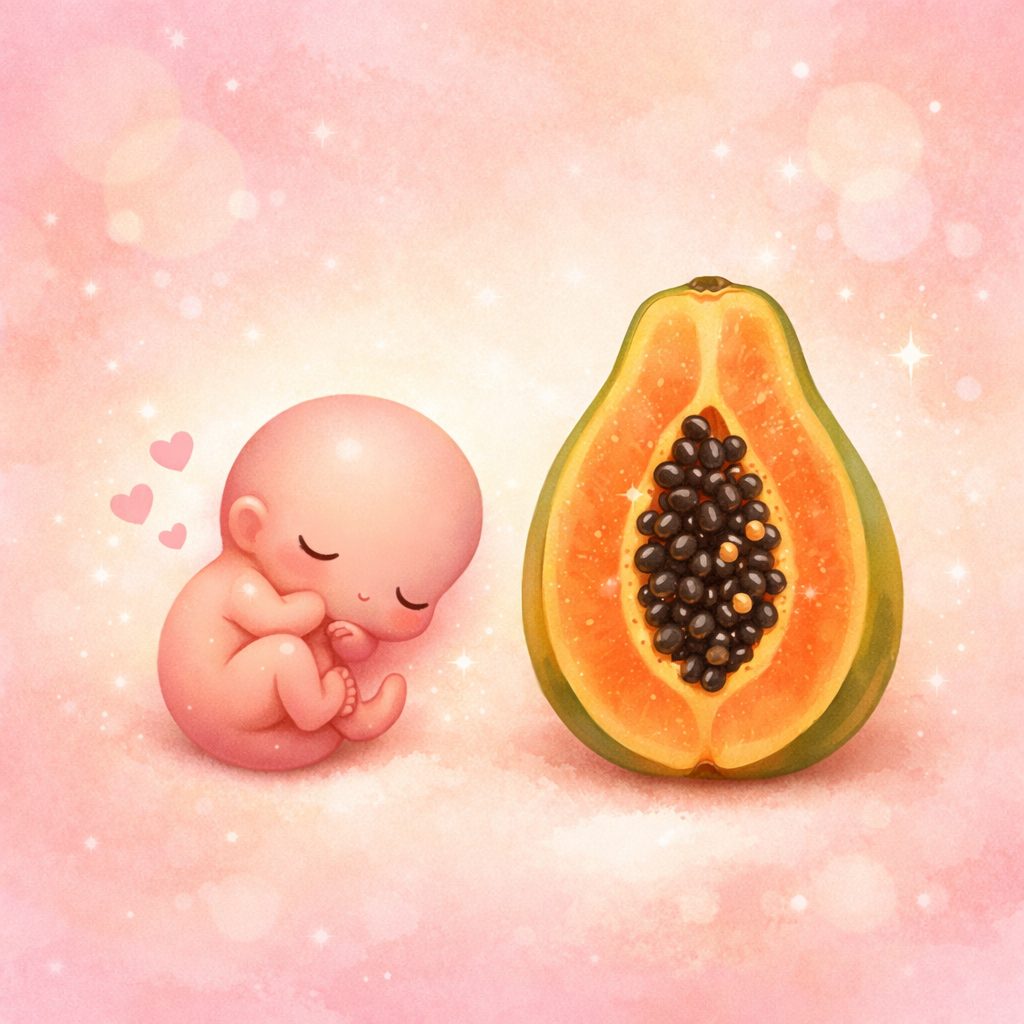
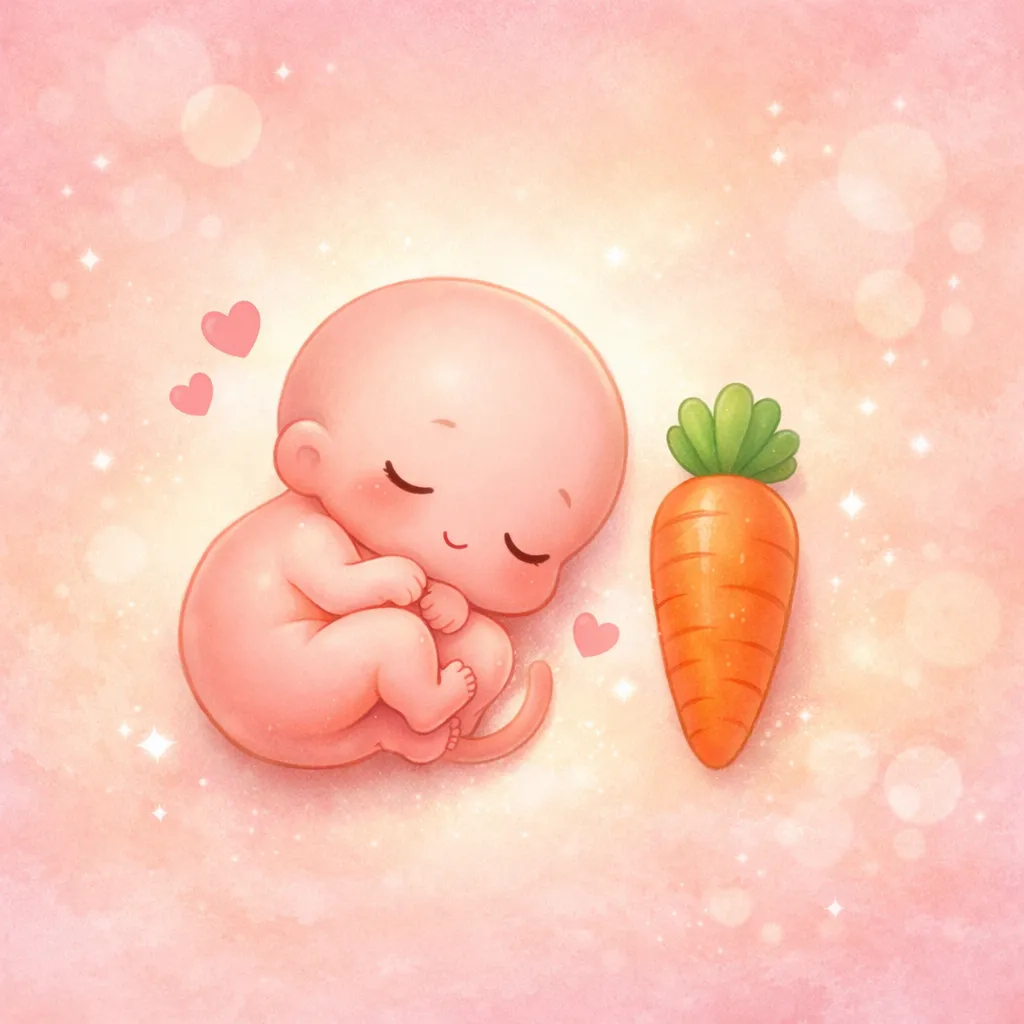
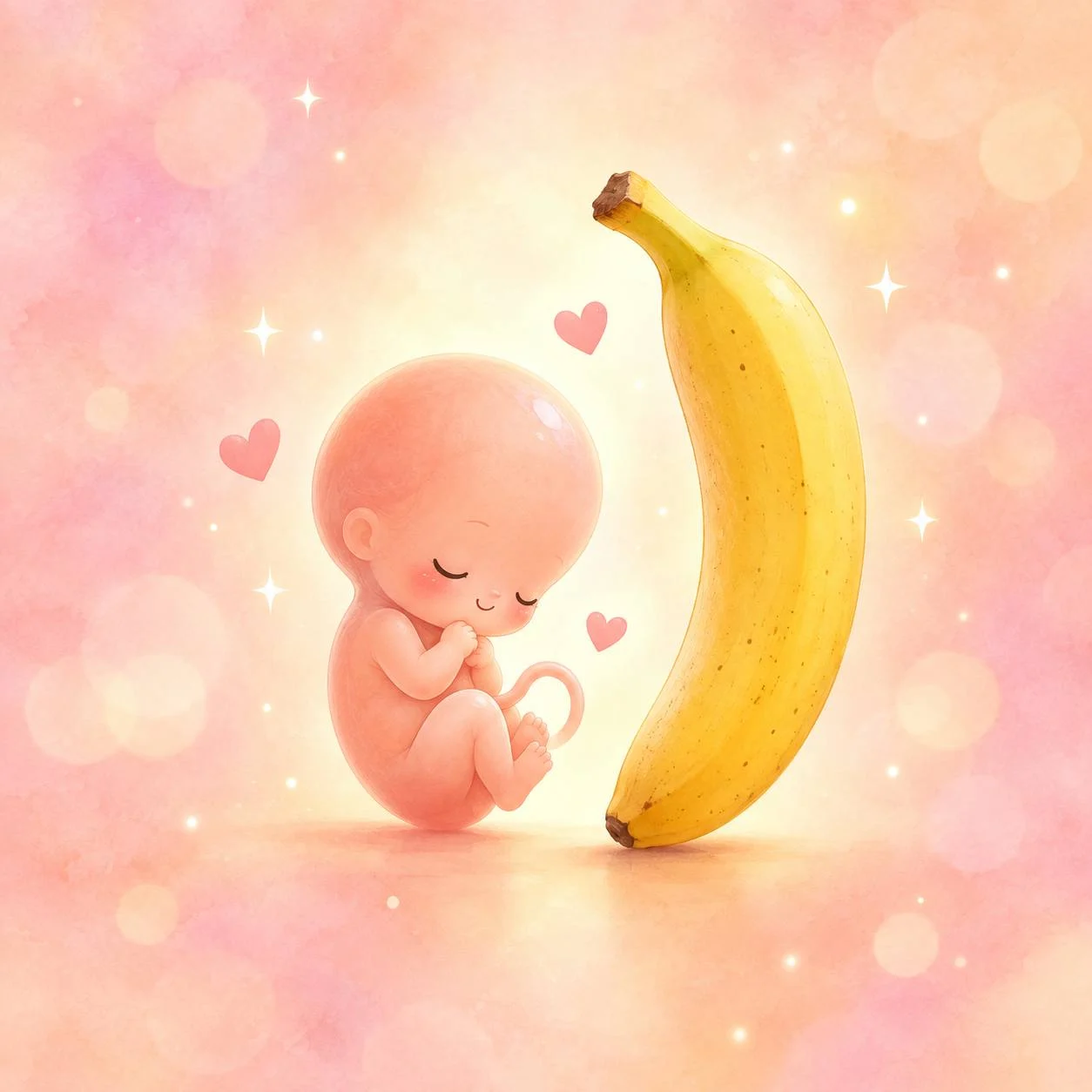
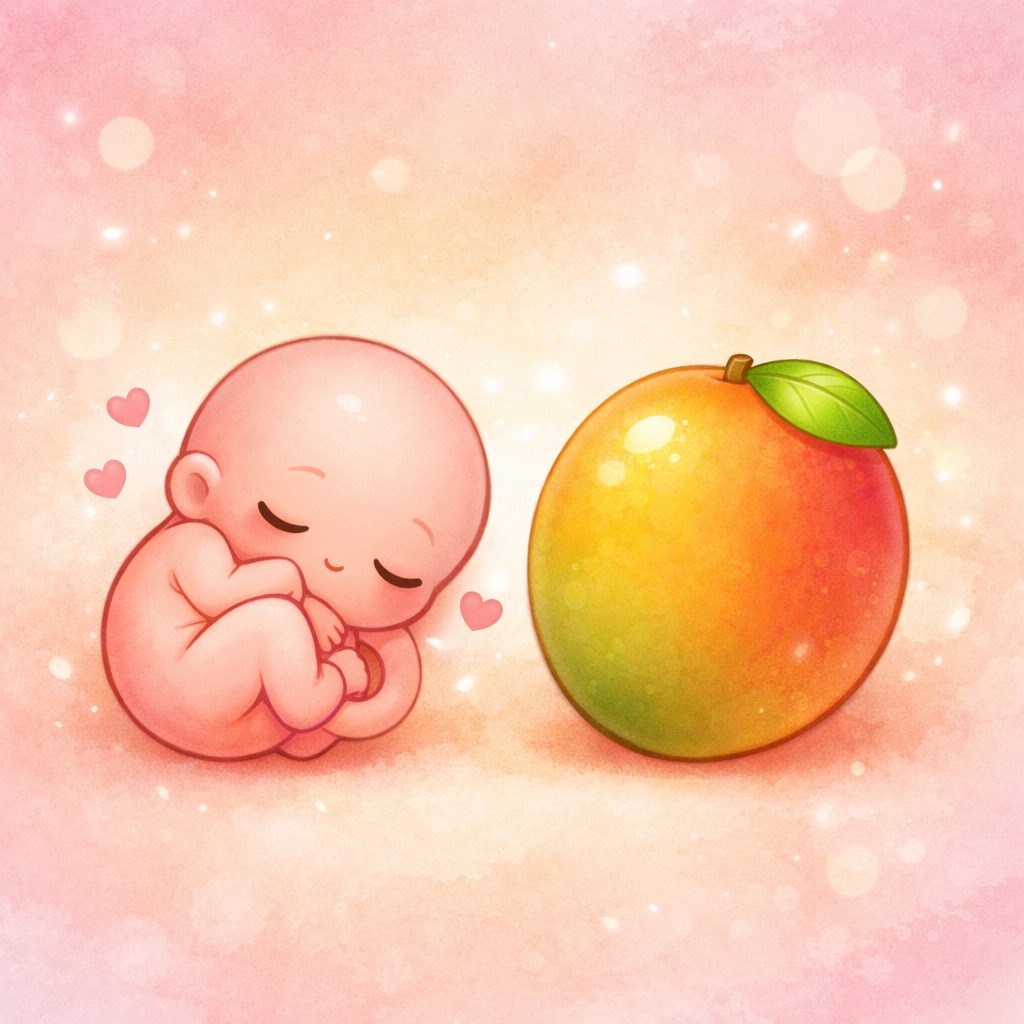
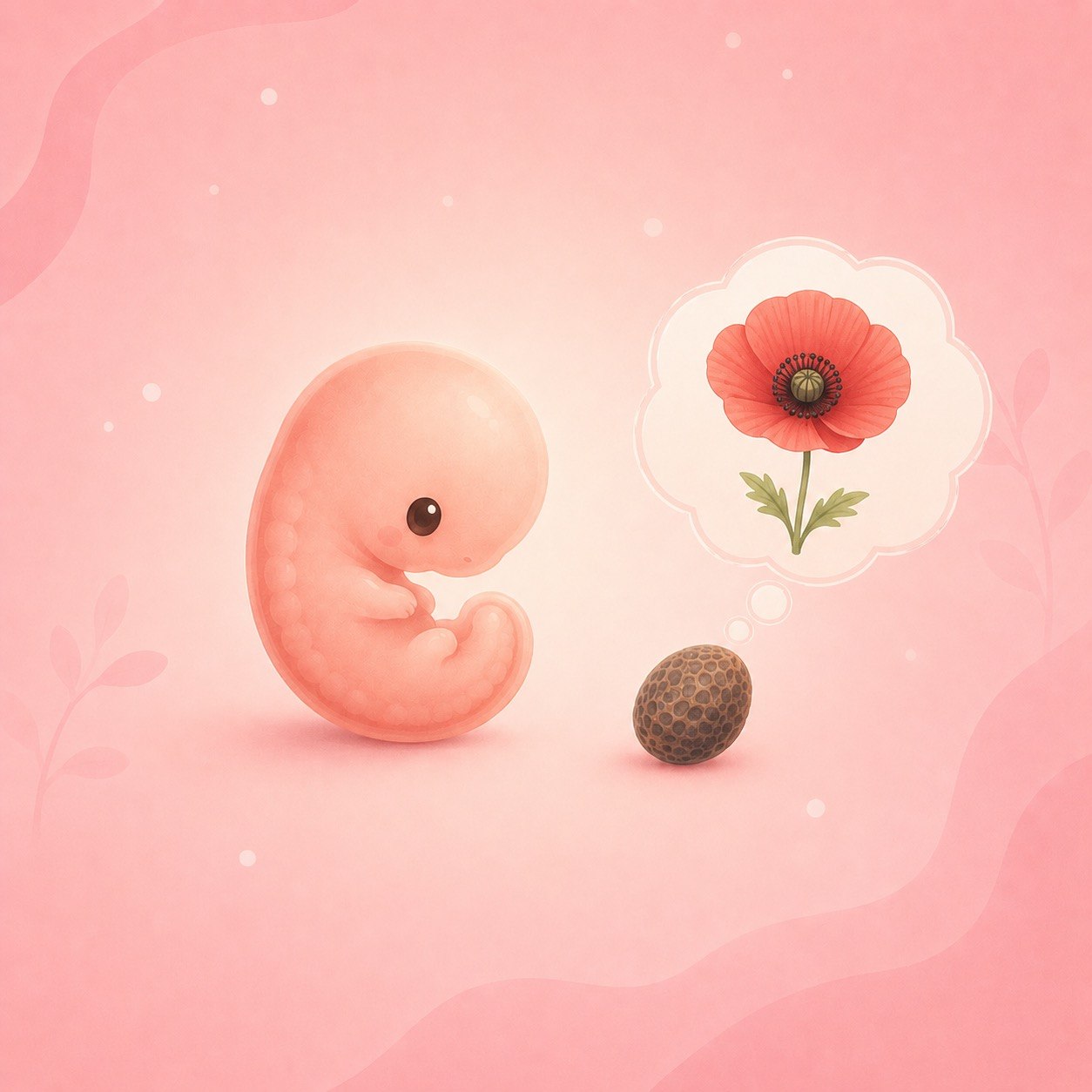
The baby in week 13 measures about 7.4 centimetres (65–78 millimetres in total, head and body) and weighs around 23 grams, roughly the size of a peach. Although it’s still small, it has progressed a lot:
- Its facial features are defined: a large forehead, increasingly proportioned eyes and ears in place.
- It has started sucking its thumb and swallowing amniotic fluid.
- The bones are hardening (ossification), and the ribs and vertebrae are taking shape.
- The first milk teeth (tooth buds) are appearing.
- The vocal cords are now forming in the larynx, although you’ll only hear its little cry at birth.
- If it’s a girl, millions of eggs are already forming in her ovaries.
- The head is still large compared with the body, but it’s balancing out week by week.
Your uterus, meanwhile, still feels like a firm bump just above your pubic bone, and it’s more and more likely that a little bump starts to show.
Tips for week 13
- Don’t skip the nuchal scan if your clinic has booked you in: it’s done between weeks 11 and 13, so this could be your last chance.
- Keep taking folic acid: although the neural tube has closed, it’s still important. I explain everything in folic acid in pregnancy.
- Take care of your diet now that your appetite is back: fruit, vegetables, protein and hydration. Keep avoiding alcohol, smoking and raw foods.
- Ease back into gentle exercise if you feel like it: walking, swimming or prenatal yoga work wonders for your energy and mood.
- Start thinking about maternity clothes if your bump is showing: something flexible and comfortable will be great.
- Don’t self-medicate: always ask your doctor before taking anything.
- Work out your due date with the gestogram and track your week with how many weeks pregnant am I.
If you have intense one-sided pain, heavy bleeding or a fever, contact your doctor promptly.
FAQ
What month am I in during week 13?
You’re in your third month of pregnancy: weeks 9–13 make up month 3. With week 13 you also enter, for many specialists, the second trimester (weeks 13–28).
How big is the baby in week 13?
About 7.4 centimetres (65–78 millimetres), roughly the size of a peach, weighing around 23 grams. Its vocal cords are forming and it sucks its thumb.
When does pregnancy nausea end?
For most women, the big improvement comes between weeks 12 and 14, as the hCG hormone stabilises and the placenta takes over. Week 13 is often already the start of the relief.
Is my bump showing in week 13?
Your uterus already feels like a firm bump above your pubic bone and, on the outside, many women start to notice it, especially with their second pregnancy or more. Every body is different.
Does the second trimester start in week 13?
For most specialists, yes: the second trimester runs from week 13 to week 28. It’s the stage when the risk of loss usually drops and symptoms improve.
Can I still be pregnant if I barely have symptoms?
Yes, absolutely. The nausea easing doesn’t mean something is wrong: it’s exactly what usually happens at this stage. If you’re worried, your doctor is the best person to reassure you.
Sources
- MedlinePlus — Fetal development
- WHO — Antenatal care
- NHS — Pregnancy week by week
- ACOG — How your fetus grows during pregnancy
- NHS — Tiredness in pregnancy
- NHS — Vomiting and morning sickness
- NHS — Swollen ankles, feet and fingers
Remember this article is for information only. If you have questions about your health or think something might be off, talk to your doctor. They can advise on the right tests and support you through this special time ❤️.