Pregnancy week 11: symptoms, ultrasound and baby size
Pregnancy week 11 has something special about it: your baby is now about 41 millimetres long, the size of a fig, and you’re very close to saying goodbye to the first trimester. It’s also the window when the nuchal scan is usually done, that test which puts many mums’ minds at rest. And the best part: those first-trimester classics, the nausea, finally start to ease. Let me tell you everything that’s happening.
If you’re coming from pregnancy week 10, this week is the natural continuation of everything I told you there. And for the full journey, see our pregnancy week by week guide.
What is pregnancy week 11?
Pregnancy weeks are always counted from the first day of your last period (LMP), not from conception. That means in week 11 you’re about 9 weeks from fertilisation, still within your third month (weeks 9–13) and in the final stretch of the first trimester.
This week your baby already has its main organs formed, and what’s left now is for them to grow and mature through to the end of the pregnancy. Although tiny, it moves a great deal, swallows amniotic fluid and is starting to look more and more like a miniature newborn.
What can you see on the week 11 scan?
Week 11 is one of the most eagerly awaited when it comes to ultrasounds, because it’s time for the nuchal scan:
- The baby’s nuchal fold is measured: if the thickness is normal, it’s a reassuring sign of a low risk of certain chromosome conditions.
- It’s part of the combined first-trimester screening, which is usually completed with a blood test (called “double” or “triple” screening depending on the clinic).
- On screen you can already see a baby with a clearly human shape: a big, well-proportioned head, little arms and legs moving, and a profile that’s coming into focus.
In week 11 you can also usually hear the heartbeat, strong and very fast (around 160–170 beats per minute), a moment many mums remember forever.
If you haven’t taken a pregnancy test yet, hCG levels are still very high and any test is very reliable. You can take our free online pregnancy test to reflect on your symptoms, and if you fancy a distraction, try our finger pregnancy test game: it’s just a game, not a real test.
What symptoms are normal in week 11?
Week 11 is the final stretch of the most intense stage of the first trimester. It’s normal to notice:
- Nausea suddenly lessening or being more bearable: many women notice a clear improvement now. If yours are still strong, don’t worry: every pregnancy is different.
- Tiredness, though a little less: your energy slowly returns as your hormones settle.
- Bigger breasts that are less sore: your areolas stay dark and your breasts can still be tender.
- Cramps or twinges in the lower belly: the ligaments are still stretching. If they’re mild and occasional, it’s normal.
- More whitish vaginal discharge: common and usually nothing to worry about. If it changes colour, smell or causes itching, mention it to your doctor.
- Constipation and bloating: your digestion is still slower. Stay hydrated and eat fibre.
- A small bump low in the belly: in slim women or those with previous pregnancies, the uterus is already starting to show.
Hardly any symptoms? That’s also completely normal: every pregnancy, every body and every week is unique.
How big is the baby in week 11?
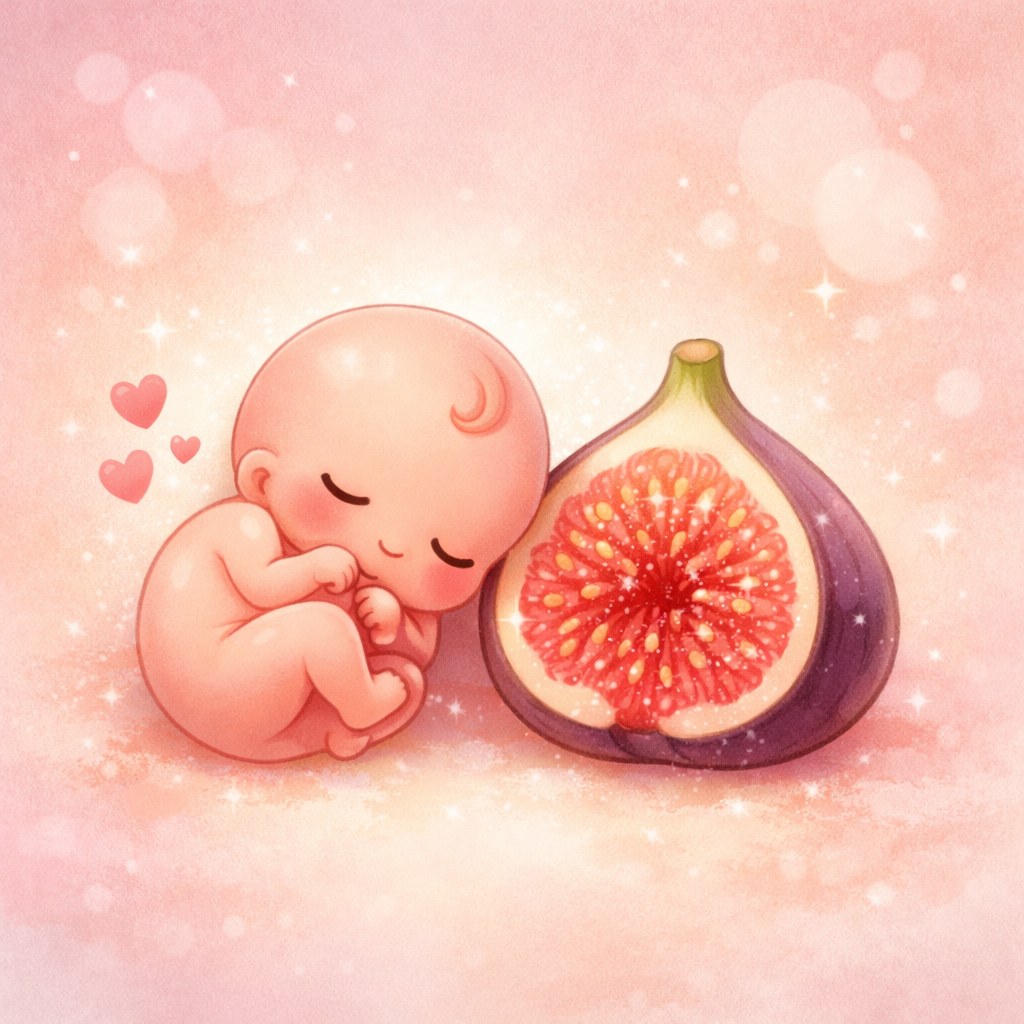
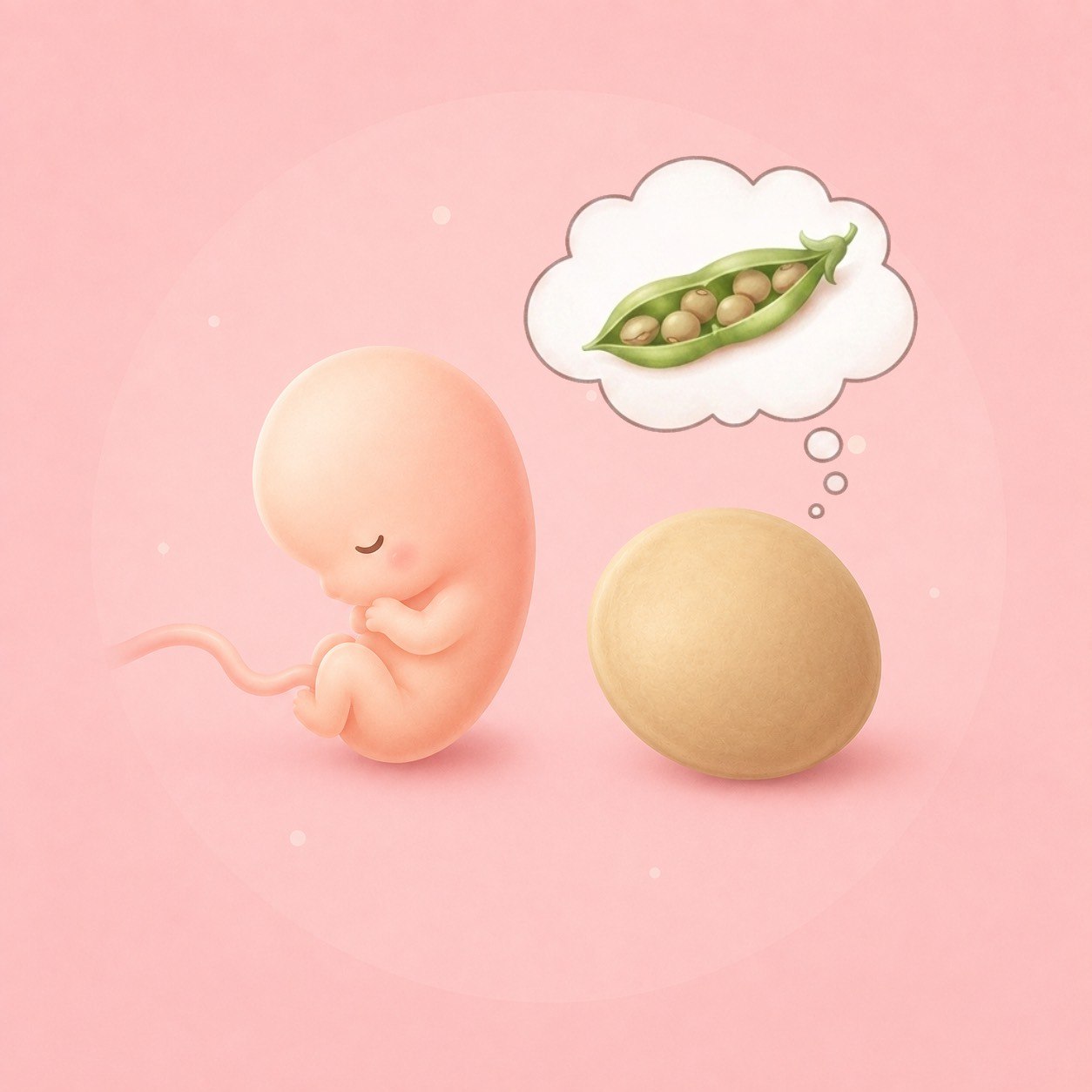
The baby in week 11 measures about 41 millimetres (around 4 centimetres), the size of a fig, and weighs around 7 grams. Still tiny, but this week it’s racing ahead:
- The head is very large compared to the body (it will be for a while), and the skin is thin and almost transparent.
- Hair follicles and the beginnings of nails are forming.
- The baby hugs, stretches and kicks: the umbilical cord is already strong and well developed.
- It swallows amniotic fluid and its kidneys make urine, which it releases into that fluid.
- The intestines, which until recently developed inside the cord, are now in place in the abdomen.
- It can open and close its mouth, bring its hands to its face and even suck its thumb.
- The main organs (heart, brain, liver, kidneys) are formed and now just need to grow and perfect themselves.
Your uterus, meanwhile, almost fills your pelvic cavity by now, and a small bump may be starting to show on the outside, especially if this is your second pregnancy or more.
Tips for week 11
- Don’t skip the nuchal scan: it’s done between weeks 11 and 13, so if your clinic has booked you in, this is it. Use the chance to ask all your questions.
- Keep taking folic acid: still essential for nervous system development. I explain everything in folic acid in pregnancy.
- Make the most of the nausea easing to eat more variety, but keep avoiding alcohol, smoking and raw foods.
- Stay hydrated and eat fibre for constipation; gentle exercise (walking, swimming) also helps.
- Start thinking beyond this stage: many mums wait until after week 12 to share the news. You set your own pace.
- Don’t self-medicate: always ask your doctor before taking anything, even for heavy digestion or headaches.
- Work out your due date with the gestogram and track your week with how many weeks pregnant am I.
If you have intense one-sided pain, heavy bleeding or a fever, contact your doctor promptly.
FAQ
What month am I in during week 11? You’re in your third month: weeks 9–13 make up month 3. Counting starts on the first day of your last period, not the day of conception.
How big is the baby in week 11? About 41 millimetres (4 centimetres), the size of a fig, weighing around 7 grams. It already has a clearly human shape and moves a great deal.
When is the nuchal scan done? Between week 11 and 13 of pregnancy. It’s an ultrasound that measures the nuchal fold and, together with the blood test, forms part of the combined first-trimester screening.
Is my bump showing in week 11? In many women the uterus is already felt just above the pubic bone, although it’s still barely visible. If this is your second pregnancy or more, it may show a little sooner.
Can I feel the baby move in week 11? Not yet: although it kicks and moves a lot, it’s too small to notice. The first sensations usually arrive between weeks 18 and 22.
When will the nausea end? For most women it clearly improves between weeks 12 and 14, as hCG levels begin to stabilise. Week 11 is often already the start of the relief.
Is the first trimester almost over? Almost: the first trimester runs until week 13, so you’re in its final stretch and close to feeling more energetic.
Sources
- MedlinePlus — Fetal development
- WHO — Antenatal care
- NHS — Pregnancy week by week
- ACOG — How your fetus grows during pregnancy
- NHS — Tiredness in pregnancy
- NHS — Vomiting and morning sickness
- NHS — Swollen ankles, feet and fingers
Remember this article is for information only. If you have questions about your health or think you may be pregnant, talk to your doctor. They can advise on the right tests and support you through this special time ❤️.